Can your employees tell you when something is going wrong? Can they disagree with you? Can they say, “I don't know”? Can they admit they made a mistake? Can they ask for help? Can they challenge an idea without worrying about what will happen afterward?
These moments may look small. But together, they tell you something important about the psychological safety of your workplace.
Psychological safety is not about making people comfortable. It is about creating enough safety for people to participate honestly, take interpersonal risks, learn, and contribute without unnecessary fear of humiliation, punishment, or rejection.
What Is Psychological Safety?
At its core, psychological safety describes a shared belief that people can speak up, ask questions, admit mistakes, express concerns, disagree, ask for help, offer ideas, challenge assumptions, and learn openly without fear of interpersonal punishment or humiliation.
It is one of the most vital foundations of a psychologically safe workplace. But it is also widely misunderstood.
Psychological safety does not mean:
everyone agrees
everyone is comfortable
there is no conflict
mistakes have no consequences
performance standards disappear
people can behave however they want
leaders must accept every idea
nobody experiences difficult emotions
Psychological safety makes it safer to tell the truth. It does not make the truth less demanding.
That distinction prevents the concept from being mistaken for mere softness. It anchors psychological safety at work in reality, proving that high standards and honest dialogue require a safe container to thrive.
Why Psychological Safety Matters
When people feel safe, they stop spending energy protecting their reputation and start spending energy solving problems.
What happens when psychological safety is high:
People raise problems early before they become crises.
Teams share vital information freely.
Asking for help is seen as normal, not weak.
Weak ideas get challenged before budgets are wasted.
Mistakes turn into lessons rather than secrets.
Different perspectives collide to create true team performance and innovation.
What happens when psychological safety is low:
Information gets hidden in private chat threads.
Problems surface only when they are too big to ignore.
People stay quiet in meetings, offering polite silence instead of truth.
Leaders receive incomplete information, leading to weak decisions.
Mistakes get covered up out of fear.
Meetings become performative exercises in agreement.
Burnout rises as employees carry the heavy tax of chronic self-protection.
When people do not feel safe enough to tell the truth, leaders are often making decisions with incomplete information.
That insight connects psychological safety and leadership directly to business outcomes. Without it, companies suffer from slow innovation, high turnover, and stagnant workplace culture.
Psychological Safety Is About Interpersonal Risk
Speaking up carries social risk. Every time someone opens their mouth at work, they risk looking foolish, difficult, or incompetent.
Consider common daily statements:
“I think this decision is wrong.”
“I made a mistake in these numbers.”
“I don't understand the brief.”
“I need help with this timeline.”
“I disagree with our current approach.”
These statements feel risky because people are quietly asking themselves: What will happen to me if I say this out loud?
Psychological safety in teams is simply the collective answer to that question. If the answer is punishment, sarcasm, or exile, people will choose silence. If the answer is curiosity and respect, people will take the interpersonal risk required to do great work.
Psychological Safety Is Not the Same as Trust
People often mix these concepts together, but they live in different rooms.
Trust usually involves: “Can I rely on you to do your job?”
Psychological safety involves: “Can I speak, question, admit, or disagree here without being punished or humiliated?”
They overlap, but they are not identical. A person might completely trust a colleague's technical competence, yet still feel entirely unable to challenge their bad ideas. Conversely, a team might feel safe enough to debate openly, but struggle with follow-through and reliability.
Healthy teams need both. To explore the foundational dynamics of reliability, read our Team Trust cornerstone.People often mix these concepts together, but they live in different rooms.
Trust usually involves: “Can I rely on you to do your job?”
Psychological safety involves: “Can I speak, question, admit, or disagree here without being punished or humiliated?”
They overlap, but they are not identical. A person might completely trust a colleague's technical competence, yet still feel entirely unable to challenge their bad ideas. Conversely, a team might feel safe enough to debate openly, but struggle with follow-through and reliability.
Healthy teams need both. To explore the foundational dynamics of reliability, read our Team Trust cornerstone.
Psychological Safety Is Not the Same as Emotional Safety
This distinction is essential for understanding modern organizational health.
Psychological safety focuses strongly on interpersonal risk: Can I speak, question, disagree, admit mistakes, or ask for help without fear of humiliation or punishment?
Emotional safety can be used more broadly to describe: Whether people experience enough emotional security to remain present, honest, connected, and capable of participating without excessive self-protection.
Here is our position: Emotionally Safe Leadership™ builds on this broader understanding by examining the emotional patterns leaders bring into the interactions that shape both psychological and emotional safety.
Psychological safety is an established organizational concept. Emotional safety is part of a broader intellectual framework. They reinforce each other without blurring into a single definition.
How Leadership Shapes Psychological Safety
Leaders influence psychological safety through repeated, daily responses.
When someone makes a mistake:
Does the leader blame, shame, and become reactive?
Or do they investigate, ask what happened, and focus on learning?
When someone disagrees:
Does the leader become defensive and shut the conversation down?
Or do they listen, ask clarifying questions, and change their mind when appropriate?
When someone raises bad news:
Does the leader punish the messenger or show anger?
Or do they thank them for surfacing the problem early?
When someone says “I don't know”:
Does the leader treat it as incompetence?
Or do they create room for collective learning?
These observable behaviors give leaders a practical mirror for their daily habits, shaping psychological safety in leadership far more effectively than any mission statement on a wall.
The Leader's Emotional Pattern Can Become Team Psychological Environment
This is where The Emotionally Safe Leadership proprietary lens enters the conversation.
A leader does not create psychological safety only through what they intentionally say. They also create it through what their emotional reactions repeatedly teach people.
A leader who fears losing control may micromanage every output. The team learns: “It is risky to act independently.” Psychological safety and ownership decrease.
A leader who fears conflict may avoid difficult conversations. The team learns: “We should keep problems beneath the surface.”
A leader who fears appearing weak may hide their own uncertainty. The team learns: “We should never admit what we don't know.”
A leader who needs to prove competence may react defensively to a challenge. The team learns: “Questioning the leader is dangerous.”
The Psychological Safety Loop
Systems feed on themselves. Teams either enter an upward spiral of openness or a downward spiral of self-protection.
The Healthy Loop
Leader remains open → Team speaks honestly → Leader receives better information → Leader responds constructively → Team learns speaking up is safe → More people participate → Better decisions and learning.
The Unsafe Loop
Leader reacts defensively → Team becomes cautious → Information gets filtered → Leader receives less truth → Leader feels they need more control → Team becomes even more cautious → Psychological safety decreases.
Low psychological safety can create the very leadership behaviors that make psychological safety worse. That is a powerful systems-level argument for why changing individual words isn't enough; leaders must look at the underlying loops.
Signs of Low Psychological Safety
When safety is missing, silence becomes the default survival strategy.
In meetings:
People rarely challenge the leader's assumptions.
The same two or three people do all the talking.
Everyone agrees far too quickly.
Real concerns appear in private Slack DMs after the meeting ends.
Questions become rare as people stop trying to understand.
In communication:
Bad news travels upward very slowly.
People soften important information to protect feelings.
Problems are reported only when they reach emergency status.
Around mistakes:
Errors get quietly swept under the rug.
People spend time assigning blame rather than fixing the root cause.
Employees avoid admitting uncertainty at all costs.
Around leadership:
Leaders believe everything is fine because nobody complains.
Employees say what they think the leader wants to hear.
People wait for permission to take even minor steps.
Silence is not always agreement. Sometimes silence is information about safety.
Recognizing these signs of low psychological safety is the first step toward building a genuinely psychologically safe workplace.
What Psychological Safety Looks Like in Practice
A psychologically safer team sounds remarkably human. Conversations are direct, unvarnished, and calm.
You hear things like:
“I don't think this plan will work, and here is why.”
“I made a mistake in the Q3 projections.”
“I need help unblocking this workflow.”
“Can we look at this decision again with new data?”
“I have a completely different view on this.”
The goal is not that every statement is correct. The goal is that people can bring information into the room without first calculating whether speaking will damage their career standing.
Psychological Safety and Accountability
There is a false choice often whispered in boardrooms: “If we make people feel safe, we lose our standards.”
The opposite is true. Psychological safety does not remove accountability; it makes honest accountability possible.
A psychologically safe team can still say:
“This commitment was missed.”
“This behavior is not acceptable.”
“This work needs to improve.”
“We need a different result.”
The difference is that accountability does not require public humiliation or shame.
People do not need protection from accountability. They need protection from unnecessary shame and interpersonal threat.
This philosophy anchors psychological safety and employee wellbeing while driving strong execution.
Psychological Safety and High Performance
You do not have to choose between high performance and human decency. In fact, sustainable high performance requires both.
High standards + psychological safety
Direct feedback + psychological safety
Strong accountability + psychological safety
Healthy conflict + psychological safety
Ambition + psychological safety
Psychological safety does not lower the bar. It makes it easier for people to clear the bar because they can surface problems earlier, ask for help sooner, and challenge weak thinking before it costs the company money.
Psychological Safety Under Pressure
When pressure rises, leaders often default to survival behaviors:
becoming more controlling and less patient
reacting defensively to disagreement
focusing entirely on certainty
pulling work back onto their own desks
becoming unwilling to hear bad news
Teams notice these shifts immediately. Pressure does not automatically destroy psychological safety, but it exposes the emotional patterns that were holding the culture together.
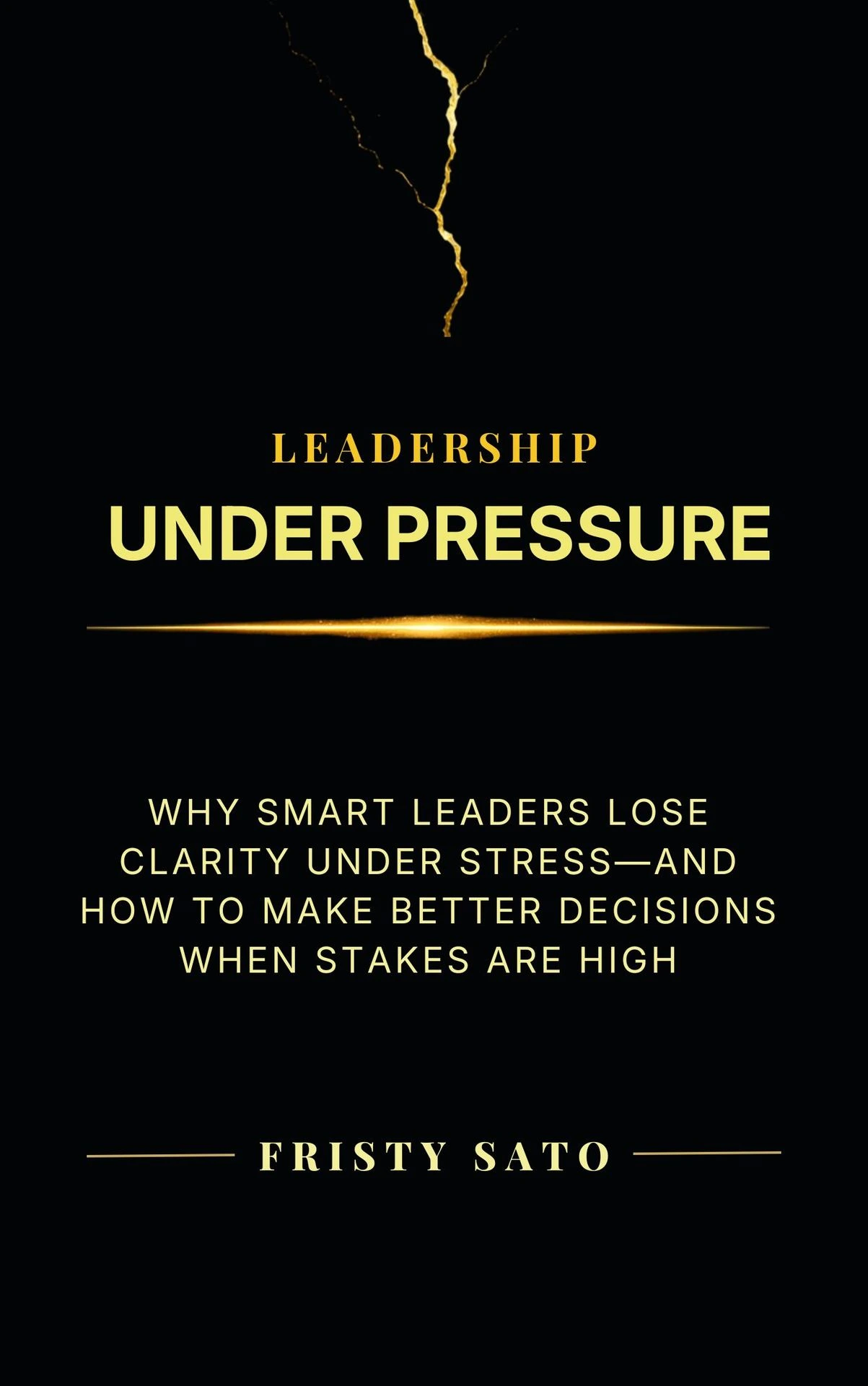
For a deeper look at how stress alters executive behavior, explore our resources on Leadership Under Pressure and Emotional Regulation for Leaders.
How to Build Psychological Safety
You cannot build psychological safety with a poster in the breakroom. It requires a deliberate, systematic sequence of self-audit and behavioral shifts.
Step 1: Examine what happens when people speak honestly
Ask yourself: What actually happens here when someone tells us something we do not want to hear?
Step 2: Examine your own leadership reactions
Look honestly at defensiveness, blame, withdrawal, control, anger, dismissal, or over-explaining.
Step 3: Make disagreement normal
Explicitly invite different views, but more importantly, respond with curiosity when they appear.
Step 4: Separate mistakes from character
Separate learning from failure from punishment for being imperfect.
Step 5: Reward early information
If people only feel safe reporting problems after they become multi-alarm fires, your culture has a safety deficit.
Step 6: Make decision rights crystal clear
People are less likely to speak and act when they do not know what they are allowed to own.
Step 7: Model appropriate vulnerability
Leaders do not need to overshare personal details. They can simply say: “I don't know,” “I got that wrong,” or “I need another perspective.”
What Leaders Should Stop Doing If They Want More Psychological Safety
Sometimes leadership transformation starts with subtraction rather than addition.
Stop:
punishing people who bring you bad news
reacting defensively to intellectual disagreement
humiliating team members in public or private
pretending to know everything about everything
asking for honesty and then becoming angry when people deliver it
taking responsibility away from people through over-control
rewarding quiet compliance over honest problem-solving
confusing polite agreement with true strategic alignment
treating thoughtful questions as personal resistance
using “open door” policies while keeping your emotional door shut
You cannot ask for honesty and punish people for giving it to you.
Why Psychological Safety Programs Often Fail
Many corporate initiatives stall out because they treat psychological safety as a workshop topic rather than an operational reality. Initiatives fail when organizations:
turn safety into an HR training event
ask employees to “speak up” without changing leader behavior
measure metrics without acting on the results
teach communication scripts while ignoring underlying power dynamics
tell employees to be vulnerable while leaders remain rigidly defensive
focus on individual resilience instead of fixing broken organizational systems
Psychological safety cannot be created through language alone. People believe what the system repeatedly demonstrates over time.
Psychological Safety Is a Leadership Responsibility, Not an Employee Personality Trait
Some employees are naturally vocal; others are quiet and reflective. Do not confuse extroversion with psychological safety. A quiet employee may feel completely safe, while an outspoken employee may simply be comfortable taking social risks.
The better question is: Can different kinds of people participate honestly without having to change their fundamental personality to survive the environment? This is especially vital when building inclusive cultures for high-achieving women and diverse teams.
From Psychological Safety to Emotionally Safe Leadership™
Psychological safety helps us understand the team environment. Emotionally Safe Leadership™ examines the leadership patterns shaping that environment.
Leader's emotional pattern → Leadership response → Team's experience → Psychological safety → Team behavior → Organizational culture.
This is where established psychological research meets a proprietary framework. Psychological safety is an organizational concept; Emotionally Safe Leadership™ explores the inner emotional architecture of the leader who makes that safety possible.
From Psychological Safety to an Emotionally Safe Organization™
An organization cannot depend entirely on individual leaders being emotionally skilled. Systems matter deeply. Incentives, workloads, reporting structures, promotion systems, performance management, decision rights, and organizational hierarchy all influence whether truth can travel safely.
You cannot create lasting psychological safety by asking individual leaders to behave differently while company systems continuously reward the opposite behavior. That brings us to the broader architecture of the Emotionally Safe Organization™.
The Psychological Safety Spectrum
Organizations rarely sit neatly in a binary of "safe" or "unsafe." They operate on a spectrum:
Low Safety: Fear → Silence → Self-protection → Information hiding.
Emerging Safety: Caution → Selective openness → Some disagreement → Limited trust.
Strong Safety: Openness → Healthy disagreement → Learning → Ownership → Better decisions.
Moving along this spectrum requires looking beyond surface behaviors to examine the underlying emotional patterns of the leadership team.
The Future of Psychological Safety
Psychological safety should not become another corporate buzzword that people repeat without understanding. The future question is not simply: “How do we make employees feel safe?”
The real question is: “What kind of leadership and organizational environment makes it possible for people to tell the truth, think independently, learn from mistakes, and challenge what is not working?”
The goal is not a workplace without friction or discomfort. The goal is a workplace where people do not need to protect themselves from unnecessary interpersonal threat in order to contribute their best work.
Final Reflection
For leaders asking where to begin, start by turning the mirror inward:
What happens when someone disagrees with you?
What happens when someone makes a mistake?
What happens when someone tells you something you do not want to hear?
What happens when someone says, “I don't know”?
What have your everyday reactions taught your team about what is safe?
Psychological safety is not created by telling people they are safe. It is created through the repeated experience of discovering that they can tell the truth and remain respected.
The emotional patterns underneath leadership behavior become part of the psychological environment everyone else has to work inside. When leaders become aware of those patterns, leadership changes—and so does the culture around them.
Discover Your Leadership Pattern
If your team doesn't seem to trust you, the answer may not simply be "communicate better." Take the Emotionally Safe Leadership Assessment™ to uncover the emotional patterns shaping your leadership.
Take a Free Leadership Course
Explore The Hidden Emotional Patterns Shaping Your Leadership™ course to understand why capable teams become passive and dependent.
Take The Hidden Emotional Patterns Shaping Your Leadership™ Free Course on Udemy
Ready to dismantle the hidden operational bottlenecks in your organization?
Book a private, 90-minute Leadership Pattern Breakthrough™ Session with Fristy Sato to map your nervous system patterns directly against your current org chart and team performance.
Continue Exploring Emotionally Safe Leadership™
If this article articulated something you have been experiencing within your own career, you are not alone. The journey toward sustainable, high-impact authority begins by exploring the underlying systems that govern how we show up.
Featured Topics
Healthy Workplace Culture
Team Trust
Psychological Safety
Employee Engagement
Ownership and Accountability
High-Performing Teams
Innovation and Creativity
Leading Organizational Change
Organizational Resilience