You achieved what you once wanted.
You became capable. You built the career. You earned the title. You created the business. You became the person everyone could depend on.
And yet, something feels wrong.
You are successful. But you are tired.
You are proud. But you cannot slow down.
You have more freedom. But somehow you feel less free.
We often assume the answer is to become better at managing success—to optimize our schedules, delegate more tasks, or find a better productivity app. But what if the deeper question is whether the way you created success required you to abandon yourself?
Success should expand your life, not slowly replace it.
What Does “Success Without Self-Abandonment” Mean?
When we talk about building achievement without losing yourself, it is equally important to define what this concept does not mean.
Success without self-abandonment does not mean:
Never sacrificing or postponing immediate comfort for a long-term goal.
Avoiding difficult choices or heavy responsibilities.
Always putting your personal desires ahead of collective commitments.
Refusing to work hard or lowering your performance standards.
Becoming less ambitious, driven, or impactful.
Instead, success without self-abandonment means remaining connected to your core values, health, and sense of self while pursuing something that matters deeply to you.
It requires recognizing the vital difference between healthy sacrifice ("I am consciously choosing this temporary cost because it serves something important to me") and self-abandonment ("I keep overriding my limits, boundaries, and emotional truth because I believe I have no other acceptable choice").
High-Functioning Self-Abandonment
We often imagine self-abandonment as a dramatic event—someone losing their identity in a dysfunctional relationship or collapsing under sudden pressure. But high achievers frequently experience a much more socially rewarded, invisible form: high-functioning self-abandonment.
The high-functioning achiever:
Performs relentlessly and delivers exceptional results.
Takes complete ownership and solves every complex problem.
Stays composed under intense scrutiny.
Supports everyone around them while quietly ignoring their own exhaustion.
Rarely complains or displays vulnerability.
From the outside, they look invincible. But internally, they may have completely stopped listening to what is true for them. Many capable leaders learned competence long before they learned emotional safety, using achievement as a shield against vulnerability.
Commitment vs. Self-Abandonment
To understand how ambition slips into self-abandonment, consider the functional differences in how we relate to our work:
| Commitment | Self-Abandonment |
| I choose this path. | I feel I have no other choice. |
| This goal matters to my values. | I need this outcome to prove my worth. |
| I can reassess and adjust. | I cannot stop or slow down. |
| I can ask for help when needed. | I must carry everything myself. |
| I know the human cost. | I completely ignore the cost. |
| Rest is a restorative choice. | Rest creates intense guilt. |
| My identity is bigger than the outcome. | The outcome entirely determines my value. |
Commitment requires effort. Self-abandonment requires disappearance.
How Success Becomes Self-Abandonment
For many high performers, the slide into self-abandonment follows a predictable arc:
Desire: "I want to build something meaningful and contribute value."
Commitment: "I am willing to invest deep effort to make it happen."
Identity: "I am the reliable person who makes things happen."
The Emotional Contract: "If I stop performing, something vital about my safety or worth may be lost."
Self-Abandonment: "I will override my physical and emotional limits to protect the outcome."
The Heavy Reality: The external achievement exists, but the person has lost access to themselves.
This is where Survival-Based Success™ takes hold. Survival-Based Success™ occurs when achievement stops being an expression of your genuine capabilities and becomes a subconscious strategy for creating internal safety.
Success becomes emotionally expensive long before it becomes financially or professionally rewarding.
The Hidden Emotional Contract
Underneath relentless ambition, many leaders carry an invisible, rigid contract:
"If I am successful, I will finally be safe."
"If I am infinitely useful, I will be valued."
"If I am exceptional, I cannot be rejected."
"If I can handle everything, nobody can criticize me."
The problem is not ambition. The problem is when achievement is tasked with providing something achievement can never reliably deliver: fundamental worth, safety, belonging, and emotional security.
The Achievement Loop vs. Sustainable Success
Why do so many successful people struggle to enjoy what they have built?
When success is driven by survival, it triggers an endless treadmill:
Achievement Loop
Goal → Effort → Achievement → Temporary relief → Minimize achievement → New target → More pressure
This is why goalposts continually shift. The moment an achievement is secured, the nervous system realizes it hasn't found permanent safety, so it demands an even bigger target.
By contrast, sustainable success integrates the win:
Sustainable Success Loop
Meaning → Goal → Action → Achievement → Integration → Appreciation → Reflection → Choice → Next direction
The ability to pause, integrate, and genuinely enjoy success is not laziness—it is an essential component of Success Safety™, or the capacity to hold achievement, recognition, and ease without immediately manufacturing a new crisis.
The ability to enjoy success is not laziness. It is part of being able to hold success.
When Rest Starts to Feel Unsafe
For many high achievers, slowing down is not simply a challenge of scheduling—it is an experience of acute internal friction.
You may recognize this dynamic in everyday moments:
A persistent sense of guilt during rest, as if taking time off is a violation of responsibility.
A spike of anxiety during downtime or open, unscheduled weekends.
A quiet, background fear of feeling behind, regardless of what has already been accomplished.
Compulsive productivity, where even leisure activities must be tracked, measured, or turned into a goal.
An inability to enjoy holidays, spend time away from your desk, or disengage completely.
The reflex of checking work communications constantly, even when no urgent issues exist.
The automatic impulse to create new projects immediately after finishing a major milestone, long before the previous win has been integrated.
We often assume rest is difficult because someone has poor time management or needs better calendar discipline. But time management is rarely the root issue.
When your identity has been built around constant usefulness, stillness can feel unfamiliar.
High-Functioning Performance Loop:

Identity Tied to Utility ⟶ Activity Used as Emotional Buffer ⟶ Stillness Arrives ⟶ Buffer Drops ⟶ Internal Discomfort ⟶ Urgent Return to Work
When work and achievement have served as subconscious mechanisms for maintaining internal control, stopping forces a person to meet themselves without achievement as a distraction. The discomfort experienced during rest is not a sign of poor discipline; it is the natural reaction of an identity that feels safe only while producing.
Until resting ceases to carry an implicit threat to your sense of worth, downtime will continue to feel like something that must be earned, justified, or quickly replaced with the next objective.
The Seven Survival Identities and Self-Abandonment
Through our work on the Seven Survival-Based Leadership Patterns™, we see how specific leadership identities manifest unique forms of self-abandonment:
Self-abandonment looks like:
carrying everyone's problems
putting everyone's needs before their own
rescuing
over-functioning
believing everything depends on them
Hidden contract:
“If I do not hold everything together, something will fall apart.”
Cost:
Loss of boundaries, exhaustion, dependency around them.
Self-abandonment looks like:
suppressing vulnerability
never admitting uncertainty
refusing support
ignoring emotional needs
treating endurance as strength
Hidden contract:
“I must be strong enough not to need anyone.”
Cost:
Isolation and emotional disconnection.
Self-abandonment looks like:
doing everything because they can
taking over
solving before others can try
becoming indispensable
carrying too much cognitive load
Hidden contract:
“If I can do it, I should do it.”
Cost:
Bottlenecking, exhaustion, underdeveloped teams.
Self-abandonment looks like:
refusing help
avoiding dependence
doing everything alone
struggling to receive
keeping emotional distance
Hidden contract:
“Depending on others is dangerous.”
Cost:
Isolation and structural fragility.
Self-abandonment looks like:
controlling everything
avoiding risk
preventing others from making mistakes
sacrificing freedom for certainty
Hidden contract:
“If I stay vigilant enough, nothing bad will happen.”
Cost:
Rigid systems and limited growth.
Self-abandonment looks like:
endless credentials
over-preparation
overworking
delaying visibility
constantly proving competence
Hidden contract:
“I need more evidence before I am allowed to fully own my authority.”
Cost:
Delayed visibility and chronic self-monitoring.
The Achievement-Driven Leader™
This should receive especially strong attention.
Self-abandonment looks like:
moving goalposts
never celebrating
measuring worth through results
chasing the next milestone
feeling guilty when not producing
Hidden contract:
“My value depends on what I achieve.”
Cost:
Chronic exhaustion and inability to experience enoughness.
The Self-Abandonment Paradox
Here lies one of the deepest paradoxes of leadership and high achievement: The very behaviors that helped you succeed may eventually prevent you from fully experiencing the success you created.
This is why simple advice like "just step back" or "just delegate more" almost always fails. It treats high-functioning behaviors as simple habits, ignoring the fact that these exact strategies built your career, established your credibility, and kept things safe for years.
When a protective behavior produces real-world success, the pattern doubles down. What began as a strategic strength turns into an inescapable loop:
Responsibility ──► Success ──► More Responsibility ──► Inability to Rest
Competence     ──► Success ──► Team Dependency     ──► Inability to Step Away
Independence   ──► Success ──► Refusal to Receive  ──► Chronic Isolation
Perfectionism  ──► Success ──► Higher Standards    ──► Relentless Pressure
Achievement    ──► Success ──► Moving Goalposts    ──► No Sense of "Enough"
Control        ──► Success ──► Operational Friction──► Inability to Scale
Proving        ──► Success ──► Higher Stakes       ──► Never Feeling Legitimate
Notice the underlying trap across each identity:
The Responsible Leader™ takes on so much that their reward for carrying the load is simply being given more to carry.
The Capable Leader™ makes solving problems look so effortless that everyone steps back, leaving them unable to take a single day off without the system stalling.
The Self-Reliant Leader™ builds an impressive career alone, only to find that their deeply ingrained reluctance to ask for help locks them into structural isolation.
The Achievement-Driven Leader™ reaches the summit they worked years to climb, only to discover their mind has already moved the target to the next peak before their feet have even landed.
This is why high achievers find themselves feeling trapped inside systems they built with their own hands. The behavior isn't failing—it's over-succeeding.
Recognizing this paradox is the turning point. It helps you see that stepping out of self-abandonment isn't about throwing away your talent, responsibility, or drive. It's about dismantling the invisible emotional requirement that forces you to disappear inside your work just to keep it going.Here lies one of the deepest paradoxes of leadership and high achievement: The very behaviors that helped you succeed may eventually prevent you from fully experiencing the success you created.
This is why simple advice like "just step back" or "just delegate more" almost always fails. It treats high-functioning behaviors as simple habits, ignoring the fact that these exact strategies built your career, established your credibility, and kept things safe for years.
When a protective behavior produces real-world success, the pattern doubles down. What began as a strategic strength turns into an inescapable loop:
Responsibility ──► Success ──► More Responsibility ──► Inability to Rest
Competence     ──► Success ──► Team Dependency     ──► Inability to Step Away
Independence   ──► Success ──► Refusal to Receive  ──► Chronic Isolation
Perfectionism  ──► Success ──► Higher Standards    ──► Relentless Pressure
Achievement    ──► Success ──► Moving Goalposts    ──► No Sense of "Enough"
Control        ──► Success ──► Operational Friction──► Inability to Scale
Proving        ──► Success ──► Higher Stakes       ──► Never Feeling Legitimate
Notice the underlying trap across each identity:
The Responsible Leader™ takes on so much that their reward for carrying the load is simply being given more to carry.
The Capable Leader™ makes solving problems look so effortless that everyone steps back, leaving them unable to take a single day off without the system stalling.
The Self-Reliant Leader™ builds an impressive career alone, only to find that their deeply ingrained reluctance to ask for help locks them into structural isolation.
The Achievement-Driven Leader™ reaches the summit they worked years to climb, only to discover their mind has already moved the target to the next peak before their feet have even landed.
This is why high achievers find themselves feeling trapped inside systems they built with their own hands. The behavior isn't failing—it's over-succeeding.
Recognizing this paradox is the turning point. It helps you see that stepping out of self-abandonment isn't about throwing away your talent, responsibility, or drive. It's about dismantling the invisible emotional requirement that forces you to disappear inside your work just to keep it going.
Success Has an Internal Cost
A leader can meticulously measure revenue, titles, followers, and business growth while completely failing to track their internal reserves:
Energy, health, and vitality.
Emotional capacity and presence.
Trust in relationships and creative freedom.
The ability to rest, receive, and walk away.
What did your success cost you that nobody included in the metric?
Two leaders can achieve the exact same external results while experiencing entirely different internal realities. True capacity is not measured solely by what you can produce, but by whether you can sustain production without eroding the human being behind the work.
The Success Cost Equation
To understand why high-functioning self-abandonment is so dangerous, we can look at achievement through a simple conceptual framework.
Traditional corporate models operate on a basic equation:
Success = Results
A more complete human equation accounts for sustainability:
Success = Results + Human Capacity to Sustain Them
From here, we can evaluate the Hidden Success Cost:
External Achievement − Internal Cost = Quality of Success
Note: This is not a scientific mathematical formula, but a conceptual lens.
Two leaders can achieve the exact same external business results—hitting revenue targets, securing market share, scaling operations—while experiencing completely different internal realities. One is expanding their capacity; the other is paying for the result by quietly consuming their health, relationships, and sense of self.
Success Without Self-Abandonment and Boundaries
When people discuss boundaries in professional spaces, they often reduce them to simply "saying no" to extra meetings. But for high achievers, boundaries protect much more than time:
Energy & Attention: Guarding your focus from trivial fires so you can address what actually matters.
Values & Integrity: Ensuring your operational decisions align with what you deeply believe.
Relationships & Health: Maintaining physical vitality and human connection outside of work.
Identity: Keeping parts of yourself alive that are not tied to your productivity or title.
The deeper struggle for high achievers is rarely a lack of tactical boundary-setting tools. The struggle is that disappointing someone else often feels far more threatening than disappointing themselves.
This dynamic powers the Responsible Leader™ and Proving Leader™ identities, where keeping everyone else happy is unconsciously used as armor against internal anxiety.
Success Without Self-Abandonment and Delegation
This personal dynamic directly dictates how a leader operates within an organization. If success depends on you personally carrying every operational weight, you have not created freedom—you have simply built yourself a larger, more stressful job.
When a leader over-functions, a predictable organizational loop forms:
Leader over-functions → team waits → leader trusts less → leader controls more → team owns less → leader carries more.
Breaking this cycle requires moving away from control and toward the pathway established in our Ownership and Accountability framework:
Clarity → Authority → Trust → Ownership → Accountability → Capacity.
Success Without Self-Abandonment and Visibility
Many leaders want the business impact of success, but they dread the emotional exposure that comes with high visibility. They carry unspoken fears of:
Public criticism, judgment, or being misunderstood.
Disappointing stakeholders or taking up "too much space."
Being unmasked as incompetent or unprepared.
When visibility feels threatening, leaders often over-prepare, over-explain, rehearse every sentence, or hide authentic disagreement behind corporate polish.
Sometimes the most important leadership question is not "How do I become more visible?" but rather: "Can I remain connected to myself while being seen?"
This is where cultivating Visibility Safety™ becomes essential.
Success Without Self-Abandonment and Receiving
Many high achievers know how to work, build, solve, achieve, and give relentlessly. Yet they struggle profoundly to receive:
Receiving support, care, and help from peers.
Receiving recognition and praise without deflecting it.
Receiving rest without feeling guilty or lazy.
Receiving wealth, ease, and financial success without immediately reinvesting every dollar into a new emergency.
This points to the core concept of Success Safety™: the capacity to hold abundance, ease, and achievement once they arrive without automatically manufacturing pressure to prove you deserve them.
Can you receive a win without feeling that you must immediately repay it through overwork?
Self-Abandonment in Leadership
Social and executive pressures often create conflicting expectations for leaders:
Be highly competent, but never intimidating.
Be ambitious, but always agreeable.
Be decisive, but endlessly relational.
Lead strongly, but remain effortlessly likable.
Perform excellence, but never appear to struggle.
What happens when the effort to meet every external expectation becomes more important than staying connected to your own truth?
Self-Abandonment Versus Healthy Responsibility
Because high achievers deeply value accountability, they often fear that dropping self-abandonment means becoming irresponsible or letting people down. We must separate the two:
Self-Abandonment: "Everyone else's demands, comfort, and expectations matter infinitely more than mine."
Healthy Responsibility: "I care deeply about the outcome, and I also recognize my own human limits, needs, authority, and capacity."
Healthy leadership does not require self-sacrifice as proof of commitment.
Success Without Self-Abandonment Across Four Levels
Self-abandonment is not merely a personal wellness issue; it cascades through every layer of an enterprise:
Personal: Impacts identity, emotional regulation, boundaries, rest, self-trust, decision-making, and internal wellbeing.
Leadership: Distorts delegation, communication, authority, visibility, conflict navigation, and leadership presence.
Team: Fosters dependency, stifles psychological safety, reduces initiative, and caps overall team capacity.
Organizational: Undermines scalability, succession planning, cultural resilience, retention, and innovation.
The Self-Abandonment Loop™ vs. The Self-Connected Success Loop™
Survival loop
Expectation → Pressure → Self-Override → Performance → Achievement → Temporary Relief → Higher Expectation → More Self-Override
Self-Connected Success Loop™
Values → Choice → Capacity → Action → Results → Integration → Recovery → Reflection → Intentional Growth
In the survival loop, success dictates who you are. In the self-connected loop, you remain anchored to yourself while creating sustainable results.
The Five Conditions for Success Without Self-Abandonment
Self-Connection + Choice + Capacity + Boundaries + Emotional Safety = Success Without Self-Abandonment
Self-Connection: Knowing what you actually value, need, and feel beneath the noise of expectations.
Choice: Distinguishing between "I genuinely choose this" and "I must do this to feel safe or worthy."
Capacity: Aligning your ambition with real human endurance rather than infinite fantasy.
Boundaries: Erecting protective structures around your energy, time, and identity.
Emotional Safety: Building internal resilience so visibility, rest, success, and uncertainty do not trigger survival behaviors.
What Success Without Self-Abandonment Looks Like
True alignment is observable in daily leadership:
Achieving meaningful goals without constantly needing to prove your worth.
Leading a high-impact organization without carrying every operational burden yourself.
Resting without needing permission or drowning in guilt.
Saying no cleanly without collapsing into anxiety or over-explaining.
Accepting help and receiving success without immediately raising the bar out of panic.
Allowing your life to expand in proportion to your career rather than shrinking.
Success should increase your capacity to live, not decrease your capacity to feel alive.
Signs You May Be Succeeding Through Self-Abandonment
- You are achieving your targets, but you feel chronically exhausted.
- Stillness and unscheduled time make you deeply uncomfortable.
- You feel guilty the moment you stop producing.
- You cannot enjoy an achievement for more than a few days before moving the goalposts.
- People constantly depend on your oversight, making it difficult to step away.
- You feel personally responsible for everyone else's emotional comfort.
- Your external resume looks exceptional, but your internal experience feels empty or trapped.
How to Begin Changing the Pattern
- Name the real cost: Inventory what your current definition of success has required you to abandon.
- Separate desire from protection: Ask yourself honestly: Do I still want this goal, or am I using it to protect an identity?
- Uncover your emotional contract: Identify what you secretly believe success will finally give you.
- Rebuild active choice: Ask: "If I already knew I was inherently enough, what would I choose to do next?"
- Practice receiving: Allow support, rest, and recognition to land without immediately compensating for them.
The Deeper Transition: From Armor to Capacity
To build a life and business that do not require your own disappearance, you must move through a fundamental shift in how you relate to your own power.
For most of your career, high performance has been powered by a linear, survival-driven loop:
Pressure → Performance → Achievement → Relief → More Pressure
In this old model, pressure acts as the primary fuel. Performance is the mechanism used to manage that pressure, achievement provides a fleeting moment of relief, and that brief respite is instantly followed by the demand for a higher target.
True leadership maturity is the process of dropping survival armor so real structural capacity can take over.
When you dismantle the emotional contract that ties your worth to your endurance, you unlock a fundamentally different blueprint for leadership and success:
Safety → Capacity → Choice → Leadership → Impact → Sustainable Success
In this new framework, you begin with internal safety—the baseline knowledge that your worth and security are not on the line every time you make a decision or step into the room. From safety, your actual human and strategic capacity expands. You lead from deliberate, conscious choice rather than automatic self-protection.
Preserving Your Core Strengths
It is crucial to understand: The goal is not to destroy the qualities that created your success.
Moving beyond self-abandonment does not mean becoming passive, lowering your standards, or pretending you no longer care about excellence. You keep every single asset that built your career:
Your ambition and drive to build meaningful things.
Your sharp intelligence and analytical depth.
Your rigorous discipline and work ethic.
Your deep sense of responsibility to your mission and people.
Your high standards for quality and execution.
Your courage to make difficult decisions under uncertainty.
Your bold vision for what is possible.
Your exceptional competence and strategic skill.
What changes is not the capability itself, but the underlying engine.
You remove the invisible, survival-based contract underneath those traits—the subtle belief that if you drop any of them for a moment, you will lose your safety, your value, or your right to belong.
When your ambition is no longer charged with proving your worth, it stops consuming you. It shifts from heavy armor into clean, sustainable authority.
Connection to Emotionally Safe Leadership™
Traditional success development asks: How can I achieve more?
Sustainable success asks: How can I keep achieving without burning out?
Emotionally Safe Leadership™ asks the deeper question: What emotional pattern makes me believe I have to abandon myself to succeed?
The goal is not to destroy the ambition, discipline, and intelligence that built your career. The goal is to remove the survival contract underneath them, allowing you to build a life you do not have to abandon yourself to keep.
Success Safety™ and Expansion Safety™
To understand how high achievers move beyond self-abandonment, we need to examine two foundational capacities within Emotionally Safe Leadership™: Success Safety™ and Expansion Safety™.
Self-Abandonment ──► Success Safety™ ──► Expansion Safety™ ──► Emotionally Safe Leadership™
Success Safety™: The Capacity to Receive and Hold
Many leaders know how to fight for outcomes, but they have never built the internal safety required to receive them once they arrive.
Success Safety™ is the capacity to hold:
Achievement: Enjoying a milestone without immediately minimizing it.
Money & Resources: Experiencing financial security without feeling an impulse to reinvest every dollar into a new crisis.
Recognition: Accepting praise and authority without deflecting or feeling performative.
Visibility: Being seen in your full expertise without feeling exposed.
Ease & Support: Allowing work to feel spacious without assuming something must be wrong.
Influence: Holding real power without needing to dominate or apologize for it.
Without Success Safety™, reaching a goal doesn't create relief. It simply creates panic, prompting the nervous system to manufacture new pressure just to feel familiar again.
Expansion Safety™: The Capacity for Sustainable Scale
While Success Safety™ allows you to hold what you have built, Expansion Safety™ governs how you grow.
Expansion Safety™ is the capacity to scale:
Responsibility & Leadership: Taking on larger strategic scopes without taking on more personal strain.
Business & Organizational Complexity: Navigating higher stakes without sacrificing physical health, key relationships, or internal peace.
Impact & Reach: Expanding your footprint while remaining anchored to your core truth and values.
When a leader lacks Expansion Safety™, every new level of growth requires a harder, more hyper-vigilant version of themselves. Expansion Safety™ ensures that growth expands your life rather than consuming the human being leading it.
What This Does NOT Mean
To keep this framework grounded and strategically clear, we must be precise about what success without self-abandonment is—and what it isn't.
Success without self-abandonment does NOT mean:
Never working hard or avoiding intense efforts.
Shying away from strategic discomfort or difficult decisions.
Putting your personal desires first in every situation.
Refusing legitimate leadership responsibility.
Abandoning ambitious, high-stakes goals.
Becoming passive or settling for mediocrity.
Lowering your performance standards or standards for your team.
Avoiding all forms of short-term sacrifice for long-term vision.
Expecting business growth or leadership to feel easy.
Eliminating stress entirely from your environment.
Removing clear accountability from your organization.
Doing only what feels comfortable or convenient.
The goal is not a life without pressure. The goal is a life where pressure does not automatically require you to abandon yourself.
Leadership inevitably involves high stakes, uncertainty, and complex trade-offs. The distinction lies in whether you navigate those realities from a place of grounded choice or from an automatic survival mechanism that treats your own wellbeing as disposable.
Success Without Self-Abandonment at Organizational Scale
Self-abandonment is not merely a personal coping style—it is an organizational culture issue.
When an enterprise unintentionally rewards leaders for overriding their limits, it creates an environment built on fragility disguised as performance.
What Happens When Systems Reward Self-Abandonment?
Heroic Leadership: Operations rely on individuals pulling off unsustainable rescues rather than clean processes.
Constant Availability: Boundaries erode, turning 24/7 responsiveness into an unspoken metric of commitment.
Burnout as a Status Symbol: Exhaustion is treated as proof of dedication and executive capability.
Over-Functioning & Bottlenecks: Capable leaders carry too much, creating severe operational dependencies.
Stifled Delegation & Weak Ownership: Teams wait for permission because leaders struggle to hand over real authority.
Hidden Capacity Problems: Systems look successful on the surface while quietly bleeding talent and key institutional knowledge.
Fragile Succession Pipelines: Rising leaders look at executive roles and decide the personal cost is simply too high.
Building an Emotionally Safe Organization™
Organizations do not become sustainable simply because employees take self-care workshops. Individual wellness tools cannot fix structural over-work.
Building genuine organizational capacity requires systemic alignment:
Clear Authority + Realistic Workloads + Distributed Ownership
                            │
                            ▼
Psychological Safety + High Accountability + Leadership Depth
                            │
                            ▼
           Sustainable Organizational Impact
When an enterprise aligns its operational structures with human capacity, performance ceases to rely on personal sacrifice. The organization scales because its people and systems are built to endure.
Sustainable Performance vs. Unsustainable Performance
The difference between temporary achievement and long-term market leadership comes down to how performance is generated:
| Unsustainable Performance | Sustainable Performance |
|---|---|
| Results are produced by consuming the human beings doing the work. | Results are produced by developing and protecting systemic capacity. |
| Relies on chronic urgency, fear of failure, and over-functioning. | Relies on clear authority, grounded trust, and strategic alignment. |
| Measures output while ignoring the internal cost paid by the team. | Measures output alongside the health and resilience of the system. |
| Breaks down the moment key individuals step away or burn out. | Scales smoothly through distributed ownership and deep leadership reserves. |
If your success requires you to become less healthy, less connected, less present, and less free over time, the question is not simply whether you are successful. The question is whether your model of success is sustainable.
Take the Next Step
Success should expand your life, not slowly require your disappearance. If you recognize that your current model of achievement relies on chronic pressure, over-functioning, or overriding your limits, several pathways are available to deepen your capacity:
Primary Step: Uncover Your Pattern
Start by identifying the specific emotional architecture driving your leadership style and relationship with achievement.
Take the Leadership Patterns Assessment™ Now
Discover which of the seven survival-based leadership patterns shapes how you respond to pressure, delegate, and manage success.
Free Video Course: The Hidden Emotional Patterns Shaping Your Leadership™
If you want to understand the systemic gap between human biology and modern business leadership:
A five-module self-paced course designed to help high achievers shift focus from acquiring more skills to understanding what their nervous system is protecting.
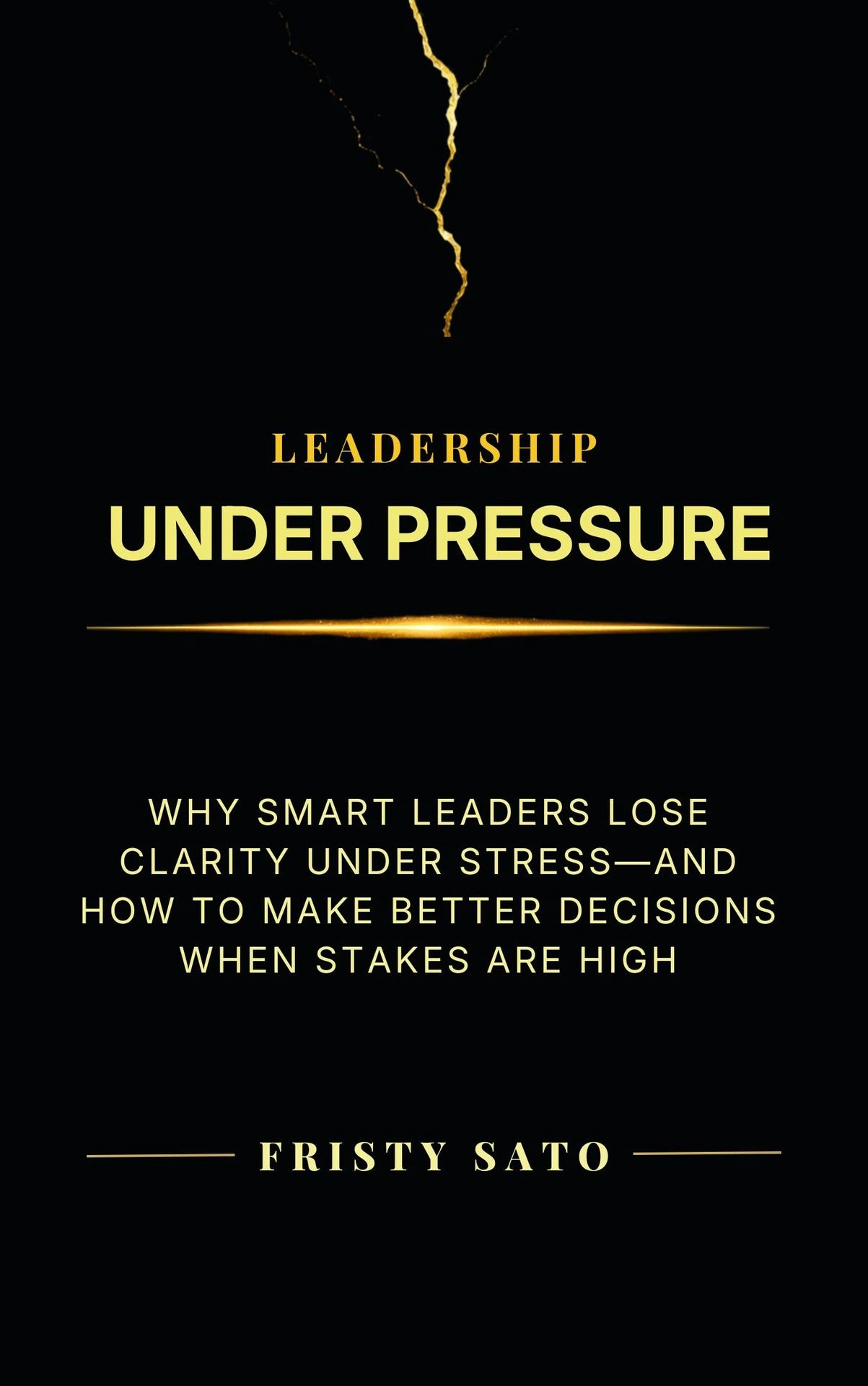
Deeper Reading: Leadership Under Pressure
Master practical frameworks to maintain executive clarity and sound judgment when stakes are high.
Focused Growth: Leadership Pattern Breakthrough™ Session
A focused, 1-on-1 strategic deep-dive designed to isolate your primary survival pattern, eliminate hidden over-functioning, and construct a personalized pathway to sustainable leadership and expansion.
Continue Exploring Emotionally Safe Leadership™
If this article articulated something you have been experiencing within your own career, you are not alone. The journey toward sustainable, high-impact authority begins by exploring the underlying systems that govern how we show up.
Featured Topics