Imagine a leader who delivers results, supports the team through every roadblock, handles difficult decisions with grace, and stays available whenever problems arise. People trust this person to get things done.
Yet behind the scenes, that leader is increasingly exhausted. Decisions keep drifting back to their desk. Delegation feels risky, like rolling the dice. Time to think strategically has completely disappeared. The team relies on their personal judgment for far too many things.
From the outside, the leader appears entirely effective. Inside, the way leadership operates is becoming harder to sustain.
The issue may not be a lack of discipline, resilience, or personal commitment. The issue is that the leadership system depends far too heavily on one person’s ongoing, tireless effort.
A leadership approach can produce strong results and still be unsustainable.
Can you continue creating meaningful results without continually sacrificing your own capacity or weakening the capacity of the people who depend on you? Sustainable leadership requires more than personal wellbeing. It involves how leaders make decisions, distribute responsibility, respond to pressure, build trust, and create the conditions for others to lead.
What Is Sustainable Leadership?
At its core, sustainable leadership is the ability to lead effectively over time while maintaining the human and organizational capacity needed for continued performance, sound judgment, healthy relationships, learning, and adaptation.
Sustainable leadership includes:
Making sound decisions without depending on constant, manufactured urgency.
Maintaining clear priorities as operational demands expand.
Building deep trust and shared responsibility across teams.
Supporting people effectively without stripping away their ownership.
Managing pressure without making chronic overwork the default operating model.
Developing leadership depth well beyond a single individual.
Creating results without repeatedly depleting the people responsible for delivering them.
Sustainable leadership does not mean avoiding difficult decisions, lowering performance standards, eliminating stress, or expecting leadership to feel easy.
Sustainable leadership is not about making leadership less demanding. It is about making effective leadership possible over time.
Why Sustainable Leadership Matters
Leadership responsibilities naturally expand as a business grows, a team becomes more complex, or an organization navigates market changes.
A leader who once succeeded through personal expertise, lightning-fast decisions, and sheer individual effort will eventually find that those same habits are no longer enough. Trying to personally oversee a growing, complex enterprise leads directly to predictable consequences:
Decision fatigue and reduced strategic clarity.
Dangerous dependence on a single leader.
Weak delegation and limited team ownership.
Lower trust and a reluctance among team members to challenge flawed assumptions.
Burnout and the quiet departure of experienced talent.
Zero time left for big-picture thinking, innovation, and systemic learning.
These outcomes become increasingly likely when a leader’s approach fails to evolve with the complexity of the organization.
Leadership must grow with the complexity it creates. Otherwise, success can become the source of the next big problem.
Sustainable Leadership vs. Short-Term Performance
A leader can meet a looming deadline by working late, take direct control to resolve a messy conflict, or personally fix a team's mistake. These actions are often necessary in an isolated emergency.
The real test is what happens when those emergency behaviors become your default operating model.
| Short-Term Performance Focus | Sustainable Leadership |
| Solves the immediate problem | Solves the problem and examines recurring root causes |
| Depends entirely on personal effort | Develops shared capability across the team |
| Prioritizes speed in every situation | Balances speed with sustainable judgment |
| Takes work back when others struggle | Supports learning and appropriate ownership |
| Measures success strictly by immediate results | Considers results and the capacity to repeat them |
| Treats personal recovery as optional | Recognizes recovery as part of sustained capacity |
| Rewards constant availability | Builds reliable systems and clear boundaries |
| Maintains control through personal involvement | Creates clarity, trust, and distributed authority |
Sustainable leadership does not reject urgency. It simply distinguishes genuine emergencies from a way of working that makes every routine task feel urgent.
The question is not whether you can carry more. It is whether carrying more is still the best way to lead.
Sustainable Leadership Is Not Just About Avoiding Burnout
While burnout is a critical concern, sustainable leadership has a much broader purpose. A leader may feel fine physically and emotionally while still leading in ways that create dependency, silence disagreement, concentrate all decisions at the top, or stunt the growth of everyone around them.
True sustainability spans four interconnected dimensions:
Personal sustainability: Can the leader maintain sound judgment, attention, emotional capacity, and a workable relationship with responsibility?
Relational sustainability: Can trust, honest communication, and healthy disagreement survive heavy pressure?
Team sustainability: Can the team maintain ownership, continuous learning, and high performance without constant rescue?
Organizational sustainability: Can the company continue operating, adapting, and developing without depending excessively on a handful of individuals?
Sustainable leadership measures the quality and durability of the entire leadership ecosystem, not just how the leader feels on a Tuesday morning.
The Hidden Cost of Being the Leader Who Can Handle Everything
Every organization knows this leader. They always have the answer, step in when others fall short, spot every hidden risk, and work harder whenever uncertainty creeps in.
These qualities feel invaluable. But problems start the moment a leader believes everything must pass through them for the work to be safe or successful.
The consequences accumulate quietly:
The leader becomes the ultimate operational bottleneck.
Team members hesitate to take initiative without explicit permission.
Delegation turns into tedious micromanagement rather than a reduction in workload.
Strategic thinking gets crowded out by endless operational triage.
The team never develops independent judgment.
The organization becomes fragile and difficult to scale.
Being indispensable can feel like proof of your value. But if everything depends on you, the organization may be depending on you too much.
The Emotional Patterns Beneath Unsustainable Leadership
Leaders do not respond to responsibility, conflict, uncertainty, or mistakes through raw skill alone. Their behavior is often shaped by what they feel they must protect, prove, or control.
A leader who fears losing control checks every line of code or client email.
A leader who believes strength means never struggling hides their uncertainty.
A leader who ties self-worth to constant achievement finds it impossible to stop.
A leader who feels personally responsible for everyone's comfort takes on burdens that belong to others.
A leader who values radical self-sufficiency rejects support even when drowning.
We often assume leaders become exhausted simply because they have too much to do. But frequently, they are also carrying an internal emotional rule telling them they cannot safely do less, ask for help, or let someone else take the lead.
The Seven Survival-Based Leadership Identities
Under pressure, familiar leadership patterns often harden into rigid survival identities:
| Leadership Identity | Possible Unsustainable Pattern | What Sustainable Leadership Requires |
| The Responsible Leader | Absorbs everyone's problems and feels accountable for every outcome | Shared responsibility and clear operational boundaries |
| The Strong Leader | Hides uncertainty and carries heavy pressure completely alone | Honest communication and the ability to receive support |
| The Self-Reliant Leader | Avoids depending on others and centralizes all work | Healthy interdependence and distributed capability |
| The Protective Leader | Uses tight control to prevent any possible mistake | Trust, cultivated judgment, and room for calculated risk |
| The Capable Leader | Becomes the sole person who must solve every complex problem | Developing other people's ability to decide and act |
| The Proving Leader | Over-prepares and overworks to constantly demonstrate worth | Grounded authority that doesn't rely on endless proof |
| The Achievement-Driven Leader | Keeps raising the bar without allowing recovery or enoughness | Meaningful ambition paired with sustainable capacity |
These are coping patterns, not fixed personality types. They help us recognize how our leadership morphs under stress. Sustainable leadership doesn't demand that you become a completely different person; it asks you to develop more choices beyond your default survival reflexes.
Sustainable Leadership Under Pressure
Pressure narrows attention, accelerates urgency, and amplifies familiar behavioral habits. Some leaders become hyper-controlling; others withdraw, delay tough decisions, over-explain, rescue their teams, or push blindly forward.
Sustainable leadership is not proven when everything is easy. It becomes visible in what happens to your judgment, relationships, and behavior when the stakes rise.
A sustainable leader can still move quickly and make grueling choices. The difference lies in the ability to separate real external urgency from internal emotional urgency, seek out relevant information, and consciously choose a response rather than automatically looping through a familiar stress pattern.
Emotional Regulation and Leadership Capacity
Emotional regulation is simply the ability to notice and work with your internal responses so they don't automatically dictate your external behavior.
For a leader, this capacity changes everything:
Staying fully attentive during charged, difficult conversations.
Thinking clearly when critical information is missing.
Catching how artificial urgency is warping your decision-making.
Receiving direct disagreement without immediate defensiveness.
Addressing mistakes without creating paralyzing fear across the team.
The goal is never to become a robotic leader who feels zero pressure. It is to become a leader whose personal pressure does not automatically become everyone else's operational crisis.
Sustainable Leadership Requires More Than Personal Resilience
Personal resilience helps leaders navigate rough patches. But mindfulness and grit cannot fix unclear roles, inadequate staffing, constant interruptions, conflicting priorities, or an organizational culture where every decision requires sign-off from the very top.
Sustainable leadership requires balancing three layers:
Personal capacity: Your ability to think clearly, recover, and stay connected to your best judgment.
Leadership practice: How you make decisions, distribute responsibility, communicate, and manage competing demands.
Organizational conditions: Whether structure, resources, incentives, and culture make effective leadership genuinely possible.
You cannot create sustainable leadership by teaching leaders to tolerate more of what makes their leadership unsustainable.
Delegation, Trust, and Shared Ownership
Leaders often struggle to delegate because they fear shoddy execution, inconsistent quality, lost control, or the extra work required to fix a botched outcome.
Effective delegation isn't about dumping tasks over the fence. It requires a clear structure:
A well-defined, agreed-upon outcome.
Clear decision rights and operational authority.
Appropriate resources, tools, and support.
Transparent boundaries and standards.
Safe room to learn and make reasonable mistakes.
Honest feedback and accountability.
A leader who hands out tasks but retains every major decision hasn't distributed responsibility at all; they’ve just created more administrative overhead. When knowledge and decision-making are genuinely distributed, the organization becomes resilient and independent.
Sustainable Leadership and Psychological Safety
People take genuine ownership when they can raise concerns, admit mistakes, question flawed assumptions, and ask for help without fearing unnecessary punishment.
A leader who reacts defensively to bad news or swoops in to take over whenever someone struggles inadvertently teaches the team to stay quiet and dependent. Sustainable leadership pairs psychological safety with clear, unwavering expectations. Safety without accountability breeds avoidance; accountability without safety breeds fear.
Sustainable Leadership and High-Performing Teams
A leader's primary job is not to produce results through brute personal effort. It is to architect the conditions where the team can independently produce results, solve complex problems, and adapt to change.
Team A meets its goals because the leader constantly intervenes, puts out fires, answers every question, and works past capacity.
Team B meets its goals because responsibilities are crystal clear, people exercise sound judgment, trust is robust, and the leader actively develops team capability.
Both teams may hit their quarterly targets. Only the second team is built to sustain that performance as complexity scales.
Sustainable Leadership and Healthy Workplace Culture
Everyday leadership behavior teaches people what an organization truly values.
If leaders praise constant availability, people learn that being reachable 24/7 matters more than protecting mental capacity. If leaders reward heroic firefighting, employees learn to wait until minor issues become explosive crises.
Over time, these habits harden into workplace culture. Sustainable leaders help build environments where high standards coexist with sustainable workloads, where problems are surfaced early, and where rest is treated as a foundational requirement for excellence rather than a sign of weak commitment.
Sustainable Leadership During Organizational Change
Change spikes uncertainty, increases decision loads, and ramps up emotional pressure. Unprepared leaders often respond by tightening control, hoarding information, or working around the clock.
Sustainable leadership during transition looks entirely different:
Communicating transparently about what is known and what remains uncertain.
Acknowledging real trade-offs and risks candidly.
Setting realistic priorities and human timelines.
Involving employees meaningfully in shaping solutions.
Protecting operating capacity so change doesn't derail daily execution.
Sustainable leadership doesn't pretend change is painless; it helps people navigate transitions without unnecessary exhaustion or panic.
Sustainable Leadership and Organizational Resilience
While sustainable leadership focuses on how leadership is practiced over time, organizational resilience focuses on how the entire system responds to disruption.
Sustainable leadership directly feeds resilience by sharing knowledge, developing leadership depth, encouraging early reporting of risks, and stripping away single-point dependencies. It helps create the exact conditions where organizational resilience can take root and flourish.
Sustainable Leadership and Sustainable Success
The three pillars of sustainability in Fristy’s framework work in tandem:
Sustainable Ambition examines the emotional engine behind growth and achievement.
Sustainable Leadership examines how people exercise leadership over time.
Sustainable Success examines whether business results can continue without consuming the human capacity required to produce them.
Sustainable leadership is the vital bridge between wanting meaningful results and building a system capable of sustaining them for the long haul.
Sustainable Leadership Is Not the Same as Being Less Ambitious
Sustainable leadership is not an argument for lower standards, sluggish growth, or shrinking responsibility. Leaders can still pursue bold goals, make tough calls, push hard during critical sprints, and lead ambitious organizations.
The crucial difference is whether your leadership approach adapts as demands scale—or whether it relies entirely on escalating pressure and personal sacrifice.
The goal is not to make leadership smaller. It is to make leadership capable of holding more without requiring everyone to sacrifice more.
How to Recognize Unsustainable Leadership
Take an honest inventory of your current leadership rhythm. Do any of these signs sound familiar?
Important decisions repeatedly loop back to you for final approval.
You struggle to disconnect on vacation or weekends without worrying that things will break.
Delegation feels like more checking and correcting than actual relief.
Your team hesitates to make a move without checking in first.
You have virtually zero time for strategic, long-term thinking.
The same operational problems recur month after month without systemic fixes.
You feel a persistent twinge of guilt whenever you ask for support.
People around you hide mistakes or delay delivering bad news until it's an emergency.
Workload continually expands, but responsibilities are never redistributed.
Your personal availability has become essential to day-to-day operations.
The organization struggles to function smoothly whenever you step away.
These signs aren't character flaws; they are operational feedback. They highlight where your leadership system currently relies too heavily on your personal bandwidth.
How to Build Sustainable Leadership
Transitioning to sustainable leadership is a systematic practice, not a quick mindset hack:
Examine what your leadership depends on: Map out the decisions, relationships, and processes that require your constant, direct involvement. Separate essential leadership duties from work others should be owning.
Notice your pressure pattern: When demands spike, do you micromanage, overwork, rescue, or withdraw? Spotting your default stress reflex gives you the power to choose a different response.
Clarify what truly matters: Ruthlessly separate essential outcomes from legacy habits, redundant meetings, and work that no longer moves the needle.
Distribute responsibility: Hand over clear outcomes, complete with decision rights, necessary resources, and the psychological safety to learn through trial.
Build trust and accountability together: Make it safe to raise problems early while holding clear, predictable standards for execution.
Protect leadership capacity: Carve out protected time for reflection, strategic planning, and recovery. Stop treating personal endurance as your primary management tool.
Develop the leadership system: Invest in developing managers, documenting workflows, clarifying decision rights, and building deep organizational bench strength.
Review what happens under pressure: Regularly evaluate whether your adjustments are successfully reducing dependency, improving decision quality, and protecting long-term capacity.
Measuring Sustainable Leadership
True progress isn't measured by how busy you look or how many hours you log. Assess your leadership across these six vital dimensions:
| Dimension | Key Questions to Explore |
| Decision quality | Can you make thoughtful, strategic decisions without constant, manufactured urgency? |
| Shared ownership | Are others stepping up, taking responsibility, and making sound operational calls? |
| Trust | Can your people safely raise concerns, push back on ideas, and ask for support? |
| Leadership capacity | Do you actually have protected time for strategic thinking, innovation, and reflection? |
| Team capability | Is your team becoming more independent and capable, or increasingly dependent on you? |
| Sustainability | Can strong results continue without repeated overtime, exhaustion, or personal sacrifice? |
Sustainable leadership transforms you from an exhausted bottleneck into the architect of a thriving, self-sustaining organization.
The Future of Sustainable Leadership
As organizations navigate rapid technological shifts, persistent market uncertainty, and changing workforce expectations, the demands placed on leaders are expanding exponentially. In this increasingly complex environment, simply being able to personally carry more is no longer a viable strategy for success.
The future of leadership requires a fundamental shift in how authority, judgment, and responsibility function across an organization. Leaders can no longer rely on sheer endurance; they must build systems and relationships that distribute operational weight effectively.
                      ┌──────────────────────────────────────────────┐
                      │    The Evolution of Effective Leadership     │
                      └──────────────────────┬───────────────────────┘
                                             │
      ┌──────────────────────┬───────────────┴───────────────┬──────────────────────┐
      │                      │                               │                      │
      ▼                      ▼                               ▼                      ▼
┌───────────┐          ┌───────────┐                   ┌───────────┐          ┌───────────┐
│ Control   │          │ Proving   │                   │  Constant │          │ Short-Term│
│ & Answers │          │ Capability│                   │Availability│         │ Output    │
└─────┬─────┘          └─────┬─────┘                   └─────┬─────┘          └─────┬─────┘
      │                      │                               │                      │
      │ Shift to             │ Shift to                      │ Shift to             │ Shift to
      ▼                      ▼                               ▼                      ▼
┌───────────┐          ┌───────────┐                   ┌───────────┐          ┌───────────┐
│ Judgment  │          │ Collective│                   │ Reliable  │          │ Sustained │
│ & Clarity │          │ Capacity  │                   │ Systems   │          │ Capacity  │
└───────────┘          └───────────┘                   └───────────┘          └───────────┘
This evolution redefines what successful leadership looks like in practice:
From having every answer to cultivating critical thinking and judgment across the entire team.
From controlling every detail to creating clear operational conditions for responsible action.
From proving personal capability to building sustainable, collective capacity.
From constant personal availability to architecting reliable leadership systems and clear decision rights.
From securing short-term results at any cost to driving performance that can be repeated without human exhaustion.
The future of leadership will not belong only to the people who can carry the most. It will also belong to the people who know how to build systems in which fewer things need to be carried alone.
Sustainable Leadership Through the Lens of Emotionally Safe Leadership™
Traditional leadership development focuses primarily on tactical behaviors: how to delegate more effectively, manage time, communicate clearly, or execute strategy.
While those skills matter, Emotionally Safe Leadership™ explores a deeper layer: What are the underlying emotional patterns shaping how you handle authority, respond to stress, and share responsibility?
When leaders experience pressure, internal survival adaptations developed long before entering the executive suite often dictate their observable behaviors:
Fear of making mistakes turns into rigid micro-control.
Fear of appearing vulnerable manifests as emotional isolation and suppression.
The need to prove personal worth drives chronic overwork and unrealistic timelines.
Over-responsibility leads to constant rescuing, creating dependent teams.
Radical self-reliance limits collaboration and centralizes critical knowledge.
Equating worth with achievement creates endless operational escalation without space for recovery.
These patterns make leadership far more exhausting than it needs to be. While structural realities—such as staffing, resources, and workload—must be addressed at an organizational level, true personal sustainability begins when a leader understands their internal reactions to uncertainty and pressure.
Sustainable leadership begins when effectiveness no longer depends on repeating the same survival pattern that made success possible in the first place.
By understanding the emotional dynamics beneath leadership behavior, leaders gain the freedom to step out of default reactive cycles. This opens the door to leading with clarity, building genuine trust, fostering distributed ownership, and protecting capacity over the long haul.
Ready to find your pattern?
Identify the underlying patterns shaping how you handle responsibility, control, and pressure under stress, and discover practical ways to shift toward sustainable capacity.
Free Video Course: The Hidden Emotional Patterns Shaping Your Leadership™
Explore how internal survival identities influence your daily leadership habits, team dynamics, and operational ownership across five engaging, practical modules.
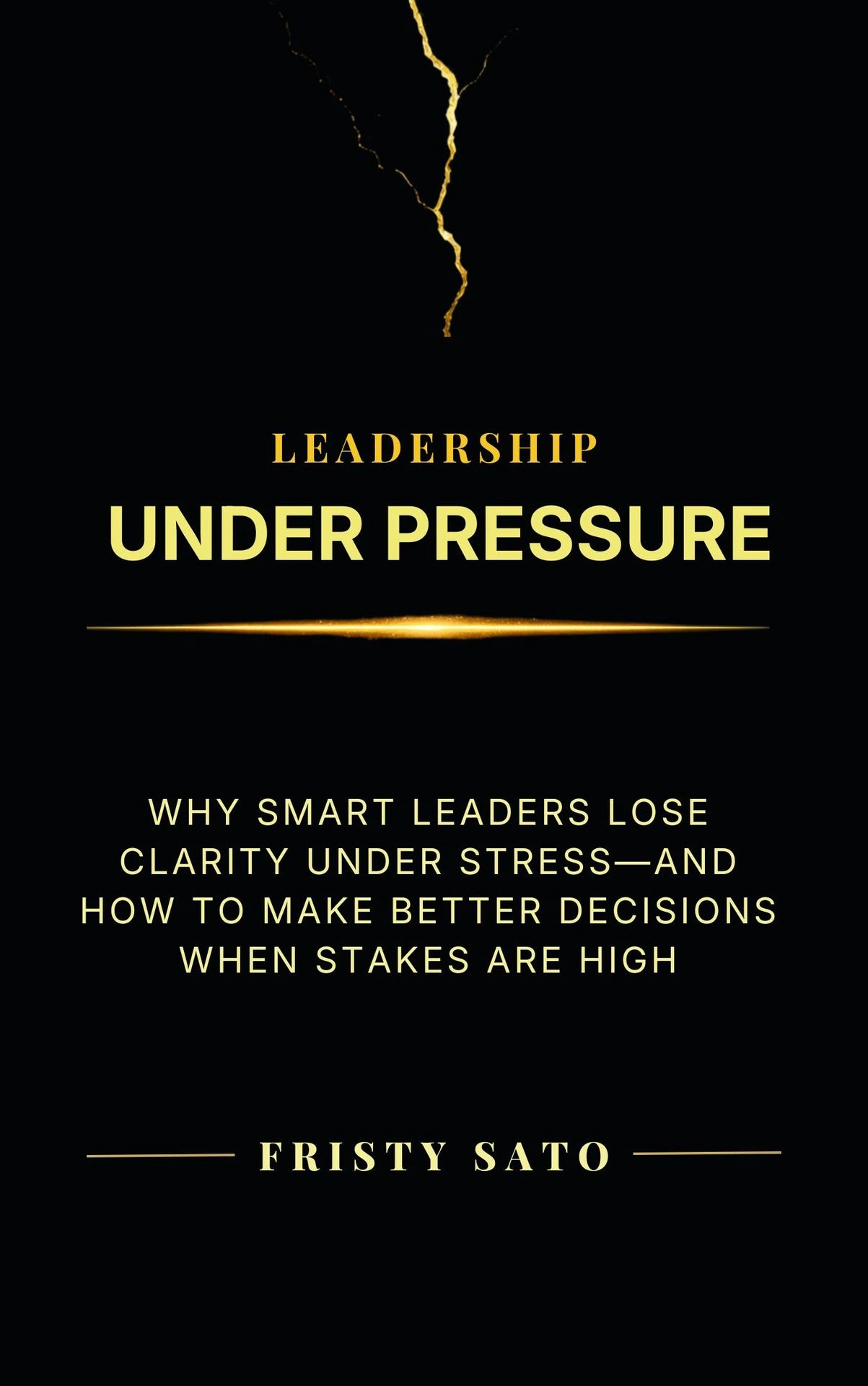
Deeper Reading: Leadership Under Pressure
Master practical frameworks to maintain strategic clarity, make confident decisions, and keep your organization grounded when stakes are high and uncertainty mounts.
Reader Learning Journey
To continue building your leadership practice and organizational design, explore these related resources in sequence:
- Leadership Under Pressure: Maintain strategic focus and calm judgment when stakes increase.
- Emotional Regulation for Leaders: Work effectively with stress responses so they don't warp decision-making.
- Ownership and Accountability: Define clear decision boundaries to empower your team to act.
- High-Performing Teams: Build collective execution capacity without relying on individual heroics.
- Healthy Workplace Culture: Establish cultural norms that support sustained high performance.
- Organizational Resilience: Design an adaptable organization capable of navigating disruption smoothly.
Continue Exploring Emotionally Safe Leadership™
If this article articulated something you have been experiencing within your own career, you are not alone. The journey toward sustainable, high-impact authority begins by exploring the underlying systems that govern how we show up.
Featured Topics
Sustainable Leadership
Sustainable Success
Sustainable Ambition
Leadership Capacity
Leadership Presence
Executive Presence
Success Without Self-Abandonment
Expansion Without Survival