Your Organization Wants Innovation. But Does It Feel Safe to Think Differently?
Imagine your organization has just announced a new innovation initiative.
The leadership team wants fresh ideas. Managers are encouraged to think creatively. Employees are invited to challenge old processes, suggest improvements, and explore new possibilities.
There may even be a budget for innovation workshops, new technology, and creative-thinking sessions.
Everything looks promising.
But when the first team meeting begins, something interesting happens. People remain quiet. A few employees share familiar suggestions, but nobody questions the existing strategy. Nobody raises the concern they discussed privately before the meeting. Nobody wants to be the person who suggests an idea that might not work.
The organization has asked people to think differently, yet they seem reluctant to do so.
Why?
It is tempting to assume that employees lack creativity, motivation, or initiative. Perhaps they need more training. Maybe the organization needs a better innovation process.
Those things may help. But there is another possibility worth examining.
Perhaps people have learned that showing their thinking can carry a cost.
Think about what employees may have experienced before:
A manager rejected an unfinished idea before hearing the full explanation.
Someone who challenged a senior leader was described as difficult.
An unsuccessful experiment damaged an employee's reputation.
A team member who admitted uncertainty was treated as incompetent.
An employee who questioned an established process was told to follow instructions.
A manager encouraged initiative but criticized decisions made without approval.
One incident may not change an entire workplace. But repeated experiences can teach people what is safe to say, question, suggest, and attempt.
Employees begin to notice the difference between what leaders encourage publicly and what their behavior rewards in practice.
They may still attend innovation sessions. They may still complete their tasks and meet their targets. Yet they become more careful about sharing ideas that challenge familiar thinking.
This creates a contradiction.
Organizations want people to explore new possibilities, but some of their everyday practices encourage people to protect the existing way of working.
An organization may invest in innovation while unintentionally training people to protect themselves from the very risks innovation requires.
That is why emotional safety and innovation deserve to be considered together.
Innovation needs more than creative people and ambitious strategies. It also needs conditions where people can express ideas, question assumptions, experiment, make mistakes, and learn without unnecessary emotional threat.
The important question is not simply whether your employees have good ideas.
It is whether they feel able to bring those ideas into the room.
What Is Emotional Safety in Innovation?
Emotional safety in innovation refers to the experience of being able to contribute ideas, question existing approaches, express uncertainty, experiment, and learn from unsuccessful attempts without unnecessary fear of humiliation, rejection, retaliation, or loss of belonging.
Within the Emotionally Safe Leadership™ perspective, the focus goes beyond whether leaders invite suggestions.
It also examines the emotional conditions created through leadership behavior and everyday working relationships.
For example, a manager may say:
"I want everyone to challenge my decisions."
But what happens when someone actually does?
Does the manager become defensive? Do they interrupt? Do they explain why the employee is wrong before understanding the concern? Do they later treat that person as less cooperative?
Or can they listen, ask questions, consider another possibility, and explain their decision respectfully?
The difference matters because people learn from repeated experiences.
Emotional safety does not mean every idea must be accepted. It does not mean every experiment should receive funding or that every unsuccessful attempt should be excused.
It means people can contribute and learn without unnecessary personal threat.
Six elements of emotional safety in innovation
1. Safety to express unfinished ideas
Innovation does not always begin with a complete proposal. Sometimes it begins with a question, an observation, or a possibility that someone has not fully worked out.
An employee might say:
"I wonder whether we could approach this process differently."
They may not yet know exactly how. But that early thought could lead to a useful discussion.
If people believe they must present perfect ideas, many possibilities may never reach the conversation.
2. Safety to challenge existing thinking
Innovation often requires questioning processes that have been accepted for years.
An employee may notice that a familiar method no longer works. A team member may see a risk that senior leaders have overlooked.
People should be able to raise these observations without automatically being treated as disloyal or difficult.
3. Safety to experiment
A new idea needs an opportunity to be tested.
People need to understand which decisions they can make independently, which experiments require approval, and what boundaries they must respect.
Without that clarity, employees may avoid action because they are unsure what will happen if something goes wrong.
4. Safety to make mistakes and learn
Not every reasonable experiment will succeed.
A team may test a new customer service process and discover that it creates delays. That result is disappointing, but it may also reveal an important weakness in the proposed approach.
The useful question becomes: What happened, why did it happen, and what should change?
5. Safety to be different
People do not all think in the same way.
Some notice details. Others see patterns. Some question assumptions immediately, while others need time to reflect.
An innovative environment should not require everyone to communicate or think in exactly the same way.
6. Safety to take responsibility
Contributing an idea is only one part of innovation. People also need opportunities to help develop, test, and implement it.
If employees can suggest ideas but cannot influence what happens next, their contribution may remain limited.
The central distinction is simple:
Emotional safety does not remove the possibility of failure. It changes whether failure becomes a source of learning or a reason to hide.
Why Innovation Requires People to Feel Safe Enough to Take Risks
Innovation involves uncertainty.
When someone suggests a new approach, they cannot always predict how other people will respond or whether the idea will work.
They may be questioning a process that a senior manager introduced. They may be suggesting a change that requires colleagues to reconsider familiar responsibilities. They may be admitting that a current system is not producing the results everyone expects.
These actions involve professional and interpersonal risks.
Consider two different experiences.
In the first, an employee suggests a new way to manage customer requests. The manager listens, asks questions, and discusses the practical limitations. The idea may be accepted, adjusted, or rejected, but the employee is treated with respect.
In the second, the manager immediately responds:
"We've already tried something like that. Why are you wasting time on it?"
The employee may not suggest another idea.
The difference is not necessarily the quality of the proposal. It is the experience of contributing.
Productive risk versus unnecessary emotional risk
Productive risk | Unnecessary emotional risk |
Testing a new idea | Being humiliated for suggesting it |
Challenging an assumption | Being labelled difficult |
Admitting uncertainty | Being treated as incompetent |
Reporting an unsuccessful experiment | Being blamed for trying |
Asking for help | Losing credibility |
Offering another perspective | Being excluded or punished |
People may be willing to take intellectual risks but unwilling to take unnecessary social or career risks.
This distinction is important.
An employee might be comfortable trying a new technical method but reluctant to tell a senior executive that the current strategy has a weakness.
Another employee might have a useful idea but hesitate to share it because a previous suggestion was dismissed publicly.
In these situations, people are not necessarily lacking creativity. They may be calculating the possible consequences of speaking.
They may ask themselves two questions:
Could this idea work?
What could happen to me if I say it?
The second question can influence whether the first idea ever reaches the conversation.
For leaders, this creates an important responsibility: understand that innovation requires room for uncertainty, disagreement, and learning.
That does not mean removing all professional risk. Business decisions still involve judgment, financial limits, and responsibility.
It means avoiding unnecessary emotional barriers that prevent people from contributing what they know.
The Relationship Between Psychological Safety, Emotional Safety, and Innovation
Psychological safety is an established concept in organizational research.
It generally refers to a shared belief that a team is safe for interpersonal risk-taking. In practical terms, people believe they can ask questions, raise concerns, admit mistakes, and disagree without expecting humiliation or punishment.
Research on psychological safety has helped explain its relationship with team learning, speaking up, and the exchange of information.
This is particularly relevant to innovation because new ideas often require people to question established assumptions and share information that others may not have considered.
Emotionally Safe Leadership™ adds another lens to this conversation.
It examines how a leader's internal emotional patterns may influence their behavior and the conditions they create for others.
For example, two managers may both say they welcome new ideas. Yet one becomes defensive when challenged, while the other can remain curious even when a suggestion questions an important decision.
Their intentions may be similar. Their responses create different experiences.
Understanding the three concepts
Concept | Main focus |
Psychological safety | Whether people believe they can take interpersonal risks within the team |
Emotional safety within Emotionally Safe Leadership™ | How emotional patterns and leadership responses may shape the conditions people experience |
Innovation | How people and organizations develop, test, implement, and improve new ideas |
These concepts are complementary rather than interchangeable.
Psychological safety helps explain the interpersonal conditions that support speaking up and learning.
The Emotionally Safe Leadership™ perspective examines the emotional patterns beneath leadership behavior that may influence whether those conditions are consistently created.
Innovation is one area where the effects become visible through what people are willing and able to contribute.
For a deeper understanding, explore Psychological Safety and Emotional Safety in Leadership.
The distinction between these concepts also matters when organizations design leadership development. A team may have communication guidelines and formal opportunities to speak up, but leaders still need to examine how they respond when those opportunities produce uncomfortable information.
A policy can invite challenge. Everyday behavior determines whether people believe that invitation.
How Emotional Unsafety Quietly Undermines Innovation
Innovation does not always disappear in one dramatic moment.
Sometimes it becomes smaller, quieter, and more cautious.
People continue doing their jobs. Meetings still take place. Employees may even participate in formal innovation activities.
But the quality of their contribution can change.
Here are eight patterns worth recognizing.
1. People stop sharing unfinished ideas
Employees wait until their thinking is complete before speaking.
That sounds sensible, but early ideas often need discussion to become useful. When people feel they must have a perfect proposal, many possibilities never receive attention.
2. People become afraid of challenging authority
An employee notices that a decision may create a problem. However, the decision came from a senior leader who reacts poorly to disagreement.
The employee stays quiet.
The concern remains unresolved, and the organization loses an opportunity to reconsider its approach.
3. Mistakes become hidden
A team tests a new process, but the result is disappointing.
Instead of sharing the outcome quickly, the employee delays reporting it. They may fear being blamed for the failure.
The delay can prevent the organization from learning what happened.
4. People choose familiar solutions
When new approaches create uncertainty, approved methods can feel safer.
Employees may continue using processes they know are inefficient because changing them could attract unwanted attention.
5. Brainstorming becomes performative
People contribute suggestions they believe leaders want to hear.
The meeting looks creative, but participants avoid ideas that challenge important assumptions.
6. Employees become dependent on approval
A founder says they want initiative but requires approval for nearly every decision.
Employees learn to wait.
Over time, even small experiments may become dependent on the founder's attention.
7. Teams lose access to different perspectives
People who think differently may stop contributing if their ideas are repeatedly dismissed.
The organization may then hear mostly from people who are comfortable with the existing approach.
8. Learning becomes slower
When mistakes, concerns, and unsuccessful experiments are hidden, the organization has less information to work with.
It may repeat the same mistakes because people do not feel able to discuss what happened.
An organization does not need to tell people to stop innovating. It may only need to make the experience of being wrong, different, or challenging uncomfortable enough that people decide to stop taking those risks.
Of course, these patterns can have different causes. Limited resources, poor processes, unclear strategy, or a lack of technical knowledge can also restrict innovation.
The point is not to blame every innovation problem on emotional safety. It is to recognize that workplace conditions can influence whether people contribute what they know.
The Hidden Emotional Patterns That Make Leaders Resist Innovation
A leader can genuinely want innovation and still behave in ways that restrict it.
This may happen because innovation brings uncertainty. It can challenge established decisions, introduce unfamiliar risks, and require leaders to share control.
A leader who is comfortable with the idea of innovation may still struggle with the experience of being challenged.
This is where the seven Survival-Based Leadership identities offer useful conceptual lenses.
They are not fixed personality types, clinical diagnoses, or labels that explain every leadership behavior. They are ways of examining patterns that may influence how leaders respond to pressure, responsibility, uncertainty, and recognition.
1. The Protective Leader: Innovation feels like loss of control
The Protective Leader wants to prevent mistakes and maintain quality.
These intentions can be valuable. Organizations need responsible decisions and appropriate safeguards.
However, the pattern can become restrictive when the leader needs to monitor every experiment and approve every detail.
For example, a manager asks an employee to improve a reporting process but then controls each step of the proposed change.
The employee may eventually stop trying to develop solutions independently.
The possible cost is reduced initiative and growing team dependency.
Explore The Protective Leader™.
2. The Responsible Leader: Innovation feels like another risk to carry
The Responsible Leader feels personally accountable for outcomes.
They may believe that if something goes wrong, they should have prevented it.
As a result, they may take decisions away from others, solve problems personally, and struggle to let employees experiment.
Their team may become increasingly dependent on their judgment.
The possible cost is that responsibility becomes concentrated in one person instead of developing across the organization.
Explore The Responsible Leader™.
3. The Self-Reliant Leader: Innovation becomes dependent on one person
The Self-Reliant Leader trusts their own ability to solve problems.
They may be capable, experienced, and quick to act. But they may struggle to receive ideas or rely on other people's judgment.
When a challenge appears, they take over.
The team gets an answer, but employees lose opportunities to develop their own solutions.
The possible cost is limited collaboration and weak knowledge-sharing.
Explore The Self-Reliant Leader™.
4. The Strong Leader: Innovation becomes emotionally difficult to discuss
The Strong Leader may feel pressure to appear certain and composed.
They may find it difficult to admit that an existing approach is not working or that someone else has identified a better option.
When challenged, they may become defensive or interpret disagreement as a threat to authority.
Employees learn that questioning decisions can create tension.
The possible cost is hidden information and fewer honest conversations.
Explore The Strong Leader™.
5. The Capable Leader: Innovation becomes another responsibility to manage
The Capable Leader is often the person who can solve difficult problems.
Colleagues rely on them, and leaders may reward them for being dependable.
However, the desire to solve everything can turn them into a bottleneck.
They may take over ideas before other people have the chance to develop them.
The possible cost is reduced team capability and excessive dependence on one person's expertise.
Explore The Capable Leader™.
6. The Proving Leader: Innovation becomes a competition for recognition
The Proving Leader may feel a strong need to demonstrate competence and value.
This can create high effort and a desire to produce impressive results.
However, the leader may become attached to their own ideas or find it difficult to recognize contributions that come from others.
Innovation then becomes less collaborative.
The possible cost is competition, defensiveness, and reduced openness to different perspectives.
Explore The Proving Leader™.
7. The Achievement-Driven Leader: Innovation becomes another performance target
The Achievement-Driven Leader focuses strongly on results, progress, and ambitious goals.
This can help an organization maintain momentum.
But innovation often requires time to test, adjust, and learn. If leaders expect immediate success, experimentation can become another source of pressure.
Employees may focus on producing visible wins rather than exploring uncertain possibilities.
The possible cost is exhaustion and reduced willingness to experiment.
Explore The Achievement-Driven Leader™.
What these patterns have in common
These leaders do not necessarily lack commitment to innovation.
Many care deeply about their teams and organizations. They may believe they are protecting quality, maintaining standards, or ensuring success.
The important question is whether their relationship with uncertainty influences how much uncertainty they allow other people to experience.
Some behaviors that help a leader produce results today may reduce the team's ability to create results independently tomorrow.
You can explore all seven patterns in The Seven Survival-Based Leadership Patterns™.
The Innovation Paradox: Leaders Ask for Different Thinking but Reward Familiar Behavior
An organization may say it wants innovation while rewarding behaviors that protect the status quo.
Consider these contradictions:
Leaders ask for creativity but reward compliance.
Leaders invite challenge but become defensive when challenged.
Leaders encourage experimentation but punish unsuccessful attempts.
Leaders ask for ownership but require approval for every decision.
Leaders request fresh perspectives but promote people who always agree.
Leaders want innovation but overload teams until they have no time to think.
Leaders ask for honest feedback but react badly when they receive it.
These contradictions can be difficult to recognize because the organization's official message may sound positive.
However, people pay attention to what happens after they speak.
An employee may hear that experimentation is encouraged. But if the first unsuccessful experiment results in public criticism, the employee may become more cautious.
Other team members notice the response, too.
Over time, the team's behavior can change even if nobody formally announces a new rule.
The Innovation Contradiction Loop™
The following is a conceptual model for understanding how this pattern may develop. It is not a validated research instrument.
The Innovation Contradiction Loop™
The organization announces that innovation matters. Leaders encourage ideas and experimentation.
An employee challenges an existing approach. They suggest a different way to solve a problem.
The leader reacts defensively or restricts the idea. The response may communicate that challenge is unwelcome.
The employee becomes more cautious. They think more carefully about what they share next time.
Other people observe the response. They learn from what happened to the person who spoke up.
The team shares fewer uncertain ideas. People rely more heavily on familiar approaches.
The organization concludes that employees lack initiative. It introduces more innovation programs without changing the underlying conditions.
The result: More innovation activity on paper, but not necessarily more freedom to question, experiment, and learn.
This is why leaders need to examine the difference between their intentions and their impact.
They may intend to protect quality. But if their response makes people afraid to raise concerns, they may unintentionally restrict the information needed to protect quality.
People pay attention to what leaders say, but they learn what is safe from what leaders do.
Emotional Safety Does Not Mean Removing Standards or Accountability
Some leaders worry that emotional safety will make employees less accountable.
They may imagine a workplace where every idea is accepted, every mistake is excused, and nobody receives difficult feedback.
That is not the goal.
Innovation needs both freedom and responsibility.
People need room to explore possibilities, but organizations also need clear goals, ethical standards, sensible resource limits, and honest evaluation.
There is a difference between:
Emotional safety does not mean... | It can mean... |
Accepting every idea | Considering ideas seriously |
Approving every experiment | Creating reasonable opportunities to test ideas |
Ignoring mistakes | Examining mistakes and learning from them |
Avoiding difficult feedback | Giving feedback without humiliation |
Removing responsibility | Giving people authority to take responsibility |
Agreeing with everyone | Respecting disagreement while making decisions |
A practical example: Testing a new customer service process
Imagine a customer service team wants to reduce the time customers spend waiting for help.
An employee suggests a new process that allows certain requests to be handled through a different route.
The manager has several choices.
They could reject the idea immediately because it is unfamiliar.
They could approve it without setting any boundaries.
Or they could create a responsible experiment.
A useful approach would involve five steps:
Clarify the purpose. What problem is the team trying to solve?
Set boundaries. Which customer requests can use the new process? Which must follow the existing route?
Agree on resources. What training, time, and support will the experiment require?
Define how results will be reviewed. Which measures will help the team understand whether the change is useful?
Discuss what was learned. What worked, what did not, and what should happen next?
The manager does not need to promise that the experiment will succeed.
They need to make sure the team can test the idea responsibly and discuss the outcome honestly.
The central balance is:
Safety without accountability can create avoidance. Accountability without safety can create fear. Innovation needs both.
How Leaders Can Create Emotional Safety for Innovation
Leaders do not create emotional safety through slogans.
They create it through repeated responses, decisions, conversations, and everyday behavior.
Here are ten practical ways to begin.
1. Respond to ideas with curiosity before judgment
What the leader may currently do: Immediately explain why an idea will not work.
What the team may experience: Their contribution is unwelcome unless it already fits the leader's thinking.
A more emotionally safe response: Ask what problem the idea is trying to solve. Invite the employee to explain what they have noticed.
What this makes possible: More useful discussion before a proposal is accepted or rejected.
A curious response does not mean agreeing with the idea. It means understanding it before evaluating it.
2. Make disagreement possible
What the leader may currently do: Treat disagreement as resistance or a lack of commitment.
What the team may experience: It is safer to agree publicly than to raise a concern.
A more emotionally safe response: Ask, "What might we be missing?" or "What would make this decision difficult to implement?"
What this makes possible: More perspectives and earlier identification of potential problems.
3. Separate mistakes from personal worth
What the leader may currently do: Respond to an unsuccessful experiment with personal criticism.
What the team may experience: Trying something new could damage their reputation.
A more emotionally safe response: Examine the decision, the available information, the process, and the result without turning the outcome into a judgment about someone's value.
What this makes possible: More honest reporting and better learning.
4. Make it safe to say, "I don't know"
What the leader may currently do: Pretend to have every answer or expect employees to do the same.
What the team may experience: Uncertainty must be hidden.
A more emotionally safe response: Acknowledge what is unknown and invite others to help explore the question.
What this makes possible: Collective thinking and more open problem-solving.
5. Give people room to experiment
What the leader may currently do: Require approval for every small decision.
What the team may experience: Initiative is welcome only when the leader controls it.
A more emotionally safe response: Define what employees can test independently, what requires approval, and which boundaries they must respect.
What this makes possible: More ownership and faster learning within appropriate limits.
6. Recognize learning, not only successful outcomes
What the leader may currently do: Celebrate only experiments that produce immediate results.
What the team may experience: An unsuccessful attempt is wasted effort.
A more emotionally safe response: Recognize useful information gained from a responsible experiment, even when the original idea is not adopted.
What this makes possible: A more honest understanding of what works and what needs to change.
7. Share authority instead of collecting every decision
What the leader may currently do: Take control whenever an employee faces uncertainty.
What the team may experience: Independent judgment is not trusted.
A more emotionally safe response: Delegate decisions with clear expectations and appropriate authority.
What this makes possible: Stronger initiative and wider problem-solving capability.
8. Protect time and capacity for creative thinking
What the leader may currently do: Expect innovation while filling every working hour with immediate operational tasks.
What the team may experience: Creative work is an extra responsibility added to an already full workload.
A more emotionally safe response: Make realistic space for exploration, reflection, and testing.
What this makes possible: Employees have a better chance of developing ideas instead of simply trying to keep up.
9. Invite different perspectives
What the leader may currently do: Rely on the same people in every discussion.
What the team may experience: Only certain voices matter.
A more emotionally safe response: Invite quieter team members to contribute. Give people time to think before asking for responses.
What this makes possible: A wider range of observations and approaches.
10. Repair moments when safety is damaged
No leader responds perfectly every time.
A manager may become impatient, interrupt someone, or dismiss an idea too quickly.
What matters next is whether they can recognize the impact and take responsibility.
A useful response might be:
"I realize I dismissed your suggestion before understanding it. I'd like to hear the full idea."
This does not guarantee that the suggestion will be accepted. But it shows that the leader can reconsider their response.
Repair helps demonstrate that respectful challenge is possible, even when a conversation becomes uncomfortable.
How to Build an Innovation Environment at Team Level
Leadership behavior matters, but innovation is not the responsibility of one person alone.
Teams also need everyday practices that support open discussion, experimentation, and shared learning.
Create space for unfinished thinking
Do not require every employee to arrive with a complete proposal.
A team meeting can include time for observations, questions, and early ideas.
For example, instead of asking only, "What solutions do you recommend?" ask:
"What are you noticing that we may not have considered?"
This allows people to raise possibilities before they know exactly how to solve them.
Establish healthy disagreement
Teams should be able to challenge ideas without attacking the people who present them.
A useful shared expectation is:
Question the idea, not the person's worth.
Explain concerns rather than dismissing suggestions.
Ask for evidence where appropriate.
Make room for different interpretations.
Be willing to reconsider an opinion.
Healthy disagreement is not endless debate. Teams still need decisions and clear direction.
Make experimentation visible
People should understand what the team is testing and why.
A simple experiment record can include:
Question | Example |
What are we testing? | A new way to handle customer requests |
Why are we testing it? | The current process creates delays |
What are the boundaries? | Only selected request types are included |
What do we hope to learn? | Whether the new route improves response time |
When will we review it? | At the end of the agreed trial period |
This makes experimentation more thoughtful and reduces confusion.
Conduct learning-focused reviews
After an experiment, ask:
What did we expect to happen?
What actually happened?
What surprised us?
What information did we gain?
What should we change?
Should we continue, adjust, or stop?
A review should not become a search for someone to blame.
However, learning does not remove responsibility. If someone ignored an agreed boundary or failed to follow an important process, that still needs to be addressed.
Share ownership of innovation
Innovation should not belong only to the innovation department or the person with the most creative job title.
Employees who work directly with customers, systems, products, and daily operations often notice problems that senior leaders do not see.
Give people meaningful opportunities to contribute.
Include quieter voices
The loudest person in a meeting does not necessarily have the most useful idea.
Some employees think before speaking. Others may be more comfortable contributing in writing.
Consider collecting ideas before meetings, allowing time for reflection, or inviting people to share their observations afterward.
Make decision boundaries clear
People need to know where they can act independently.
If every decision requires approval, employees may stop taking initiative.
If the boundaries are unclear, they may avoid action because they fear exceeding their authority.
Good leadership makes both responsibility and decision-making limits understandable.
Protect the team from unnecessary blame
When an experiment has been agreed upon, conducted responsibly, and reviewed honestly, an unsuccessful result should be treated as information.
The team can still examine mistakes, poor judgment, and missed responsibilities. But blame should not replace learning.
These practices work best when leaders consistently support them. A team cannot maintain open experimentation if its members repeatedly experience punishment for raising concerns.
For more on team-level conditions, explore Emotionally Safe Teams.
Why Innovation Programs Fail Even When Organizations Invest in Creativity
Many organizations invest in innovation workshops, creative-thinking training, new software, and transformation programs.
These investments can be useful.
But they may produce limited results when the everyday working environment does not support the behaviors that innovation requires.
Consider some common situations.
Innovation is treated as a workshop rather than an everyday way of working.
Employees attend a session, generate ideas, and return to a workplace where existing processes remain difficult to challenge.
Leaders encourage creativity but retain excessive control.
Employees are asked to take initiative, yet every meaningful decision must pass through several approval stages.
Employees are expected to innovate without enough time or resources.
People are already overloaded. Innovation becomes another task rather than a supported part of the work.
Mistakes are publicly criticized.
Employees learn that an unsuccessful experiment can damage their professional standing.
People are rewarded for short-term results but not learning.
Teams focus on immediate outcomes because longer-term exploration is not recognized.
Decision-making authority is unclear.
Employees may have responsibility for improving a process but no authority to change it.
Feedback does not lead to action.
People are invited to share ideas, but they never hear what happened afterward. Eventually, participation may feel pointless.
Organizational hierarchy makes challenging decisions difficult.
People may believe that questioning a senior leader is too risky, even when they have important information.
Innovation is expected during chronic overload.
Employees have little time to think beyond immediate demands.
These examples show why innovation cannot be created through enthusiasm alone.
An innovation strategy can explain what an organization wants to create. It cannot, by itself, make people feel safe enough to contribute to that creation.
Organizations also need to examine:
Workload and available time.
Access to information.
Decision-making structures.
Budget and resources.
Incentives and performance measures.
Leadership accountability.
Diversity of thought.
Power relationships.
The way mistakes and unsuccessful experiments are handled.
Emotional safety is one important condition within this wider system. It cannot replace good organizational design, sufficient resources, technical knowledge, or effective execution.
For a broader view of the workplace conditions that shape behavior, explore Healthy Workplace Culture.
From Individual Emotional Patterns to Organizational Innovation
Innovation is influenced by more than individual creativity.
The way people think and contribute is shaped by leadership, relationships, and organizational systems.
A useful way to examine this is through four connected levels.
The personal level
This level considers how an individual relates to uncertainty, mistakes, visibility, criticism, and being different.
For example, a leader may feel uncomfortable when they cannot predict the outcome of a decision.
That discomfort may influence how they respond when employees suggest unfamiliar approaches.
It does not automatically mean the leader has a particular psychological issue. There can be many reasons why someone prefers predictability.
The useful question is how the response affects their behavior.
The leadership level
This level examines how personal patterns influence authority, decisions, feedback, delegation, and responses to new ideas.
A leader who finds uncertainty difficult may insist on reviewing every decision.
They may believe they are protecting the organization. Yet their behavior could make it harder for employees to experiment independently.
The team level
This level considers what people learn is safe to question, suggest, test, disagree with, and take responsibility for.
If the manager reviews every decision, employees may gradually stop acting without approval.
If the manager responds constructively to challenge, employees may become more willing to raise concerns and develop ideas together.
The organizational level
This level examines the wider effects on creativity, learning, experimentation, and adaptability.
For example, excessive approval requirements may slow experimentation across several departments.
However, the issue may not be limited to one manager. Organizational policies, incentives, technology, resources, and reporting structures may also contribute.
These levels influence one another, but they do not create a fixed or automatic chain.
A leader cannot compensate indefinitely for an organization that provides insufficient resources or rewards the wrong behaviors. Likewise, changing a policy may not be enough if leaders continue to respond defensively when people challenge established decisions.
The emotional patterns inside leadership do not stay inside the leader. They can influence the conditions in which other people think, contribute, and create.
The Emotionally Safe Leadership™ Perspective on Innovation
Innovation requires people to engage with uncertainty.
Leaders also have emotional responses to uncertainty.
They may feel uncomfortable when someone questions their decisions, when an experiment fails, or when a team member proposes an approach they would not have chosen themselves.
Those reactions may influence how they lead.
A leader who understands their own patterns has more opportunity to respond intentionally rather than automatically.
This is an important part of the Emotionally Safe Leadership™ perspective.
Traditional innovation development may focus on questions such as:
What creative skills do employees need?
How can we improve our innovation process?
What technology should we invest in?
How can we encourage more ideas?
How can we make teams more accountable?
The Emotionally Safe Leadership™ perspective also asks:
What happens inside a leader when someone challenges their decision?
Why might a leader become controlling when an outcome is uncertain?
What makes delegation difficult?
Why does a leader feel responsible for every result?
How does the leader respond when an experiment fails?
What does the team learn from those responses?
These questions do not replace innovation strategy. They help examine the human conditions surrounding its implementation.
Five conceptual dimensions of the Emotionally Safe Organization™
The following five dimensions form a conceptual framework within this work. They are not established academic standards or independently validated organizational measures.
Dimension | Connection to innovation |
Organizational Self Safety™ | People can contribute without feeling that their basic sense of worth or belonging is constantly threatened |
Relational Safety Architecture™ | Relationships support honest discussion, disagreement, and collaboration |
Systemic Visibility Safety™ | People can raise concerns, share different perspectives, and make problems visible |
Institutional Success Safety™ | Success does not depend on hiding mistakes, overworking, or protecting existing ways of operating |
Adaptive Expansion Safety™ | The organization can explore new possibilities, learn, and adapt without relying on chronic pressure |
Together, these dimensions invite leaders to examine whether the organization supports people in contributing, questioning, and developing new possibilities.
The SAFE Expansion™ Pathway
The SAFE Expansion™ Pathway offers three stages for examining and changing leadership patterns.
Regulate
Notice and manage automatic reactions to uncertainty, mistakes, disagreement, and challenges.
For example, a leader who feels frustrated when an employee questions a decision can pause before responding. They can ask themselves whether they are evaluating the idea or reacting to the discomfort of being challenged.
Rewire
Examine the beliefs and survival patterns that may create excessive control, proving, or fear of failure.
A leader may begin to recognize that they have learned to associate being responsible with personally controlling every outcome.
Recognizing the pattern creates an opportunity to consider another way of leading.
Redefine
Develop leadership practices that can hold authority, uncertainty, responsibility, and different perspectives without needing to control everything.
This may involve clearer delegation, more open conversations, responsible experimentation, and a healthier relationship with mistakes.
The purpose is not to make leaders endlessly agreeable or comfortable.
It is to help them become more capable of leading when things are uncertain.
You can explore the SAFE Expansion™ Pathway and the Principles of Emotionally Safe Leadership™.
How to Know Whether Your Organization Is Emotionally Safe Enough for Innovation
It is easy to say that an organization supports innovation.
It is more useful to examine what happens when someone questions a decision, shares an unfinished idea, or reports an unsuccessful experiment.
The following questions are reflection prompts, not a validated organizational assessment.
They can help leaders identify areas that deserve closer attention.
Questions for leaders
How do I react when someone challenges my ideas?
Can I admit that I do not know the answer?
Do I allow people to test ideas without controlling every step?
How do I respond when an experiment does not work?
Do I recognize learning, or only successful outcomes?
Am I genuinely open to ideas that change my existing plans?
Do people have enough authority to act on their ideas?
Have I created enough time and resources for experimentation?
Do I become defensive when employees question established decisions?
Can I distinguish between a responsible challenge and a personal attack?
Questions for teams
Can people disagree with the manager?
Do employees share unfinished ideas?
Are mistakes discussed openly?
Can people question existing processes?
Do quieter team members have room to contribute?
Are people encouraged to take initiative?
Does feedback lead to meaningful change?
Can the team explain what it has learned from unsuccessful experiments?
Do people know which decisions they can make independently?
Is disagreement handled respectfully?
Questions for organizations
Does the organization reward learning as well as results?
Are people given time and resources to experiment?
Are decision-making boundaries clear?
Do leaders demonstrate openness to challenge?
Are unsuccessful experiments treated fairly?
Do employees have real opportunities to influence decisions?
Do performance measures recognize collaboration and learning?
Are workloads realistic enough to allow thoughtful work?
Can employees raise concerns without unnecessary career risk?
Do leaders take responsibility when their behavior discourages contribution?
The answers may reveal that the challenge is not simply a lack of creativity.
Perhaps people need more authority. Perhaps the organization needs to review its incentives. Perhaps managers need support in responding to disagreement. Or perhaps employees need better access to information and resources.
The purpose is not to assume that every problem comes from leadership behavior.
It is to examine the whole environment.
And one question deserves particular attention:
Are people in your organization free to think differently, or have they learned that thinking differently comes with a cost?
Innovation Begins When People No Longer Have to Protect Themselves From Thinking Differently
We often assume innovation begins with better ideas.
But what if it begins much earlier?
What if it begins with whether someone feels able to share an idea that is not fully formed, question something everyone has accepted, or admit that the current way of working is no longer effective?
An organization cannot build the future while making it unsafe to question the present.
This does not mean every suggestion should be accepted. Leaders still need to make difficult decisions. Organizations need standards, financial discipline, responsible experimentation, and accountability.
But people should not have to hide their thinking simply to protect themselves.
A leader does not need to agree with every idea. They do need to create an environment where people can express different perspectives, examine possibilities, and learn from what does not work.
And this requires more than an innovation strategy.
It requires attention to leadership behavior, team relationships, decision-making authority, organizational systems, and the emotional conditions people experience when they contribute.
A leader who struggles with uncertainty may unintentionally limit experimentation. A manager who reacts defensively to disagreement may discourage important information. A founder who approves every decision may create a team that waits for permission instead of developing new possibilities.
These patterns can be changed, but they first need to be recognized.
The goal is not to create a workplace where everyone agrees or every experiment succeeds.
It is to create an environment where people can think differently, speak honestly, take responsibility, and learn together.
Because innovation does not only depend on what people are capable of imagining.
It also depends on whether the environment allows them to bring those possibilities into reality.
You cannot ask people to create the future while making it unsafe for them to question the present.
Take the next step: Explore the emotional patterns beneath leadership
Innovation challenges are not always caused by a lack of ideas, creativity, or technical ability.
Sometimes the way leaders respond to uncertainty, mistakes, control, and disagreement also influences the conditions in which people contribute.
Understanding these patterns can be a useful starting point.
Discover Your Leadership Pattern
Your team's ability to innovate may be influenced by more than its creativity or skills. The way you respond to uncertainty, mistakes, control, and disagreement can also shape the conditions in which people contribute.
The Emotionally Safe Leadership Assessment™ helps you explore the leadership pattern that may be influencing your decisions, relationships, responsibilities, and the experience of the people you lead.
You can use it as a starting point to reflect on:
How you respond when work becomes uncertain.
Whether you tend to take over or find it difficult to delegate.
How you handle mistakes and disagreement.
Whether your leadership creates space for shared responsibility.
Which patterns may be worth examining more closely.
Continue Your Learning: The Hidden Emotional Patterns Shaping Your Leadership™
Why do capable leaders still feel exhausted, over-responsible, and stuck?
This five-module course explores the relationship between human biology, emotional patterns, and modern business leadership.
Explore the seven Survival-Based Leadership identities and understand how they may influence leadership behavior, relationships, and decision-making.
Leadership Pattern Breakthrough™
For leaders who recognize a pattern and want to explore how it appears in their decisions, relationships, and team experience, Leadership Pattern Breakthrough™ offers a deeper opportunity for reflection and development.
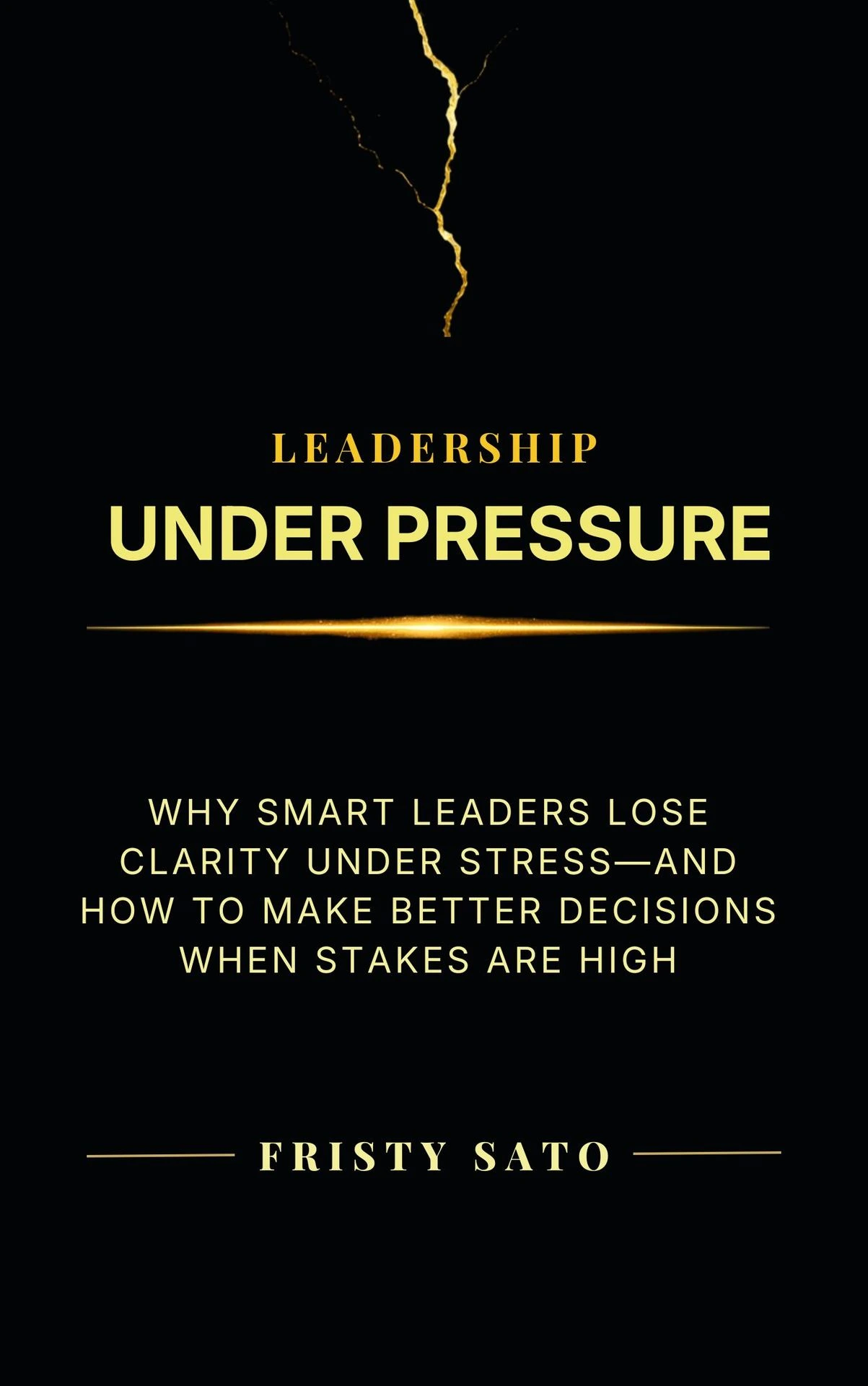
Read the Book: Leadership Under Pressure
Leadership becomes especially challenging when the stakes are high.
Decisions become more complicated, emotions become stronger, and the pressure to get things right can affect clarity.
In Leadership Under Pressure: Why Smart Leaders Lose Clarity Under Stress—and How to Stay Clear When Stakes Are High, this book explores why capable leaders can struggle to maintain clarity under pressure and how they can develop a more conscious relationship with their leadership responses.
Emotionally Safe Leadership for Teams and Organizations
Strong innovation requires more than capable employees and ambitious targets.
It also requires leadership, team dynamics, and workplace systems that allow people to contribute, challenge, experiment, and learn.
Explore how Emotionally Safe Leadership™ can support organizational development, trust, ownership, and more sustainable innovation.
Continue Exploring Emotionally Safe Leadership™
If this article articulated something you have been experiencing within your own career, you are not alone. The journey toward sustainable, high-impact authority begins by exploring the underlying systems that govern how we show up.
Featured Topics