You Cannot Build Trust by Asking People to Trust You
Imagine a leader standing in front of their team and saying:
"I trust you. I want you to take ownership. You don't need to ask me about every little thing."
It sounds encouraging. The team may even appreciate hearing it.
But a few days later, an employee makes a decision without asking for approval. The leader questions every detail, explains why the decision should have been different, and takes the task back.
Another employee admits to making a mistake. Instead of discussing what happened and how to fix it, the manager responds with frustration. The employee leaves the conversation wondering whether being honest was a good idea.
A third team member asks for support. The manager tells them they need to become more independent.
What happens next?
People become careful. They ask for permission before making decisions. They keep problems to themselves until they have a solution. They avoid admitting uncertainty. They may even stop asking colleagues for help.
The organization might describe this as a lack of trust. Leaders may decide that their employees need more confidence, stronger relationships, or better teamwork.
But there's another possibility.
What if people have learned that relying on others carries a cost?
This is where the relationship between emotional safety and trust becomes important. Trust does not grow simply because someone says they are trustworthy or because an organization includes trust in its values. It develops through repeated experiences of reliability, honesty, respect, responsibility, and fair treatment.
People notice what happens when something goes wrong. They notice whether promises are kept, whether disagreement is welcome, and whether a person takes responsibility when their actions affect someone else.
They also notice how leaders respond when they feel challenged, uncertain, or out of control.
Within Emotionally Safe Leadership™, trust is therefore more than a relationship issue. It is also connected to the emotional patterns that influence how leaders respond to other people.
A leader may genuinely want a capable, independent team but still struggle to share control. Another may value honesty but become defensive when someone gives difficult feedback. A third may want employees to ask for help but feel uncomfortable showing their own need for support.
These contradictions matter.
People do not learn to trust others because they are told to. They learn through repeated experiences that show them whether others can be relied upon.
The question is not simply whether you want your team to trust you. It is whether your everyday behavior gives people good reasons to do so.
What Is Trust in the Workplace?
Workplace trust is the willingness to rely on another person based on the belief that they will act with reasonable reliability, honesty, competence, respect, and responsibility.
Trust always involves some uncertainty.
When you delegate a task, you cannot control every step the other person takes. When you ask a colleague for help, you depend on them to follow through. When you share a concern with your manager, you trust that the information will be handled appropriately.
You accept a degree of vulnerability because you believe the other person is likely to act in a fair and responsible way.
That does not mean you expect people to be perfect. It means you have enough evidence to believe that working with them is worthwhile and reasonably dependable.
Five foundations help trust develop.
1. Reliability: People do what they say they will do
Reliability is one of the clearest ways people experience trust.
A colleague promises to send a report by Thursday and delivers it on time. A manager says they will discuss a concern with senior leadership and follows through. A team member cannot meet a commitment but communicates the problem early rather than disappearing.
These actions show that a person's words have meaning.
Reliability does not require someone to meet every expectation under every circumstance. Plans change, unexpected problems occur, and people sometimes make mistakes. What matters is whether they communicate honestly and take responsibility when circumstances shift.
Repeatedly making promises without following through weakens trust, even when the intentions behind those promises are good.
2. Honesty: People communicate truthfully
Trust becomes difficult when people hide important information, change their stories, or say what others want to hear rather than what they believe is true.
Honesty allows people to make informed decisions. It helps teams identify problems before they grow and gives colleagues a clearer understanding of what is happening.
Honesty also includes admitting uncertainty.
A leader who says, "I don't know yet, but I'll find out," may create more confidence than one who gives a confident answer that later proves inaccurate.
3. Responsibility: People take ownership
Trust grows when people accept responsibility for their decisions and actions.
If a mistake happens, they do not immediately search for someone to blame. If they make a commitment, they recognize their part in fulfilling it. If their behavior causes harm, they are willing to address the impact.
Responsibility is especially important in leadership because authority gives a person the ability to influence other people's working conditions.
A trustworthy leader does not use authority only to direct others. They also use it to take responsibility for the decisions they make.
4. Respect: People treat one another with dignity
Respect becomes visible during disagreement, pressure, and difficult conversations.
It is easy to appear respectful when everyone agrees. The real test comes when someone questions a decision, makes a mistake, or offers an opinion that challenges an established way of working.
Respect does not mean avoiding difficult feedback. It means addressing the issue without humiliating the person.
5. Emotional safety: People can communicate without unnecessary emotional threat
People need to be able to ask questions, raise concerns, admit mistakes, and request support without constantly fearing judgment, humiliation, or retaliation.
This does not remove professional standards or consequences. It helps create conditions in which people can be honest and responsible rather than hiding information to protect themselves.
These five foundations support one another. Someone may be highly competent but difficult to trust if they repeatedly blame colleagues. A kind manager may still be difficult to depend on if they rarely follow through. A leader may deliver strong results while creating fear through unpredictable reactions.
Trust requires more than believing someone can do the job. It also involves believing you can work with that person without constantly protecting yourself.
What Is the Relationship Between Emotional Safety and Trust?
Trust and emotional safety are closely connected, but they are not the same thing.
Trust is the willingness to rely on another person.
Emotional safety concerns the experience of being able to communicate, contribute, ask for help, and take appropriate interpersonal risks without unnecessary emotional threat.
Within Emotionally Safe Leadership™, this relationship can be considered through two connected dimensions.
Internal emotional safety
Internal emotional safety concerns how a leader relates to their own emotional experience when facing situations such as:
Criticism or disagreement.
Mistakes and unexpected outcomes.
Uncertainty and changing circumstances.
Requests for help.
Another person's success or expertise.
A loss of control.
Difficult feedback.
A leader who can remain grounded during these moments may find it easier to listen, consider different perspectives, and respond thoughtfully.
A leader who experiences these situations as threats may react by becoming defensive, controlling, dismissive, or withdrawn.
The reaction is not always deliberate. It may happen quickly, before the leader has had time to consider the effect on others.
Relational emotional safety
Relational emotional safety concerns the conditions people experience in their interactions with a leader and with one another.
For example:
A manager receives difficult feedback without immediately attacking the person who gave it.
A leader responds fairly when an employee reports a mistake.
A colleague keeps confidential information private.
A team member can ask for support without being treated as incompetent.
A leader allows an employee to make an appropriate decision without taking control away at the first sign of difficulty.
These experiences can make it easier for people to rely on one another.
Consider a manager who receives an uncomfortable report from an employee. The report reveals that a project is behind schedule because an earlier decision created an unexpected problem.
The manager has a choice. They can focus on defending the original decision and finding someone to blame. Or they can listen, understand the situation, and work with the employee to address it.
The second response does not mean ignoring responsibility. It makes honest communication more useful because the problem can be addressed rather than hidden.
However, emotional safety alone does not guarantee trust. People also need evidence of competence, reliability, fairness, and consistent action.
Emotional safety can make trust easier to develop, but trust still needs to be earned through action.
For a broader explanation of the leadership dimension, see Emotional Safety in Leadership.
Why People Struggle to Trust Others
When trust is low, it is tempting to assume that someone has a personal problem with trust. But distrust can have many causes.
Sometimes it comes from previous experiences. Sometimes it is a response to what is happening right now. Often, several factors work together.
Previous experiences of disappointment
A person who has repeatedly experienced broken promises, betrayal, unfair blame, or unreliable relationships may become more careful about depending on others.
They may wait for evidence before sharing information or handing over responsibility.
That caution may have helped them in a previous situation. It may not always be useful in a new environment, but it can be difficult to change without repeated experiences that show a different outcome is possible.
Fear of losing control
Depending on someone means accepting that not everything will happen exactly as expected.
A leader who is used to managing every detail may find delegation uncomfortable. They may worry that another person will make a poor decision, damage a relationship, or create extra work.
As a result, they continue checking and correcting.
The intention may be to protect quality. The effect may be to limit other people's opportunities to demonstrate reliability.
Fear of being let down
Some people would rather carry everything themselves than risk asking for help and being disappointed.
They may have learned to expect that others will not follow through. Even when colleagues are willing to contribute, the person may struggle to give them a meaningful opportunity.
Fear of judgment
People may avoid sharing uncertainty because they believe others will interpret it as weakness or incompetence.
An employee might wait until a problem becomes serious before telling their manager. A leader might avoid admitting that they need advice. A team member might pretend to understand an assignment rather than ask a question.
In each case, the desire to protect credibility can prevent the honest communication that would help the situation.
Lack of consistent behavior
Trust becomes difficult when words and actions do not match.
A manager may promise to support an employee's development but repeatedly cancel their development meetings. An organization may say that employee feedback matters but never explain what happens after people raise concerns.
Over time, people learn to judge the pattern rather than the promise.
Unclear expectations
People cannot easily depend on one another when responsibilities, standards, and decision-making authority are unclear.
An employee may hesitate to act because they do not know which decisions they are allowed to make. A manager may become frustrated because they expected a different result but never explained the standard.
Clear expectations make trust more practical.
Unfair treatment
Favoritism, inconsistent consequences, hidden decisions, and unequal access to information can damage trust.
Employees may notice that one person is allowed to make mistakes while another is criticized for the same behavior. They may see that some colleagues receive opportunities without clear reasons.
Fairness does not mean treating every situation identically. It means making decisions based on understandable and consistent principles.
Unpredictable emotional reactions
When people cannot predict whether a leader will respond with curiosity, anger, blame, or withdrawal, they may become cautious.
They may start managing the leader's emotions instead of focusing on the work.
This is an important part of the connection between emotional safety and trust. A leader's reaction to ordinary workplace events can shape how much honesty and openness people feel able to bring into the relationship.
One distinction matters here: distrust is not always an individual emotional pattern that needs to be overcome. Sometimes people are responding accurately to unreliable, unfair, or harmful conditions.
Not everyone who struggles to trust is afraid of closeness. Sometimes they have learned that depending on others creates more work, risk, or disappointment.
How Leadership Behavior Builds or Breaks Trust
Leaders influence trust through repeated everyday actions. Their intentions matter, but people experience the behavior itself.
Leadership behavior | What it may communicate |
Keeping commitments | You can rely on me |
Admitting mistakes | Honesty matters more than protecting my image |
Listening without immediate defensiveness | Your perspective matters |
Giving clear expectations | You do not have to guess what is expected |
Sharing relevant information | I am not using information to control you |
Following through on decisions | My words have meaning |
Giving appropriate authority | I trust you to take responsibility |
Responding fairly to mistakes | You can be honest without unnecessary fear |
Taking responsibility for harm | Trust can be repaired through action |
Now consider the opposite behaviors:
Saying one thing and doing another.
Making promises without following through.
Publicly embarrassing employees.
Changing expectations without explanation.
Taking credit for other people's work.
Blaming people for problems created by unclear systems.
Sharing private information without permission.
Asking for honesty but reacting defensively.
Giving responsibility without authority.
Showing favoritism.
These actions can make people question whether a leader's words are dependable.
Imagine that a manager tells an employee they are free to make decisions about a project. The employee chooses a different approach from the one the manager would have selected. The manager then criticizes the decision in front of colleagues and takes the project back.
The next time the employee faces a similar decision, they are likely to seek approval first.
The manager may interpret this as a lack of initiative. But the employee has learned something about the consequences of acting independently.
That is why trust is built through patterns, not isolated gestures.
People may remember what a leader promises, but they learn whether to trust that leader through what happens repeatedly.
For a related discussion of how trust supports shared responsibility, see Ownership and Accountability
The Hidden Survival Patterns That Make Trust Difficult for Leaders
Some leaders genuinely want strong relationships and capable teams, but may still struggle to depend on others, share control, or receive support.
One way to explore this contradiction is through the seven Survival-Based Leadership Patterns™.
These patterns are conceptual lenses for recognizing possible behaviors under pressure. They are not fixed personality types, clinical diagnoses, or proof that a particular person has experienced trauma. The same behavior can have different causes, and one leader may recognize aspects of several patterns.
1. The Protective Leader: Trust feels like losing control
The Protective Leader may feel responsible for preventing problems before they happen.
They check details, monitor progress, and prefer predictable outcomes. They may find it difficult to accept a different approach, even when the other person has the skills to handle the task.
Their intention may be to protect the team and the quality of the work.
But the team may experience constant monitoring rather than trust. Employees may stop making independent decisions because they expect their choices to be questioned.
2. The Responsible Leader: Trust feels like risking other people's disappointment
The Responsible Leader may feel responsible for every outcome.
They step in when colleagues struggle, take on extra work, and try to prevent others from experiencing difficulty. They may find it hard to let someone make a mistake and learn from it.
Over time, the leader becomes exhausted while the team has fewer opportunities to develop ownership.
The leader may think, "If something goes wrong, I should have prevented it."
The team may gradually learn, "The leader will take care of it."
3. The Self-Reliant Leader: Trust feels like depending on someone who may let them down
The Self-Reliant Leader prefers to handle things personally.
They may rarely ask for help, delegate only small tasks, or make important decisions alone. Depending on others can feel more risky than carrying the responsibility themselves.
The team may experience this as exclusion. People may wonder why they are not trusted with meaningful work or why their contributions are rarely needed.
The leader's independence may look like strength, but excessive self-reliance can limit shared capability.
4. The Strong Leader: Trust feels like showing vulnerability
The Strong Leader may feel pressure to appear certain, capable, and emotionally steady at all times.
They may hide uncertainty, avoid admitting mistakes, or struggle to ask for support.
The team may conclude that vulnerability is unwelcome. People may feel they need to hide their own doubts to match the leader's expectations.
Strength, however, does not require pretending to know everything. A leader can remain responsible and decisive while acknowledging uncertainty.
5. The Capable Leader: Trust feels like allowing someone else to do it differently
The Capable Leader often feels responsible for solving problems.
They may take over when someone struggles, correct work before the employee has time to learn, or assume their own approach is the safest option.
The team may begin waiting for the leader rather than using its own judgment.
This can create a difficult cycle: the leader sees that people rely on them and concludes that they cannot step back. Yet the team's dependence may partly result from the leader repeatedly taking responsibility away.
6. The Proving Leader: Trust feels like giving up recognition or status
The Proving Leader may feel a strong need to demonstrate competence.
They may find it difficult to admit that someone else has a better idea, receive criticism, or allow another person to take the lead.
The team may become cautious about showing its strengths. People may compete for recognition rather than share knowledge.
Trust grows more easily when a leader can recognize another person's ability without experiencing it as a threat to their own value.
7. The Achievement-Driven Leader: Trust becomes conditional on performance
The Achievement-Driven Leader may place strong emphasis on speed, results, and measurable success.
They may have little patience for slow progress and may withdraw confidence after mistakes. People can begin to feel that they must keep proving themselves to remain trusted.
High standards are not the problem. The challenge appears when performance becomes the only basis for how people are treated.
A team needs clear expectations, but people also need fair treatment when results fall short.
Explore the patterns in more detail in The Seven Survival-Based Leadership Patterns™.
The central insight is that some leaders do not struggle to trust because they do not value people. They may struggle because their sense of safety has become connected to staying in control, staying capable, or never needing anyone.
Recognizing a pattern does not excuse harmful behavior. It creates an opportunity to understand it and choose a different response.
Hyper-Independence: When Trusting Yourself Becomes the Only Safe Option
One of the clearest ways trust difficulties can appear in leadership is through hyper-independence.
Hyper-independence describes a pattern in which a person relies excessively on themselves and finds it difficult to receive help, depend on others, or share responsibility.
It is not the same as being capable or self-sufficient. Those qualities can be useful. The difficulty arises when independence becomes the only way a person feels safe.
A leader may think:
"It is easier if I do it myself."
"I don't want to depend on someone who might let me down."
"If I ask for help, people may think I cannot handle the job."
"I know what needs to happen, so I should just take care of it."
"I don't want to owe anyone anything."
These beliefs can influence daily leadership behavior.
The leader rarely delegates meaningful work. They avoid asking colleagues for support. They make important decisions alone. They become the central problem-solver and may feel uncomfortable when others offer a different approach.
At first, this can look efficient. The leader knows the work, understands the standards, and can move quickly.
But the long-term cost may be significant.
The team gets fewer opportunities to make decisions. Employees may become less confident because they are rarely trusted with important responsibilities. The leader carries more work and becomes increasingly necessary to every process.
The leader may think:
"I cannot depend on anyone."
The team may gradually learn:
"We are not expected to carry anything without the leader."
Both sides can become trapped in the same pattern.
Why hyper-independence can weaken trust
Trust requires a person to accept that someone else may approach a task differently.
That does not mean abandoning standards. It means allowing another person to take responsibility within clear boundaries.
For example, a department head may ask a manager to lead a project but continue attending every meeting, reviewing every email, and changing every decision. The manager technically has responsibility but little real authority.
The department head may believe they are supporting quality. The manager may experience a lack of confidence in their ability.
A more useful approach would be to agree on the desired outcome, define the limits of the manager's authority, set appropriate check-in points, and allow them to lead within those boundaries.
This gives both people a clearer basis for trust.
It also allows the leader to discover whether the other person is reliable through actual experience rather than assumptions.
Hyper-independence can be explored alongside Survival-Based Leadership™, Why Delegation Feels So Difficult, and Sustainable Leadership.
The goal is not to become dependent on everyone. It is to develop the ability to rely on appropriate people without feeling that you must surrender your judgment or authority.
The Trust Paradox: You Cannot Demand Trust While Controlling Everything
A common leadership contradiction appears when someone asks for trust but behaves in ways that make trust difficult.
Consider these situations:
A leader says, "I trust you," but reviews every small decision.
A manager asks for ownership but takes over when an employee chooses a different approach.
A founder wants an independent team but keeps all important information and decisions.
A leader wants honest communication but becomes defensive when receiving criticism.
A manager describes mistakes as learning opportunities but reacts with anger when something goes wrong.
The words and behavior send different messages.
To explain one possible pattern, this article introduces the Control–Dependency Loop™, a conceptual model developed for this work. It is a way to examine a recurring leadership dynamic, not a validated research instrument.
Leader feels uncertain
        ↓
Leader increases control
        ↓
Team has fewer opportunities to decide
        ↓
Team becomes more dependent on approval
        ↓
Leader sees dependence as proof
that the team cannot be trusted
        ↓
Leader takes on even more responsibility
        ↓
Control increases further
The leader may unintentionally create the very behavior they are frustrated by.
A team that is rarely allowed to decide may eventually stop trying. The leader then sees the lack of initiative as evidence that people are not ready for responsibility.
A different pattern can develop through what this article calls the Trust–Ownership Loop™, another conceptual model rather than a validated research model.
Clear expectations
        ↓
Appropriate authority
        ↓
Space to make decisions
        ↓
Consistent support
        ↓
Honest feedback
        ↓
Responsibility for outcomes
        ↓
Learning and improvement
        ↓
Greater confidence and trust
The second loop does not mean that every decision will be correct. People will make mistakes, and some choices will need to be reviewed.
The difference is that people have a genuine opportunity to demonstrate responsibility, receive feedback, and improve.
Trust grows when responsibility is shared rather than merely announced.
Trust, Psychological Safety, and Emotional Safety: What Is the Difference?
These three concepts are connected, but they answer different questions.
Trust: The willingness to rely on another person based on expectations of their reliability, honesty, competence, and behavior.
Psychological safety: A shared belief that people can take interpersonal risks within a team without fear of humiliation or punishment.
Emotional safety in leadership, within the Emotionally Safe Leadership™ perspective: The internal and relational conditions that influence how leaders experience pressure and how people experience their interactions with them.
Concept | Central question |
Trust | Can I rely on you? |
Psychological safety | Can I speak up and take interpersonal risks here? |
Emotional safety in leadership | Can I remain connected to myself under pressure while creating conditions where others can contribute without unnecessary emotional threat? |
Consider a team that feels comfortable discussing problems. Employees can raise concerns during meetings and challenge a proposal without being mocked. This suggests some level of psychological safety.
However, the same team may still struggle with trust if colleagues repeatedly fail to keep commitments.
Or consider an employee who trusts a manager's technical ability but does not feel comfortable disagreeing with them. The employee believes the manager can deliver results but does not feel safe challenging their decisions.
A third situation might involve a leader who is personally comfortable with vulnerability but works in an organization that rewards secrecy and competition. The leader's intentions cannot, by themselves, change the wider system.
The concepts overlap, but they are not interchangeable.
Emotional safety can support the conditions in which trust and psychological safety develop. Trust provides evidence that people can rely on one another. Psychological safety concerns the shared experience of interpersonal risk within a team.
For more on the team-level concept, read Psychological Safety. To explore how emotional safety shapes leadership behavior, see What Is Emotionally Safe Leadership™.
Trust and Accountability: Why Trust Does Not Mean Blindly Believing People
Trust is not blind faith, unlimited patience, or the absence of standards.
In a healthy working relationship, trust and accountability support one another.
When a team member misses a deadline, a trusting environment does not require the manager to pretend it does not matter.
The manager still needs to understand what happened, consider the impact, agree on responsibility, and decide what needs to change.
The difference lies in how the conversation happens.
A fear-based response might focus on blame:
"How could you let this happen? I cannot trust you with anything important."
A responsible response might be:
"We missed the deadline, and that affected the rest of the team. Let's understand what happened, what you could have done differently, and what support or changes are needed to prevent this from happening again."
The second response does not remove accountability. It makes accountability more useful.
The same principle applies when a leader breaks a promise. Rebuilding trust requires more than saying sorry. The leader needs to acknowledge the commitment, recognize the impact, explain what will change, and demonstrate that change over time.
When responsibility is delegated, trust also requires clarity. An employee needs to know what they are responsible for, which decisions they can make, what standards apply, and when they should seek support.
There are two important distinctions:
Trust without accountability can become avoidance. Problems remain unresolved because nobody wants to address difficult behavior.
Accountability without trust can become fear. People focus on avoiding blame rather than communicating honestly and taking responsibility.
Healthy trust requires clarity, responsibility, and consistency.
Trust does not mean expecting people to be perfect. It means creating relationships where people can be honest about what happened and responsible for what happens next.
How Leaders Build Trust With Their Teams
Trust is built through behavior people can observe. It is not a single conversation or a one-time team activity.
Here are ten practical ways leaders can make trust more likely to develop.
1. Be consistent between words and actions
Common behavior: A leader makes promises to encourage the team but does not follow through.
Team experience: Employees become uncertain about which commitments matter.
A more trustworthy response: Make commitments carefully. If circumstances change, communicate early and explain what can realistically happen instead.
Why it matters: Consistency gives people evidence that the leader's words can be relied upon.
2. Communicate honestly
Common behavior: A manager gives false reassurance because they do not want to create concern.
Team experience: Employees may later feel misled when the real situation becomes clear.
A more trustworthy response: Share relevant information, acknowledge uncertainty, and explain what is known and what is not yet known.
Why it matters: People can make better decisions when they understand the situation.
3. Listen without immediately defending yourself
Common behavior: A leader interrupts criticism to explain why the decision was correct.
Team experience: Employees may stop raising concerns because they expect an argument.
A more trustworthy response: Listen first. Ask questions to understand the issue. You can explain your reasoning after you have considered the other person's perspective.
Why it matters: Listening does not require agreement. It shows that people can contribute information without being dismissed.
4. Give people meaningful responsibility
Common behavior: A manager delegates tasks but keeps every important decision.
Team experience: Employees feel responsible for outcomes they cannot control.
A more trustworthy response: Define the expected result, agree on boundaries, and give people authority that matches their responsibilities.
Why it matters: People develop confidence and ownership through real opportunities to act.
5. Respond fairly when mistakes happen
Common behavior: A leader reacts with anger or embarrassment when an employee reports a problem.
Team experience: People may hide mistakes or delay reporting them.
A more trustworthy response: Address the impact and the behavior without attacking the person's identity or worth. Identify what needs to be corrected and who is responsible.
Why it matters: Problems can be addressed earlier when people are not focused on hiding them.
6. Respect confidentiality
Common behavior: A manager shares personal information disclosed in a private conversation.
Team experience: Employees become less willing to ask for support or discuss sensitive issues.
A more trustworthy response: Treat private information carefully. Explain any limits to confidentiality, especially when safety, legal duties, or formal reporting requirements apply.
Why it matters: People need to know that information will not be used casually against them.
7. Admit your own mistakes
Common behavior: A leader explains away every poor decision or shifts responsibility to the team.
Team experience: Accountability appears to apply only to employees.
A more trustworthy response: Acknowledge your part clearly. Explain what you have learned and what you will do differently.
Why it matters: Leaders make accountability credible when they practice it themselves.
8. Avoid favoritism
Common behavior: Expectations and consequences change depending on who is involved.
Team experience: Employees may believe that relationships matter more than fairness.
A more trustworthy response: Apply clear principles consistently. When situations require different decisions, explain the relevant reasons as openly as appropriate.
Why it matters: Fairness helps people understand how decisions are made.
9. Follow through on difficult conversations
Common behavior: A manager avoids addressing conflict and hopes it will disappear.
Team experience: Resentment grows, and people begin to question whether problems can be resolved.
A more trustworthy response: Address issues respectfully and in a timely way. Agree on actions and revisit them when necessary.
Why it matters: Trust is strengthened when people see that difficult matters are not simply ignored.
10. Repair when trust is damaged
Common behavior: A leader expects a quick apology to restore the relationship.
Team experience: The person affected may feel pressured to move on before anything has changed.
A more trustworthy response: Acknowledge what happened, listen to the impact, take responsibility, and demonstrate change over time.
Why it matters: Trust is rebuilt through evidence, not demands.
These practices may sound simple, but they require consistency, especially when a leader is tired, under pressure, or facing criticism.
That is why leadership development needs to address not only what leaders know, but also how they respond when their usual sense of control is challenged.
How Teams Build Trust With One Another
Trust is not only a relationship between a manager and an employee. It also develops horizontally between colleagues.
A team can have a supportive leader and still struggle if members withhold information, avoid responsibility, compete for recognition, or repeatedly fail to follow through.
Professional trust does not require everyone to be close friends. People can have different personalities, working styles, values, and opinions while still depending on one another.
What matters is whether they can work together with honesty and responsibility.
Reliability
Team members follow through on commitments. If they cannot, they communicate early and help agree on a realistic alternative.
Open communication
People share relevant information rather than withholding it to protect their position or gain an advantage.
Shared responsibility
Colleagues do not quietly leave difficult work for someone else. They discuss who is responsible and what support is needed.
Respectful disagreement
People can question an idea without attacking the person who suggested it.
Mutual support
Asking for help is not automatically treated as incompetence. Team members understand that support can help the whole group deliver better work.
Repair
People address misunderstandings and tension rather than allowing resentment to grow.
Recognition
Colleagues acknowledge contributions without turning every success into a competition.
Imagine a project team facing an unexpected delay. One person has information that could help solve the problem, but they are reluctant to share it because they fear being blamed for the original issue.
A team with stronger trust is more likely to focus on the shared problem: what happened, what information is missing, and what needs to happen next.
This does not remove individual responsibility. It makes collaboration more effective.
Explore how these conditions come together in Emotionally Safe Teams and Team Trust.
How Organizations Create Conditions for Trust
Leaders have an important influence on trust, but they do not control every condition that shapes it.
Organizational systems can support trustworthy behavior—or make it much harder.
Consider a company that tells employees to collaborate but rewards only individual competition. It asks people to speak openly but provides no safe way to raise concerns. It expects managers to delegate but requires senior approval for ordinary decisions.
The message is contradictory.
Employees may be told to trust one another while the systems around them encourage caution.
Organizations can create stronger conditions for trust through several practical choices.
Transparent decision-making: Explain important decisions and the reasons behind them, while respecting legitimate confidentiality.
Fair and consistent policies: Apply expectations in ways people can understand and challenge through appropriate processes.
Clear roles and responsibilities: Make it easier to know who owns a decision, task, or outcome.
Reasonable workloads: Avoid creating constant pressure that leaves people too exhausted to communicate or support one another.
Accessible information: Give people the information they need to make responsible decisions.
Fair performance evaluation: Assess contributions using clear criteria rather than favoritism or shifting expectations.
Responsible leadership behavior: Hold leaders accountable for how they use authority and treat people.
Safe ways to raise concerns: Provide clear routes for reporting problems, including concerns involving senior leaders.
Clear conflict processes: Address disagreements before they become entrenched.
Consistent follow-through: Ensure that organizational commitments lead to visible action.
Power is an important part of this conversation.
Employees may depend on leaders for income, promotion, job security, and future opportunities. That can make it difficult to speak honestly, especially when the person receiving the feedback has significant authority over their career.
A leader should not assume that silence means trust.
Sometimes people stay quiet because they do not believe speaking honestly will change anything. They may also fear that raising a concern will damage their reputation or future opportunities.
This is why organizations need more than statements about openness. They need fair processes and visible accountability.
Trust cannot become a genuine organizational value when the systems around people repeatedly teach them to protect themselves.
For a wider view of the conditions that shape trust, explore Healthy Workplace Culture and Human-Centered Organizations.
Rebuilding Trust After It Has Been Broken
Trust can sometimes be rebuilt after disappointment, mistakes, or damaged relationships. But it cannot be demanded, and it should not be rushed.
A leader may want to move forward quickly because the situation feels uncomfortable. The person affected may need more time and stronger evidence before they are willing to rely on that leader again.
Meaningful repair involves more than an apology.
Step 1. Acknowledge what happened
Be specific about the event or behavior.
Avoid minimizing the situation or immediately explaining why it happened.
For example:
"I said I would keep that information private, and I shared it with someone else. I did not respect the agreement we made."
This is more useful than saying, "I'm sorry if you felt uncomfortable."
Step 2. Recognize the impact
The person who caused the harm may not fully understand its effect.
Listen to what changed for the other person. Did they lose confidence? Did the event affect their work? Do they now feel reluctant to share information?
Recognizing the impact does not mean agreeing with every interpretation. It means taking the experience seriously.
Step 3. Take responsibility
Separate responsibility from defensive explanations.
There may be circumstances that help explain what happened, but explanations should not become a way to avoid accountability.
Step 4. Agree on what needs to change
Make the next steps specific.
If a manager repeatedly dismisses concerns, the change may involve how meetings are run, how feedback is received, and how decisions are communicated.
If a colleague repeatedly misses commitments, the change may involve clearer deadlines, earlier communication, or a more realistic division of work.
Step 5. Demonstrate consistency over time
Trust returns through repeated evidence.
One good conversation may open the door, but it cannot erase a long pattern of unreliable behavior.
The person who caused the damage needs to keep doing what they agreed to do, including when the situation becomes inconvenient.
Step 6. Allow the other person to decide
A leader can take responsibility for rebuilding trust, but cannot demand that someone trust them again.
The other person may need time. They may choose to maintain stronger boundaries. In some situations, the relationship may not return to what it was.
Some breaches also require formal action, changes in responsibilities, or structural safeguards.
For example, imagine a manager who repeatedly dismisses employee concerns during meetings. After several people stop speaking openly, the manager apologizes and says they want more honest communication.
A meaningful repair would involve changing how concerns are received. The manager might begin by inviting employees to explain their reasoning, asking follow-up questions before responding, and showing what happens after feedback is given.
The team will judge the change through repeated experience.
An apology can begin the repair process. Consistent behavior is what gives people a reason to trust again.
How to Know Whether Your Team Has Trust
Trust can be difficult to assess because it is not always visible.
A team may appear friendly while people quietly avoid depending on one another. Employees may attend every meeting but withhold important concerns. A manager may receive positive feedback while team members still seek approval for every decision.
The following questions are reflection prompts, not a validated assessment or formal measurement instrument.
Questions for leaders
Do people tell me about problems early?
Can team members disagree with me?
Do I give people authority that matches their responsibilities?
Do I respond consistently when mistakes happen?
Do I keep my commitments?
Can I receive feedback without becoming defensive?
Do people ask for help before a problem becomes serious?
Do I trust people to approach work differently from me?
Questions for team members
Do colleagues follow through on commitments?
Can people admit mistakes honestly?
Are different opinions respected?
Do people share important information?
Can team members depend on one another?
Are disagreements addressed directly?
Do people take responsibility when things go wrong?
Can someone ask for help without being judged?
Questions for organizations
Are decisions communicated clearly?
Are expectations applied fairly?
Can employees raise concerns without retaliation?
Are leaders held accountable for their behavior?
Do organizational actions match stated values?
Are trust problems addressed rather than ignored?
The answers matter more when considered as patterns than as isolated events.
One disagreement does not prove that a team lacks trust. One missed deadline does not mean a colleague is unreliable. But repeated avoidance, broken commitments, unfair treatment, and defensive reactions may point to conditions that need attention.
You can also look at what happens when the pressure rises.
Do people communicate sooner or hide problems? Do leaders share responsibility or take everything back? Do colleagues work through disagreements or quietly withdraw?
If people have to constantly check, protect, hide, or manage themselves around one another, what does that tell you about the level of trust in the environment?
The Emotionally Safe Leadership™ Perspective on Trust
Trust is influenced by what leaders do, but it is also shaped by what happens internally when they face situations that challenge their sense of safety.
Consider a few questions:
What happens inside you when someone disagrees with your decision?
What happens when an employee makes a mistake?
What happens when someone else performs better than you expected?
What happens when you need help?
What happens when you cannot control the outcome?
What happens when someone notices a gap in your knowledge?
These moments can reveal patterns beneath leadership behavior.
A leader who feels threatened by disagreement may become defensive. A leader who equates mistakes with failure may respond harshly. A leader who believes they must manage everything may struggle to share responsibility.
The purpose of examining these patterns is not to label leaders as good or bad. It is to understand what may be influencing their choices and how those choices affect other people.
Within Emotionally Safe Leadership™, the Emotionally Safe Organization™ is explored through five conceptual dimensions developed for this work. They are not independently validated academic measures.
Dimension | Relationship to trust |
Organizational Self Safety™ | People can participate without constantly feeling that their worth or belonging is under threat. |
Relational Safety Architecture™ | Relationships support honesty, respect, reliability, and mutual responsibility. |
Systemic Visibility Safety™ | People can raise concerns and make problems visible. |
Institutional Success Safety™ | People do not have to sacrifice honesty or well-being to maintain success. |
Adaptive Expansion Safety™ | People can depend on one another while navigating change and growth. |
These dimensions encourage leaders to look beyond whether people say they trust one another. They invite a closer examination of the conditions in which trust develops.
The SAFE Expansion™ Pathway and trust
The SAFE Expansion™ Pathway offers another way to consider the work of changing leadership patterns.
Regulate: Notice automatic reactions to uncertainty, mistakes, disagreement, and dependence. Instead of immediately taking control or becoming defensive, create enough space to choose a considered response.
Rewire: Examine beliefs and patterns that may contribute to hyper-independence, excessive control, perfectionism, or the need to prove yourself. Ask whether these responses are still useful and what they may be costing the team.
Redefine: Develop a leadership identity that can share responsibility, receive support, and use authority without needing to control every detail.
The goal is not to make leaders trust everyone blindly. Nor is it to make them endlessly agreeable.
The goal is to help leaders understand their own patterns, assess trust based on real evidence, and build healthier relationships through consistent behavior.
You can explore the SAFE Expansion™ Pathway to understand how this process connects with Emotionally Safe Leadership™.
Trust Grows When People No Longer Have to Protect Themselves From One Another
We often think trust is something we need to build between people.
We organize team activities, encourage collaboration, introduce new communication practices, and remind employees that everyone needs to work together.
Those efforts can be useful. But they cannot replace the everyday experiences through which trust develops.
What happens when someone is afraid to admit a mistake?
What happens when a leader feels they must control everything?
What happens when asking for help feels like losing credibility?
What happens when an employee shares an honest concern and receives defensiveness instead of consideration?
These experiences shape how people relate to one another. They influence whether people share information, accept responsibility, ask for support, and allow others to depend on them.
Trust grows through repeated experiences of honesty, reliability, respect, responsibility, and emotional safety.
Leaders influence those experiences through their everyday behavior. Organizations influence them through their systems, policies, incentives, decision-making structures, and approach to fairness.
This means that building trust requires more than asking people to be open. It requires examining what happens when they actually are open.
It also requires leaders to look at their own relationship with control, uncertainty, dependence, and vulnerability.
A leader who finds it difficult to share responsibility may need to examine why relying on others feels uncomfortable. A leader who reacts defensively to feedback may need to understand what makes disagreement feel threatening. A leader who carries everything alone may need to recognize how that pattern affects the team's ability to develop.
The answer is not to abandon standards or trust everyone without question.
It is to build relationships in which people can depend on one another while maintaining clear expectations, appropriate boundaries, and shared responsibility.
You cannot ask people to trust an environment that repeatedly teaches them to protect themselves.
And you cannot build a trusting team through leadership behavior that makes dependence, honesty, or vulnerability feel unsafe.
Explore Your Own Leadership Patterns
Trust is not only influenced by what you ask your team to do. It is also influenced by how you respond when people make mistakes, disagree, need support, or take responsibility.
You may genuinely want a more independent and confident team while unknowingly holding on to patterns that make shared responsibility difficult.
Understanding those patterns can be an important first step.
Discover Your Leadership Pattern
Your team's ability to innovate may be influenced by more than its creativity or skills. The way you respond to uncertainty, mistakes, control, and disagreement can also shape the conditions in which people contribute.
The Emotionally Safe Leadership Assessment™ helps you explore the leadership pattern that may be influencing your decisions, relationships, responsibilities, and the experience of the people you lead.
You can use it as a starting point to reflect on:
How you respond when work becomes uncertain.
Whether you tend to take over or find it difficult to delegate.
How you handle mistakes and disagreement.
Whether your leadership creates space for shared responsibility.
Which patterns may be worth examining more closely.
Continue Your Learning: The Hidden Emotional Patterns Shaping Your Leadership™
Why do capable leaders still feel exhausted, over-responsible, and stuck?
This five-module course explores the relationship between human biology, emotional patterns, and modern business leadership.
Explore the seven Survival-Based Leadership identities and understand how they may influence leadership behavior, relationships, and decision-making.
Leadership Pattern Breakthrough™
For leaders who recognize a pattern and want to explore how it appears in their decisions, relationships, and team experience, Leadership Pattern Breakthrough™ offers a deeper opportunity for reflection and development.
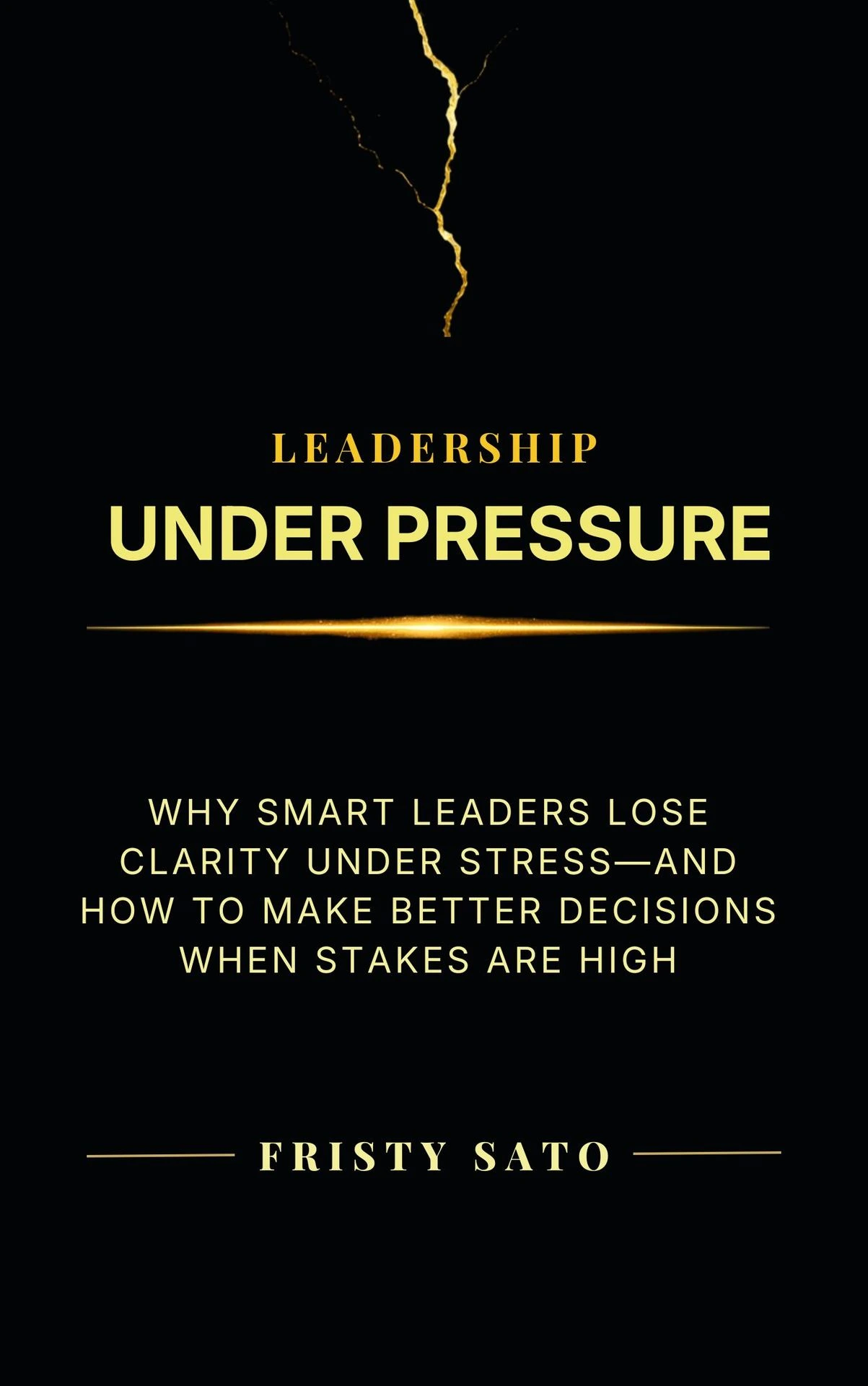
Read the Book: Leadership Under Pressure
Leadership becomes especially challenging when the stakes are high.
Decisions become more complicated, emotions become stronger, and the pressure to get things right can affect clarity.
In Leadership Under Pressure: Why Smart Leaders Lose Clarity Under Stress—and How to Stay Clear When Stakes Are High, this book explores why capable leaders can struggle to maintain clarity under pressure and how they can develop a more conscious relationship with their leadership responses.
Emotionally Safe Leadership for Teams and Organizations
Strong innovation requires more than capable employees and ambitious targets.
It also requires leadership, team dynamics, and workplace systems that allow people to contribute, challenge, experiment, and learn.
Explore how Emotionally Safe Leadership™ can support organizational development, trust, ownership, and more sustainable innovation.
Continue Exploring Emotionally Safe Leadership™
If this article articulated something you have been experiencing within your own career, you are not alone. The journey toward sustainable, high-impact authority begins by exploring the underlying systems that govern how we show up.
Featured Topics