Your Team Can Be Performing Well and Still Be Running Out of Capacity
Imagine leading a team that consistently meets its targets.
Projects are delivered. Customers receive what they expect. Revenue goals are reached. Senior management is pleased with the results.
From the outside, everything looks successful.
But behind those results, something else is happening.
People are working late because they are afraid of falling behind. Managers check every detail because they do not trust the team to make mistakes. Employees avoid raising concerns until problems become serious. One leader solves most of the difficult issues because nobody else feels confident making decisions.
The team is delivering.
But people are exhausted.
Perhaps you recognize this situation. Maybe your organization is achieving strong results, but the effort required to maintain them keeps increasing. Perhaps your employees work hard but rarely take initiative. Or maybe you have noticed that performance drops whenever pressure rises.
It is tempting to respond by increasing expectations, adding more monitoring, or asking people to work harder.
After all, if the team is struggling, shouldn't stronger pressure produce stronger results?
Not necessarily.
Sometimes pressure helps people focus. A genuine deadline, an urgent customer need, or a serious business challenge may require extra effort and quick decisions. But when pressure becomes the normal way of operating, it can create conditions that make performance harder to sustain.
A team can deliver impressive results while relying on fear, overwork, excessive control, and individual sacrifice.
The numbers may look healthy while the human capacity behind those numbers is weakening.
This raises an important question:
Are people performing because they have the capacity to do their best work, or because they feel they cannot afford to stop?
That question changes how we think about performance.
Instead of asking only how to get more from people, we begin asking what allows them to contribute their knowledge, judgment, and abilities over time.
This is where emotional safety and performance become connected.
The goal is not to remove ambition, accountability, or high standards. Organizations need results. Leaders need people to meet their responsibilities. Teams need clear expectations.
But perhaps we should also examine the conditions under which those results are produced.
Because high output and sustainable performance are not always the same thing.
What Is the Relationship Between Emotional Safety and Performance?
Emotional safety and performance are connected because people need workable conditions to communicate, learn, make decisions, raise concerns, and take responsibility.
When employees fear humiliation, punishment, or constant judgment, they may hide mistakes, avoid risks, or focus on protecting themselves.
When people can communicate more openly and receive a fair response, they may be better able to use their knowledge and judgment.
Emotional safety does not guarantee high performance. It is one condition that can support the behaviors needed for effective and sustainable work.
How emotional safety can support performance
Consider what a team needs to do its job well.
It needs people who can:
Share relevant information.
Ask questions when something is unclear.
Raise problems before they become serious.
Admit mistakes and learn from them.
Consider feedback.
Make decisions within their authority.
Take responsibility for commitments.
Challenge assumptions when necessary.
Collaborate across different roles and perspectives.
These behaviors matter because a team cannot make full use of its collective knowledge if people are afraid to share what they know.
It cannot learn from mistakes if employees hide them.
It cannot develop ownership if independent decisions are repeatedly punished.
And it cannot adapt well if people are afraid to question existing approaches.
Imagine an employee who notices a problem with a customer order. They have two possible responses.
They can report it immediately, explain what happened, and help find a solution.
Or they can wait because they are worried about being blamed.
The second response may delay the problem's discovery. What could have been a small correction may become a larger issue.
The difference is not necessarily the employee's skill or commitment. It may also involve the conditions surrounding the decision to speak up.
Safety supports performance by helping people use their abilities
This is an important distinction.
Emotional safety does not create performance by making work easier. It can support performance by making it easier for people to use their knowledge, judgment, and abilities.
A capable employee may still struggle to contribute when every question is treated as a challenge, every mistake becomes a personal criticism, or every decision requires approval from one manager.
The employee's ability has not necessarily disappeared. The conditions for using it may be limited.
Of course, emotional safety cannot replace technical competence, good strategy, adequate resources, or effective management. It works alongside these things.
The deeper question is whether the workplace allows people to contribute effectively without unnecessary emotional self-protection.
What Is High Performance Really?
Many organizations measure performance through visible results.
They look at revenue, productivity, delivery times, customer satisfaction, sales targets, project completion, and efficiency.
These measures are important. Without them, leaders may struggle to understand whether the organization is achieving its goals.
But they do not always reveal the full condition of the system producing those results.
To understand this difference, it helps to separate three ideas: output, performance, and sustainable performance.
Output: What people produce
Output describes what people produce within a given period.
For example:
The number of customers served.
The number of products delivered.
Sales completed in a month.
Projects finished before a deadline.
Tasks completed during a working day.
Output is useful because it provides visible information about activity and results.
However, it does not always explain what it took to achieve them.
A team may complete twice as much work because it has improved its processes. Or it may complete twice as much because employees have been working excessive hours.
The output may look similar. The underlying conditions are very different.
Performance: How effectively people contribute
Performance considers more than the amount produced.
It also includes how effectively people meet responsibilities, solve problems, maintain quality, and contribute to shared goals.
A strong performer does not simply complete tasks. They understand priorities, use their skills, communicate relevant information, and take responsibility for their work.
Sustainable performance: Whether results can continue
Sustainable performance considers whether meaningful results can continue without steadily consuming the human and organizational capacity required to produce them.
It asks questions such as:
Can people maintain their contribution over time?
Can the team handle challenges without depending on one exhausted person?
Are employees learning and developing?
Can the organization adapt when conditions change?
Are workloads and expectations realistic?
Are results supported by effective systems?
A team may meet every target this quarter while becoming less capable of meeting those targets next quarter.
That is why high output is not always evidence of healthy performance.
Sometimes people are compensating for broken systems, unclear roles, insufficient resources, or excessive workloads.
A useful performance conversation should examine not only what the organization produces, but also whether it is developing or weakening the capacity to produce those results again.
Why Emotional Safety Matters for Performance
Emotional safety may support performance through several practical pathways.
These are possible influences, not guaranteed outcomes. They depend on leadership, organizational systems, skills, resources, and the nature of the work.
1. Better information
Leaders need accurate information to make decisions.
If employees hide concerns or avoid reporting bad news, managers may work with an incomplete picture of what is happening.
A workplace where people can raise concerns more openly gives leaders a better chance of understanding problems before making decisions.
For example, an employee may notice that a new process is creating delays. If they can raise the issue without expecting an unreasonable reaction, the organization has an opportunity to investigate and respond.
2. Earlier problem detection
Problems are often easier to address when they are small.
A team member who notices a mistake early can help prevent it from affecting customers, deadlines, or other departments.
However, people need to believe that reporting a problem will lead to a fair discussion rather than automatic blame.
This does not mean removing accountability. It means making it possible to understand what happened before deciding what action is needed.
3. Learning from mistakes
Mistakes provide information.
Sometimes they reveal a gap in knowledge. Sometimes they expose an unclear process, an unrealistic deadline, or a decision that needs to be reconsidered.
If the only response to a mistake is punishment, people may focus on hiding errors.
A more useful approach distinguishes between honest mistakes, repeated performance problems, poor judgment, and deliberate misconduct.
Different situations require different responses.
4. Better decision-making
Good decisions depend on relevant information and the ability to consider different perspectives.
A leader who hears only agreement may miss important risks.
Employees often understand parts of the work that senior leaders cannot see directly. Their knowledge can improve decisions when they have appropriate opportunities to contribute.
Emotional safety may help make those contributions more possible.
5. Stronger ownership
People are more likely to take responsibility when they understand what is expected and have the authority to influence their work.
If a manager expects an employee to own a result but requires approval for every small decision, responsibility becomes difficult to exercise.
Ownership needs clarity, authority, and appropriate support.
It also requires accountability when commitments are not met.
6. More effective collaboration
Teams often need to work across different roles, priorities, and professional perspectives.
Disagreement is part of that process.
When people can discuss differences without turning every challenge into a personal threat, they may be better able to solve shared problems.
This connects with the wider topic of Emotionally Safe Teams.
7. Adaptability
Organizations operate in changing conditions.
Customer needs shift. Technology changes. Competitors introduce new approaches. Regulations and market conditions evolve.
Teams need to notice when existing methods are no longer working.
If employees feel unable to question established practices, the organization may miss useful information.
A more open environment can help people discuss what needs to change.
8. More sustainable contribution
People need the capacity to think, communicate, make decisions, and contribute over time.
Chronic pressure and excessive workload can make these activities harder to maintain.
Emotional safety does not remove every source of stress. But it can help reduce unnecessary emotional demands, such as constantly hiding mistakes, managing unpredictable reactions, or proving personal worth through overwork.
These eight pathways help explain why emotional safety can matter to performance. They do not mean that emotional safety alone will increase revenue, productivity, or profitability.
It is one part of a wider performance system.
The Difference Between High Output and Sustainable Performance
A team can produce strong results while relying on working conditions that are difficult to maintain.
This is particularly important when organizations reward visible effort without examining the long-term consequences.
Consider the following comparison.
High output driven by survival | Sustainable high performance |
People work because they fear consequences | People understand expectations and take responsibility |
Mistakes are hidden | Mistakes are examined and addressed |
The leader solves everything | Responsibility is shared |
People wait for approval | People make decisions within clear authority |
Urgency becomes normal | Priorities and workloads are managed |
Employees prove their value through overwork | Contribution is valued beyond constant availability |
Feedback creates defensiveness | Feedback supports learning and improvement |
Results depend on a few exhausted people | Capacity is developed across the team |
People avoid challenging decisions | Different perspectives can be considered |
Success depends on constant personal sacrifice | Results are supported by effective systems |
Survival-driven performance can work in the short term
There are situations where people need to make an extraordinary effort.
A genuine emergency may require longer hours. A critical deadline may require intense focus. A sudden operational problem may call for rapid decisions.
Temporary pressure is not automatically unhealthy.
The difficulty begins when temporary pressure becomes the permanent way the organization operates.
When everything is urgent, people have little time to think. When every mistake is treated as a personal failure, employees may hide problems. When leaders take control of every decision, teams may stop developing independence.
The organization may continue delivering results, but the cost of maintaining them can rise.
A team can be productive and still be unsustainable.
The goal is not to remove effort from work. It is to avoid making chronic overwork, fear, and emotional self-protection the main sources of performance.
How Emotional Unsafety Can Undermine Performance
Emotionally unsafe conditions may affect performance in ways that are not immediately visible in standard business reports.
Here are eight possible consequences.
1. Information gets hidden
People may delay raising concerns because they fear blame or embarrassment.
A team leader might not hear about a problem until it has already affected a customer or deadline.
The issue may appear to be poor communication, but the reasons behind the silence deserve attention.
2. Problems are discovered late
When employees are uncomfortable reporting mistakes, small issues may remain hidden.
By the time someone raises the problem, it may be more expensive or difficult to resolve.
Early reporting is not only a communication issue. It is also influenced by the response people expect when they share bad news.
3. Decision-making becomes slower
Employees may wait for approval rather than using their judgment.
This can happen when leaders frequently reverse decisions, criticize independent action, or make authority unclear.
The team becomes dependent on one person, even when others have the skills to make appropriate decisions.
4. Initiative decreases
People may stop suggesting improvements or taking reasonable risks.
They may learn that trying something different creates more personal risk than simply following existing instructions.
This can limit opportunities for improvement.
5. Learning becomes limited
When people focus on defending themselves, they may have less attention available for understanding what went wrong.
A performance conversation becomes an argument about blame rather than an opportunity to identify what needs to change.
6. Collaboration weakens
Employees may become protective of their own responsibilities, recognition, or position.
Instead of sharing knowledge, they may keep information to themselves.
This can create unnecessary competition and reduce cooperation across teams.
7. Leaders become bottlenecks
When employees do not feel confident making decisions, more and more work moves toward the leader.
The manager becomes responsible for approvals, problem-solving, quality checks, and decisions that could be handled elsewhere.
This can create a cycle:
The team depends on the leader, so the leader takes more control. The leader takes more control, so the team becomes even more dependent.
8. Human capacity declines
Chronic pressure, emotional suppression, and excessive workloads can contribute to exhaustion.
People may struggle to maintain concentration, patience, and decision-making capacity when recovery time is consistently limited.
This does not mean every tired employee is experiencing emotional unsafety. Workload, health, personal circumstances, resources, and job design also matter.
The important point is that performance problems can have several causes. Leaders should investigate the actual conditions rather than assume that employees simply need more motivation.
The Hidden Cost of Survival-Based Leadership
Some leadership behaviors are rewarded because they appear productive.
- The leader who works late every night is seen as committed.
- The manager who checks everything is seen as responsible.
- The employee who never asks for help is seen as independent.
- The team that never challenges leadership is seen as aligned.
- The person who always says yes is seen as reliable.
But what if some of these behaviors are connected to emotional pressure rather than healthy performance?
Working hard is not automatically a problem. Checking quality is a legitimate management responsibility. Independence can be valuable. Agreement may reflect a genuinely shared view.
The issue is not the behavior alone. It is what may be driving it and what it creates over time.
Seven survival-based leadership identities and their possible performance costs
The Seven Survival-Based Leadership Patterns™ provide conceptual lenses for exploring how certain emotional patterns may influence leadership behavior.
Leadership identity | Possible performance pattern | Possible hidden cost |
Controls quality and decisions | Team dependency and reduced initiative | |
Carries excessive responsibility | Unequal workload and limited ownership | |
Handles everything independently | Weak collaboration and poor knowledge-sharing | |
Suppresses uncertainty and emotion | Hidden problems and limited openness | |
Solves every difficult issue | Leadership bottlenecks | |
Overworks to demonstrate value | Perfectionism and unnecessary pressure | |
Constantly raises expectations | Exhaustion and difficulty recognizing enough |
Let's consider how these patterns may affect performance.
The Protective Leader
A Protective Leader may check every detail because mistakes feel difficult to tolerate.
This can help maintain quality in certain situations. However, if the pattern becomes excessive, employees may stop making independent decisions.
The leader protects the outcome today but may reduce the team's ability to manage similar work tomorrow.
The Responsible Leader
A Responsible Leader may take on more than their share because they do not want others to struggle or feel disappointed.
This can create short-term reliability. But when one person carries too much responsibility, other people may have fewer opportunities to develop ownership.
The leader's workload increases while the team's capacity remains underdeveloped.
The Self-Reliant Leader
A Self-Reliant Leader may prefer to handle difficult tasks alone.
This can look efficient, especially when the leader is experienced. But it may also limit collaboration and knowledge-sharing.
If important information remains concentrated in one person, the organization becomes more vulnerable when that person is unavailable.
The Strong Leader
A Strong Leader may avoid showing uncertainty or discussing emotional difficulties.
This can create an impression of stability. But if the leader never acknowledges uncertainty, employees may become less willing to raise their own concerns.
Problems can remain hidden because people believe they are expected to appear confident at all times.
The Capable Leader
A Capable Leader may solve problems quickly and often.
Their ability can become a valuable resource. Yet if they always step in, others may have fewer opportunities to develop their own judgment.
The leader becomes essential to too many decisions.
The Proving Leader
A Proving Leader may work excessively to demonstrate competence.
They may over-prepare, struggle to delegate, or feel that ordinary performance is never enough.
This can create high personal output but also unnecessary pressure and perfectionism.
The Achievement-Driven Leader
An Achievement-Driven Leader may continually raise targets and push for greater results.
Ambition can help organizations grow. But if every achievement immediately becomes the new minimum expectation, people may never feel that their work is enough.
The team may struggle to recognize progress, recover, or maintain a reasonable pace.
The deeper performance question
These identities are conceptual lenses, not fixed personality types or diagnoses. The same behavior can have different causes.
The useful question is:
Could a behavior that helps produce results today be reducing the team's ability to produce results independently tomorrow?
Sometimes the answer is yes.
A leader may achieve impressive personal results while creating a team that cannot operate without them. An employee may appear highly committed while becoming increasingly exhausted.
The short-term result can hide a longer-term cost.
Explore What Is Survival-Based Leadership™ and Why Survival Patterns Become Leadership Patterns.
How Leaders Accidentally Create Performance Pressure
Leaders do not always intend to create fear or unnecessary pressure.
Some are trying to protect quality. Others are responding to demands from senior management, customers, investors, or the wider market.
But good intentions do not guarantee helpful results.
Here are six patterns worth examining.
1. Confusing urgency with importance
When every task becomes urgent, people struggle to identify what deserves attention first.
Employees may constantly switch between priorities, rush important work, and spend less time thinking carefully.
Leaders can help by distinguishing between genuine emergencies, important deadlines, and tasks that can wait.
2. Rewarding overwork
If people receive the most recognition for being constantly available, employees may learn that visible sacrifice matters more than effective contribution.
Someone who finishes work efficiently may receive less recognition than someone who stays late every night.
Over time, this can create unhealthy expectations around availability.
3. Taking control under pressure
When results are threatened, leaders may begin checking every detail and taking decisions back from employees.
They may believe they are protecting the outcome.
But excessive control can reduce confidence and independent problem-solving.
4. Punishing mistakes
When mistakes lead to humiliation or disproportionate consequences, people may become more concerned with avoiding blame than improving the work.
This does not mean every mistake should be treated the same way. Repeated negligence and deliberate misconduct require appropriate accountability.
But leaders need to understand what happened before deciding how to respond.
5. Moving the goalposts
Employees may struggle when expectations continually change.
They complete one goal, only to discover that the standard has increased without a clear discussion.
Ambition is valuable, but people need to understand what success looks like and how priorities are changing.
6. Making everything personal
Performance discussions can become judgments about someone's value or commitment.
For example, a missed deadline may lead to comments about whether an employee really cares about the team.
This shifts attention away from the actual issue.
A better discussion examines the commitment, what affected it, and what needs to happen next.
The important question is not whether leaders intend to create pressure.
It is whether their behavior creates the conditions they actually want.
Emotional Safety, Accountability, and High Standards
One common concern is that emotional safety might make employees less accountable.
If people are encouraged to speak openly, will they become less disciplined? If leaders avoid making employees uncomfortable, will standards decline?
These concerns come from confusing emotional safety with the absence of accountability.
Emotional safety does not mean:
Accepting poor performance.
Avoiding difficult feedback.
Removing reasonable consequences.
Lowering standards.
Allowing repeated irresponsibility.
Making everyone comfortable.
Agreeing with every opinion.
It means addressing expectations and problems without unnecessary humiliation, fear, or personal attack.
Three elements of healthy performance
Sustainable performance needs three connected elements.
- Clarity: People understand what is expected, how success will be evaluated, and which responsibilities belong to them.
- Capacity: People have the skills, authority, resources, time, and support needed to meet expectations.
- Accountability:People take responsibility for commitments, decisions, and outcomes, and address problems when expectations are not met.
These elements need to work together.
- If expectations are unclear, people may not know what they are accountable for.
- If people lack authority or resources, they may be held responsible for outcomes they cannot reasonably control.
- If accountability is missing, important standards may become inconsistent.
And if emotional safety is missing, people may become more concerned with protecting themselves than addressing performance honestly.
Safety without accountability becomes avoidance. Accountability without safety becomes fear.
The goal is to create conditions where people can be honest about problems and still be expected to take responsibility for addressing them.
For more on shared responsibility, explore Ownership and Accountability.
The Leader's Emotional State and Team Performance
Leaders are not separate from the performance environment they create.
Their responses to pressure may influence how priorities are communicated, how mistakes are handled, how decisions are made, and how much responsibility employees are allowed to exercise.
Consider a practical example.
A project begins falling behind schedule.
The leader becomes anxious about the outcome. They start checking every detail, asking for constant updates, and taking decisions back from team members.
The intention may be to protect the project.
At first, this may help the leader feel more in control. But the team begins to change its behavior.
Employees wait for instructions rather than making independent decisions. They become less confident about taking action. They may avoid suggesting alternatives because they expect the leader to decide anyway.
The leader then notices that the team is showing less initiative.
They conclude that employees need closer supervision.
So they increase control again.
A possible reinforcing pattern
- Leader feels pressure about results
- Leader increases control and monitoring
- Team becomes more dependent on approval
- Team initiative appears to decrease
- Leader feels even more pressure to take control
Note: This is just an illustrative pattern, not a universal explanation for low ownership or performance.
This is one possible way that leadership behavior and team experience can reinforce each other.
The leader may not intend to reduce team capacity. They may be trying to protect quality and meet expectations.
But the result can be a team that depends increasingly on one person.
A more useful response might involve clarifying decision-making authority, identifying the real project risks, and agreeing on which updates are necessary.
The leader can remain accountable without controlling every detail.
This is one reason leadership under pressure deserves attention. Explore Leadership Under Pressure.
Emotional Safety and Performance Under Pressure
Pressure is part of leadership.
Organizations face deadlines, customer expectations, competition, financial demands, and unexpected problems. Leaders cannot remove every difficult situation.
The important distinction is between productive challenge and chronic threat.
Productive challenge can focus effort
A meaningful challenge can encourage people to concentrate, learn, and apply their skills.
For example, a team may need to complete an important project within a clear deadline. The work may be demanding, but people understand the goal, have appropriate resources, and know where to get support.
The pressure has a purpose and a defined context.
Chronic threat can shift attention toward self-protection
When pressure becomes constant, people may focus more on avoiding mistakes, blame, or negative reactions.
They may become reluctant to ask questions or report problems.
Leaders may also become more controlling when they feel that the outcome is at risk.
This does not mean all stress is harmful or that pressure always reduces performance. The effects depend on the situation, the person, the level of support, and how long the pressure continues.
Why pressure can change communication and decisions
Under difficult conditions:
Attention may narrow toward immediate problems.
Uncertainty may make people more defensive.
Fear of mistakes may reduce information-sharing.
Leaders may become more controlling.
Employees may stop raising concerns.
Decisions may become more reactive.
People may struggle to consider alternative approaches.
These are possible responses, not universal outcomes.
The goal is not to remove pressure from leadership.
It is to build the capacity to respond to pressure without allowing survival patterns to control the way people work.
This connects with the ideas explored in Emotional Regulation for Leaders.
How to Build Emotional Safety Without Lowering Performance Standards
Leaders do not need to choose between strong performance and respectful working conditions.
They can maintain clear expectations while reducing unnecessary emotional pressure.
Here are seven practical areas to work on.
1. Make expectations clear
People need to understand what success looks like.
A vague instruction such as "I need better performance" gives employees little information about what to change.
Instead, explain:
What outcome is required.
What quality standard applies.
When the work is due.
Which priorities matter most.
How progress will be reviewed.
Who is responsible for each decision.
Clear expectations reduce unnecessary guessing.
2. Match authority with responsibility
Do not expect people to own outcomes while withholding the authority to influence them.
If an employee is responsible for a project, clarify which decisions they can make independently and which require approval.
This helps develop judgment and reduces unnecessary dependence on the manager.
3. Respond constructively to mistakes
When something goes wrong, understand the situation before deciding what action is needed.
Ask:
What happened?
What was expected?
What contributed to the problem?
What was within the person's control?
What needs to change?
Is additional training or support required?
What accountability is appropriate?
This approach does not remove consequences. It makes the response more informed.
4. Encourage honest information
Make it possible for people to raise problems early.
When an employee reports bad news, avoid reacting as though the act of reporting is itself the problem.
You can still address responsibility, but first make sure you understand the situation.
A useful response might be:
"Thank you for raising this now. Let's understand what happened, what the impact may be, and what we need to do next."
5. Share responsibility
A strong team should not depend on one leader to solve every problem.
Give employees appropriate opportunities to make decisions, develop skills, and take responsibility.
This requires patience. People may not make every decision exactly as the leader would.
But shared ownership cannot develop if authority is never shared.
6. Manage workload and capacity
Do not rely on chronic urgency or excessive effort as the main way to meet targets.
Review:
How much work is assigned.
Whether priorities conflict.
Whether deadlines are realistic.
Whether responsibilities are distributed fairly.
Whether people have the necessary tools and training.
Whether too many decisions depend on one person.
Sometimes performance will not improve until the organization changes the conditions surrounding the work.
7. Maintain fair accountability
Address missed expectations directly, consistently, and respectfully.
People should understand what needs to improve and what happens if commitments are not met.
Avoid public humiliation, unpredictable consequences, or changing standards without explanation.
Fair accountability helps people understand that emotional safety does not mean freedom from responsibility.
How to Measure Performance Beyond Output
Traditional performance measures often focus on revenue, efficiency, productivity, quality, and targets.
These measures matter. Organizations need to know whether they are achieving their goals.
But they do not reveal the full condition of the system producing those results.
A broader view can include four dimensions.
1. Results
Ask whether meaningful goals are being achieved.
Possible indicators include:
Revenue or service targets.
Product or project quality.
Customer experience.
Delivery commitments.
Error rates and rework.
Progress against strategic goals.
2. Human capacity
Consider whether people can maintain their contribution.
Useful questions include:
Is the workload manageable?
Are people regularly working beyond reasonable limits?
Are critical responsibilities concentrated in too few people?
Is there enough time for recovery and development?
Are employees able to take leave without the work becoming unmanageable?
The aim is not to assume that every demanding period is unhealthy. It is to understand whether the organization depends on excessive effort as a normal operating condition.
3. Team capability
Look at whether the team can operate effectively without depending on one person for everything.
Consider:
Can employees make decisions within their authority?
Is important knowledge shared?
Can people solve routine problems independently?
Are responsibilities understood?
Can the team manage disagreements and feedback?
4. Adaptability
Consider whether the organization can learn and respond when conditions change.
Ask:
Can people raise concerns?
Are mistakes examined?
Can teams challenge outdated processes?
Are different perspectives considered?
Can the organization respond to new information?
A broader performance view
Results: What are we achieving?
Capacity: Can we keep contributing?
Team capability: Can we work effectively together?
Adaptability: Can we learn and respond?
A practical reflection model, not a validated performance measurement system.
These dimensions can help leaders ask better questions about performance.
They should be considered alongside business outcomes, employee experience, operational measures, and the specific needs of the organization.
A team that achieves its targets but depends on one exhausted manager may need a different development plan from a team that achieves the same targets through shared capability.
The results matter. So does the system producing them.
Why High-Performance Initiatives Sometimes Fail
Organizations often introduce new initiatives when performance needs to improve.
They may set more ambitious targets, introduce productivity tools, provide management training, or encourage employees to take greater ownership.
These actions can help.
But they may fail when the underlying conditions remain unchanged.
Consider these examples.
More targets without more capacity
Employees receive additional goals, but the workload, staffing, and available time remain the same.
People are expected to achieve more without a clear discussion about what should change.
The result may be increased pressure rather than improved effectiveness.
Productivity training without workload review
Employees learn how to organize their time, but they still have too many competing responsibilities.
Better time management cannot solve every problem created by excessive workload or unclear priorities.
Delegation training without trust
Managers are taught to delegate but continue to criticize employees whenever they make a decision differently.
The manager may technically delegate tasks while keeping control of every important decision.
Ownership without authority
Employees are told to take responsibility but cannot make decisions without multiple approvals.
The organization expects ownership without providing the authority needed to exercise it.
Innovation without room to learn
Teams are encouraged to develop new ideas, but unsuccessful experiments are treated as personal failures.
Employees may become less willing to try something different.
Empowerment without leadership change
Leaders are told to empower their teams but continue to be rewarded for controlling every outcome.
Their incentives may reinforce the very behavior the organization wants to change.
The conditions must support the behavior
These examples point to a central issue:
You cannot consistently ask people to behave differently while maintaining the conditions that make the old behavior feel safer.
- If an organization wants more ownership, it needs to review authority and decision-making.
- If it wants honest communication, it needs to consider how leaders respond to uncomfortable information.
- If it wants sustainable performance, it needs to examine workload, capacity, systems, and incentives.
Performance improvement requires both better skills and better conditions for using those skills.
The Organizational Dimension: Performance Is a System, Not Just an Individual Effort
It is easy to focus on the individual when performance falls.
A manager may be told to become more confident. An employee may be told to improve time management. A team may be asked to communicate better.
Sometimes those are useful steps.
But performance is also shaped by the organization surrounding the individual.
Leadership behavior, team dynamics, systems, incentives, structures, and resources interact.
A useful way to examine these influences is through four levels.
1. Personal level
This level includes the individual's emotional patterns, beliefs, capacity, skills, and responses to pressure.
For example, a leader may struggle to delegate because they feel responsible for every outcome.
Another employee may avoid asking for help because they believe they should be able to solve every problem independently.
These patterns can influence behavior, but they do not explain every performance problem.
2. Leadership level
This level concerns how authority, decisions, expectations, and responsibility are exercised.
It includes questions such as:
Are priorities clear?
Is authority shared appropriately?
Can employees raise concerns?
Are mistakes handled fairly?
Does leadership behavior support the expectations being set?
3. Team level
This level concerns how people communicate, collaborate, learn, and take ownership.
A team may have skilled individuals but struggle because responsibilities overlap, information is not shared, or disagreements remain unresolved.
Team performance depends partly on how people work together.
4. Organizational level
This level includes systems, culture, incentives, structures, and resources.
An organization may expect innovation while rewarding only predictable results. It may encourage collaboration while evaluating employees entirely through individual competition.
It may ask leaders to support their teams while giving them unrealistic workloads and conflicting priorities.
These conditions can limit what individuals and teams are able to achieve.
The four levels influence one another
A leader cannot compensate indefinitely for a poorly designed organization.
An emotionally safe leader cannot independently solve every structural problem.
Equally, a well-designed system can still be undermined by leadership behavior that discourages communication or ownership.
Sustainable performance requires attention to the connections between people, leadership, teams, and organizational design.
For more on the wider organizational conditions, explore Organizational Resilience and Leading Organizational Change.
Emotional Safety and Sustainable High Performance
Sustainable high performance can be understood as the ability to achieve meaningful results consistently while maintaining the human and organizational capacity required to continue producing those results.
It is not about avoiding effort.
It is not about making every working day comfortable.
And it is not about removing accountability.
It is about building the conditions that allow people and systems to contribute effectively over time.
Five conditions are particularly important.
1. Clear direction
People need to understand where the organization is going, what matters most, and what success looks like.
Without clear direction, employees may spend time working hard on competing priorities.
2. Emotional safety
People need reasonable confidence that they can raise concerns, ask questions, discuss mistakes, and disagree without unnecessary humiliation or retaliation.
This helps make important information available to the people who need it.
3. Shared ownership
Responsibility should not depend entirely on one leader.
Teams need appropriate authority, clear roles, and opportunities to develop their ability to make decisions.
4. Fair accountability
People should understand their commitments and take responsibility for their outcomes.
When expectations are not met, the issue should be addressed directly and consistently.
5. Sustainable capacity
The organization needs to consider whether its people, systems, and resources can support the results it expects.
A performance plan that relies indefinitely on exhaustion is unlikely to be a healthy long-term approach.
Short-term performance and sustainable performance ask different questions
Short-term performance asks:
"Can we deliver this result?"
Sustainable performance also asks:
"Can we continue delivering results without steadily weakening the people and systems responsible for them?"
A high-performing team should not depend on one exhausted leader, constant urgency, or people repeatedly sacrificing their well-being to meet expectations.
The organization should be developing capability, not simply extracting effort.
Explore Sustainable Leadership, Sustainable Success, and Sustainable Ambition.
The Emotionally Safe Leadership™ Perspective
Traditional performance development often begins with practical questions:
What skills do people need?
How can we improve productivity?
How can managers set better targets?
How can employees become more accountable?
How can the organization improve efficiency?
These questions are important.
But another set of questions can help leaders examine what may be happening beneath everyday performance behavior.
What happens inside a leader when performance is threatened?
Why does the leader become controlling under pressure?
What emotional beliefs may make delegation difficult?
Why does the leader feel responsible for everything?
What does the team learn from the leader's reactions to mistakes?
What happens to team capacity when people must constantly prove their value?
Emotionally Safe Leadership™ examines how emotional patterns beneath leadership behavior may influence the experience of teams and organizations.
The purpose is not to replace performance management, business strategy, or organizational design.
It is to include the human and emotional conditions that can influence how people use their abilities and work together.
Five conceptual pillars of Emotionally Safe Organization™
The following five pillars are conceptual elements of the Emotionally Safe Leadership™ framework. They are not established academic standards or universally adopted organizational measurements.
Organizational Self Safety™
Can the organization recognize pressure, uncertainty, and internal challenges without automatically relying on control, blame, or overwork?
This involves the ability to examine how the organization responds when results are threatened.
Relational Safety Architecture™
Do leadership relationships and team structures allow people to communicate, disagree, and take responsibility with appropriate respect?
This includes how authority and working relationships influence everyday interactions.
Systemic Visibility Safety™
Can important information, concerns, mistakes, and risks become visible without people facing unnecessary emotional punishment for raising them?
This is especially important when leaders need accurate information to make decisions.
Institutional Success Safety™
Can the organization pursue meaningful results without making constant sacrifice, overwork, or personal worth dependent on achievement?
This does not mean lowering standards. It means examining how success is defined and rewarded.
Adaptive Expansion Safety™
Can the organization learn, develop, challenge existing approaches, and expand its capabilities without relying on fear or excessive control?
This includes creating room for people and systems to adapt.
How SAFE Expansion™ supports the deeper work
The SAFE Expansion™ Pathway provides three stages for examining and changing patterns that may influence leadership behavior.
Regulate: Develop the capacity to respond to pressure rather than react automatically.
Rewire: Understand and work with the patterns beneath control, over-responsibility, perfectionism, and other survival-based behaviors.
Redefine: Build leadership practices that support shared responsibility, healthy authority, and sustainable results.
This is not a promise that every organizational performance issue can be solved through individual leadership development.
Some challenges require changes to strategy, staffing, resources, systems, or organizational structure.
But understanding the emotional patterns influencing leadership can be a valuable part of wider performance development.
Explore the SAFE Expansion™ Pathway and What Is Emotionally Safe Leadership™.
The Best Performance Is Not the Performance That Costs People Everything
Organizations need results.
Leaders need accountability. Teams need high standards. Businesses need to remain effective, competitive, and capable of meeting their commitments.
But none of these should require people to spend their working lives in a state of constant emotional protection.
A workplace can achieve strong results while hiding problems, exhausting its people, and creating unnecessary dependence on a few individuals.
It can look successful while its ability to sustain that success is gradually weakening.
This is why we need to examine performance from a wider perspective.
We often measure performance by looking at what people produce.
But perhaps we also need to look at what it takes to produce those results.
Are people learning, contributing, and becoming more capable?
Or are they becoming more exhausted, more dependent, and more afraid of making mistakes?
Can employees raise concerns before problems become serious?
Can leaders receive feedback without becoming defensive?
Can teams make decisions without waiting for one person to approve everything?
Can the organization maintain its standards without relying on chronic urgency and personal sacrifice?
These questions do not weaken the importance of performance. They help us understand what makes performance possible and what may put it at risk.
Because high performance should not depend on how much pressure people can tolerate.
It should depend on how well an organization can use, develop, and sustain the human capacity within it.
The goal is not to build a workplace with less ambition. It is to build a workplace where ambition does not require people to sacrifice themselves to keep it alive.
Explore the Leadership Patterns That May Be Influencing Your Team's Performance
Your team's performance may be influenced by more than its skills, goals, and systems.
The way you respond to pressure, mistakes, uncertainty, and responsibility can shape how people work around you.
A leader may believe they are protecting quality while unintentionally creating dependency. They may value accountability while making employees afraid to admit mistakes. They may want stronger results while relying on patterns that make sustainable performance harder.
Understanding these patterns can be a useful starting point.
Discover Your Leadership Pattern
What might your team be adapting to?
The Emotionally Safe Leadership Assessment™ helps you explore the leadership pattern that may be influencing your decisions, relationships, responsibilities, and the experience of the people you lead.
You can use it as a starting point to reflect on:
How you respond when work becomes uncertain.
Whether you tend to take over or find it difficult to delegate.
How you handle mistakes and disagreement.
Whether your leadership creates space for shared responsibility.
Which patterns may be worth examining more closely.
Continue Your Learning: The Hidden Emotional Patterns Shaping Your Leadership™
Why do capable leaders still feel exhausted, over-responsible, and stuck?
This five-module course explores the relationship between human biology, emotional patterns, and modern business leadership.
It offers an opportunity to understand the seven survival-based leadership identities and examine the patterns that may influence the way you lead.
Leadership Pattern Breakthrough™
If you recognize a recurring pattern in your team and want to understand what may be happening beneath your leadership behavior, a deeper exploration may be useful.
The aim is to move beyond identifying a problem and begin examining the beliefs, protective responses, and repeated behaviors that may be influencing it.
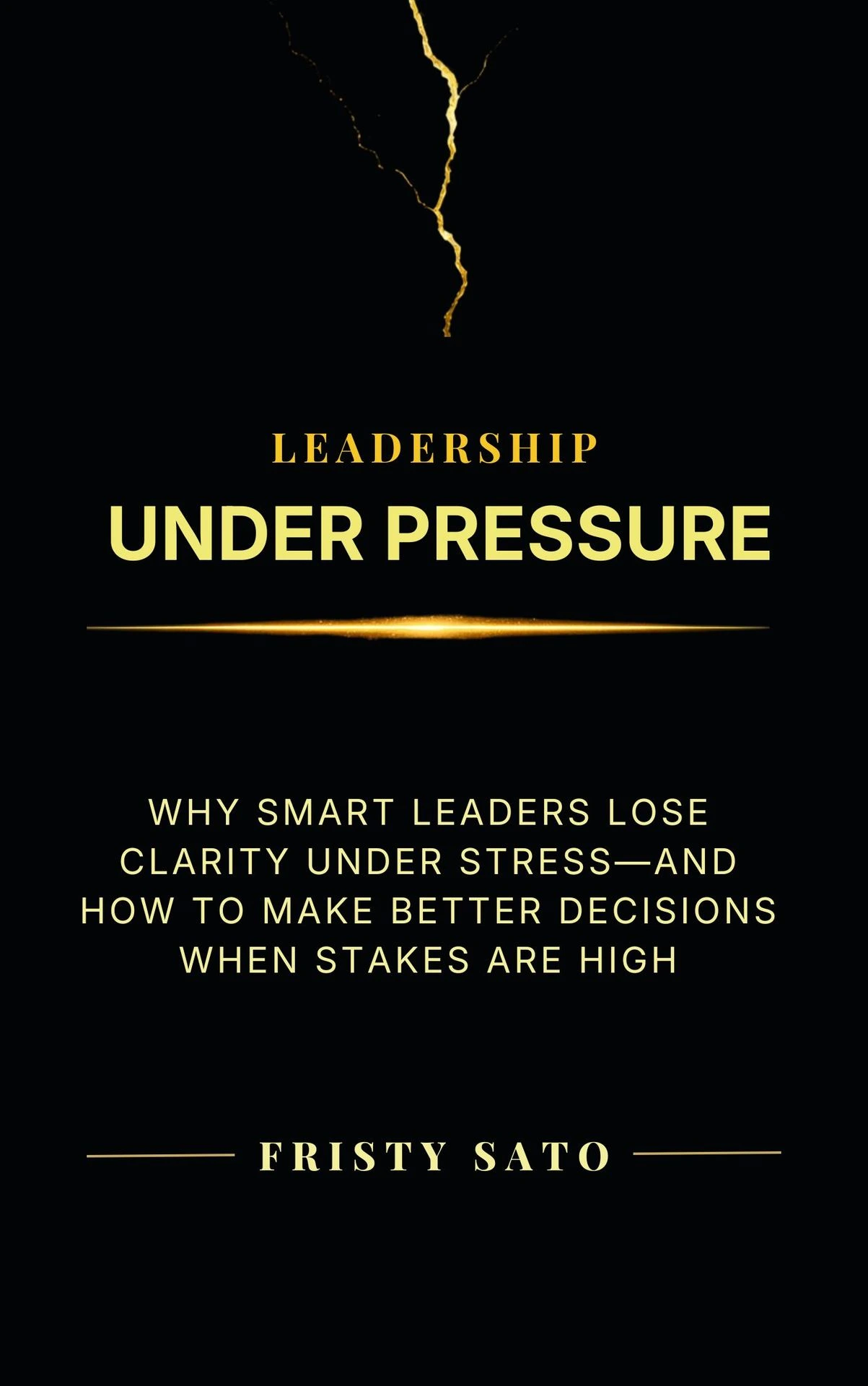
Read the Book: Leadership Under Pressure
Leadership becomes especially challenging when the stakes are high.
Decisions become more complicated, emotions become stronger, and the pressure to get things right can affect clarity.
In Leadership Under Pressure: Why Smart Leaders Lose Clarity Under Stress—and How to Stay Clear When Stakes Are High, this book explores why capable leaders can struggle to maintain clarity under pressure and how they can develop a more conscious relationship with their leadership responses.
Emotionally Safe Leadership for Teams and Organizations
Strong organizational performance requires more than capable employees and ambitious targets.
It also requires leadership, team dynamics, and workplace systems that allow people to contribute their full capacity.
Explore Emotionally Safe Leadership™ as a starting point for understanding this wider approach.
Continue Exploring Emotionally Safe Leadership™
If this article articulated something you have been experiencing within your own career, you are not alone. The journey toward sustainable, high-impact authority begins by exploring the underlying systems that govern how we show up.
Featured Topics