People May Be Talking, But Are They Really Communicating?
Imagine asking your team a simple question during a meeting:
"Does anyone see a problem with this decision?"
Nobody says a word.
You look around the room. Everyone appears to agree. A few people nod, and someone says the plan sounds good.
But later, you discover that several team members had serious concerns. One person thought the deadline was unrealistic. Another knew the plan could affect an important client. A third had tried to raise the issue before the meeting but decided not to push it.
So, what happened?
You invited feedback, but you did not receive the information you needed.
This situation is more common than many leaders realize. A manager may say, "My door is always open," while employees carefully choose their words because they are unsure how the manager will react. A leader may encourage honesty but become defensive when someone questions a decision. Team members may communicate regularly while avoiding the conversations that matter most.
A workplace can have meetings, emails, messaging platforms, feedback sessions, and open-door policies without having honest communication.
People may be talking constantly while keeping their most important thoughts to themselves.
We often assume communication problems happen because people lack the right skills. Perhaps they need to listen better, speak more clearly, give better feedback, or learn how to manage conflict.
Those skills matter. But there is another question worth asking:
What if people already know what they want to say, but they do not feel safe enough to say it?
This is where emotionally safe communication becomes important.
It asks us to look beyond the words people use and consider what happens when someone expresses a different opinion, raises a concern, admits a mistake, or shares an uncomfortable truth.
It also asks leaders to look at their own reactions.
You might genuinely want honest feedback. But can you receive it without immediately explaining yourself? Can you hear disagreement without treating it as a challenge to your authority? Can you discuss mistakes without making people feel that their value is being judged?
The deeper question is:
What happens when people have something important to communicate but are more concerned about the reaction than the message itself?
What Is Emotionally Safe Communication?
Emotionally safe communication is the ability to express and receive information, concerns, ideas, feedback, and disagreement while maintaining dignity, respect, and room for honest participation.
It allows people to communicate what they think, need, notice, or feel without unnecessary fear of humiliation, retaliation, dismissal, or emotional punishment.
This working definition is used within the broader Emotionally Safe Leadership™ perspective. It is not a universally standardized academic definition. It offers a practical way to examine the emotional and relational conditions surrounding everyday communication.
One important point deserves attention: emotionally safe communication involves two connected responsibilities.
1. How we communicate with others
The first responsibility concerns how we express ourselves.
It includes the ability to:
Share thoughts and concerns clearly.
Ask questions when something is unclear.
Disagree without attacking another person.
Give direct feedback without humiliating someone.
Acknowledge mistakes and take responsibility.
Express needs and boundaries.
Explain expectations without relying on threats or intimidation.
For example, imagine an employee notices that a project is falling behind schedule.
They could remain silent because they worry about disappointing their manager. Or they could explain the situation, identify the obstacle, and ask for help.
Emotionally safe communication makes the second response more possible.
2. How we receive communication from others
The second responsibility is just as important. It concerns what happens when someone communicates something to us.
It includes the ability to:
Listen without immediately defending ourselves.
Consider perspectives that differ from our own.
Ask questions before making assumptions.
Receive feedback without attacking the person giving it.
Acknowledge the impact of our words and actions.
Respond without unnecessary punishment or retaliation.
This matters because communication is not a one-way activity.
A leader may speak clearly, give thoughtful instructions, and encourage employees to share their opinions. But if that leader reacts badly whenever someone disagrees, people may gradually stop being honest.
The words say, "You can speak openly."
The reaction says, "Only if I like what you say."
Emotional safety does not mean avoiding discomfort
An honest conversation can be uncomfortable. A performance discussion may involve disappointment. A disagreement may reveal competing priorities. Feedback may show that someone needs to change their behavior.
These situations are not automatically signs of unsafe communication.
The goal is not to make every conversation pleasant. The goal is to make honest communication possible without unnecessary emotional harm.
Emotionally safe communication is not about making sure nobody feels uncomfortable. It is about making sure discomfort does not become a reason to silence, shame, threaten, or dismiss people.
Why Emotionally Safe Communication Matters
Communication influences how people work together. It affects what information gets shared, how problems are addressed, and whether people can take responsibility for their work.
Emotionally safe communication supports several important conditions.
1. It helps build trust
Trust grows through repeated interactions.
When people can raise concerns and receive a fair response, they gain more confidence in the relationship. They learn that honesty does not automatically lead to humiliation or punishment.
This does not mean every request will be accepted or every concern will lead to a change. It means people can expect to be heard and treated with respect.
Explore the related topic of Team Trust.
2. It gives leaders better information
Leaders make decisions based on the information available to them.
If employees hide concerns, disagree privately, or avoid reporting mistakes, leaders may make decisions without understanding the full situation.
Consider a manager who asks whether a new process is working. Everyone says yes, but several employees know that the process creates delays.
The manager may believe the change is successful simply because nobody has raised an objection.
Honest communication helps leaders see what is actually happening.
3. It supports early problem detection
Small problems are often easier to address than large ones.
An employee who can raise a concern early may help prevent a missed deadline, a customer complaint, or an avoidable mistake.
However, employees need more than permission to speak. They need reasonable confidence that raising a concern will not make their situation worse.
4. It makes healthy conflict possible
Different people have different experiences, priorities, and opinions. Disagreement is a normal part of working together.
Emotionally safe communication helps people challenge ideas without turning every disagreement into a personal conflict.
A team can disagree about a strategy and still respect one another.
5. It strengthens shared responsibility
Clear communication helps people understand what is expected, what has gone wrong, and what needs to happen next.
When people can discuss missed commitments directly, they have a better opportunity to take responsibility and correct problems.
This connects closely with Ownership and Accountability.
6. It supports learning and development
Feedback is useful only when people can give it and consider it.
If employees fear criticism, they may hide mistakes. If managers cannot receive feedback, they may miss opportunities to improve their leadership.
A healthier communication environment allows people to learn without treating every mistake as a judgment of their worth.
7. It supports sustainable working relationships
People can spend a surprising amount of energy trying to manage other people's reactions.
They may rehearse simple messages, avoid asking questions, hide concerns, or wait for the perfect moment to raise an issue.
When communication becomes more honest and respectful, people may spend less energy protecting themselves and more energy doing meaningful work.
These benefits are not automatic. Emotionally safe communication does not guarantee better decisions or higher performance on its own. Competence, reliable information, clear authority, reasonable workloads, and effective systems still matter.
But it can help create the conditions in which those things work better.
Signs of Emotionally Safe Communication
How can you recognize emotionally safe communication in everyday workplace situations?
It is not measured by how friendly everyone appears. It is better understood through repeated behaviors.
Here are six areas to consider.
1. Open expression
People can ask questions, share concerns, and explain different points of view.
They do not have to pretend to agree just to keep the meeting comfortable.
For example, an employee might say:
"I understand why we're considering this approach, but I think we may be overlooking the impact on the customer support team."
The manager may not agree, but the employee can raise the concern without being treated as difficult or disloyal.
2. Respectful disagreement
People can challenge ideas without attacking individuals.
A disagreement does not automatically damage the relationship. Leaders can hear opinions that differ from their own without assuming that someone is questioning their competence.
This is particularly important in senior teams, where decisions can affect many people.
3. Healthy feedback
Feedback is specific, relevant, and focused on behavior or outcomes.
People can discuss performance without humiliation. Leaders are also willing to receive feedback about their own communication and decisions.
For example, a team member might say:
"When the priorities changed yesterday, I wasn't sure which deadline mattered most. Could we clarify that before the next project begins?"
This is more useful than remaining silent and hoping the problem disappears.
4. Honest listening
People listen to understand rather than simply waiting for their turn to speak.
Questions are welcomed. Concerns are explored. People are not immediately told that they are wrong, too sensitive, or overreacting.
Listening does not require agreement. It requires a genuine effort to understand what another person is communicating.
5. Clear communication
Expectations, decisions, and responsibilities are explained.
People know where they stand. They do not need to guess what a manager wants or interpret vague comments.
For example, instead of saying, "I need you to be more proactive," a leader can explain the specific actions they expect and when they need to happen.
6. Repair after difficult interactions
Even thoughtful people sometimes communicate poorly.
They may interrupt, misunderstand, become frustrated, or use words they later regret.
Emotionally safe communication includes the ability to acknowledge these moments and repair the relationship.
A leader might say:
"I interrupted you earlier, and I don't think I gave your concern enough attention. I'd like to hear the rest of what you were saying."
That kind of response does not make the original mistake disappear. But it shows that the relationship matters enough to address it.
Signs of Emotionally Unsafe Communication
Sometimes the most useful way to understand communication safety is to notice what people stop doing.
Do employees stop asking questions? Do they agree publicly but express concerns privately? Do they avoid telling their manager about problems until there is no choice?
These behaviors may indicate that communication has become difficult or emotionally costly.
Common signs include:
People remain silent when they disagree.
Leaders interrupt or dismiss different opinions.
Employees avoid sharing bad news.
Feedback becomes personal criticism.
Sarcasm or public embarrassment is used to express frustration.
People carefully monitor every word.
Difficult issues are discussed behind people's backs.
Leaders become defensive when questioned.
People experience punishment or retaliation after raising concerns.
Conversations focus on proving who is right.
Employees avoid admitting mistakes.
Team members agree during meetings but withdraw afterward.
Imagine a manager who asks for an update every morning. When an employee reports a delay, the manager responds with frustration and asks why the employee failed to plan properly.
The next time a problem appears, that employee may wait before reporting it.
The manager may interpret the delay as poor communication. The employee may see it as self-protection.
The pattern can become difficult to break.
One difficult conversation does not define the whole environment
It is important not to overinterpret every awkward interaction.
People have bad days. Conversations sometimes go wrong. Different communication styles can also create misunderstandings.
The more important question is whether certain patterns happen repeatedly.
Do people learn that honesty comes with an unreasonable emotional cost? Do concerns receive attention, or are they regularly dismissed? Can relationships recover after disagreements?
Repeated experiences often teach people what is safe to say and what is better left unsaid.
The Difference Between Polite and Emotionally Safe Communication
Many workplaces place a high value on politeness.
People are encouraged to remain professional, avoid arguments, and speak respectfully. These are useful expectations.
But politeness and emotionally safe communication are not the same thing.
A conversation can sound pleasant while important truths remain hidden.
Consider these examples:
An employee says, "No problem," when they are already overwhelmed.
A team member says, "I agree," while privately believing the decision is risky.
A manager hears, "Everything is fine," because nobody wants to explain what is going wrong.
An employee says, "Whatever you think is best," because challenging the decision feels too risky.
Nobody is openly arguing. Everyone appears polite. Yet honest communication is missing.
Polite but potentially unsafe communication | Emotionally safe communication |
Avoiding disagreement to keep the peace | Expressing disagreement respectfully |
Saying yes to avoid conflict | Being honest about capacity |
Hiding mistakes to avoid criticism | Raising mistakes early |
Pretending to agree | Sharing different perspectives |
Avoiding feedback | Giving feedback with respect |
Suppressing concerns | Addressing concerns directly |
Staying quiet to avoid a reaction | Asking questions without unnecessary fear |
The difference is not about being less respectful.
It is about allowing respect and honesty to exist together.
A team should not have to choose between being kind and telling the truth.
A conversation can sound pleasant while important truths remain unspoken. Emotionally safe communication allows people to be respectful without having to be dishonest.
The Role of Leadership in Emotionally Safe Communication
Leaders have a particular influence on communication because they hold authority.
An employee may experience a conversation with a manager differently from the way the manager experiences it.
A manager might see a performance discussion as a routine part of the job. An employee may worry that the conversation could affect their reputation, future opportunities, or job security.
This difference matters.
Leaders do not control every emotional response employees have, and they cannot guarantee that everyone will feel comfortable during every conversation. But they do influence the conditions in which people communicate.
There are six important responsibilities.
1. Invite honesty and receive it well
Asking for feedback is not enough.
If a leader asks for honest opinions but becomes defensive when challenged, employees may stop offering them.
Instead of immediately explaining why a decision was made, try asking:
"Can you tell me more about what concerns you?"
You can still explain your reasoning later. First, understand what the other person is communicating.
2. Make expectations clear
Unclear expectations create unnecessary tension.
Employees may worry about making the wrong choice because they do not know what the manager expects.
Leaders should explain priorities, responsibilities, deadlines, and decision-making authority.
Clarity is not about controlling every detail. It is about giving people enough information to do their work responsibly.
3. Communicate difficult decisions honestly
Leaders sometimes need to communicate decisions people will not like.
A project may be cancelled. A deadline may change. A role may be affected by restructuring.
Trying to make every decision sound positive can reduce trust.
It is usually better to explain what is known, what remains uncertain, why the decision was made, and what happens next.
4. Address conflict directly
Avoiding conflict may feel easier in the short term.
But unresolved tension can grow through assumptions, gossip, and private frustration.
Leaders should create appropriate opportunities to discuss the actual issue, hear different perspectives, and clarify what needs to change.
5. Respect different perspectives
Disagreement is not automatically disrespect.
An employee who questions a decision may be trying to protect a project, customer, or team.
Leaders should consider the content of the disagreement before judging the intention behind it.
6. Take responsibility for impact
A leader's communication is not measured only by what they intended to say.
It is also shaped by how they respond when someone communicates something they do not want to hear.
A manager may intend to be direct but come across as dismissive. A leader may believe they are encouraging high standards while employees experience constant criticism.
Taking responsibility does not mean accepting every interpretation as fact. It means being willing to understand the impact and consider whether a different response would be more helpful.
For a deeper look at the emotional conditions surrounding leadership, explore Emotional Safety in Leadership.
How Emotional Patterns Influence Communication
Communication is influenced by more than language skills.
It can also be affected by what happens emotionally when people feel challenged, criticized, misunderstood, rejected, or uncertain.
A leader may believe they are communicating clearly while their emotional reactions make it difficult for others to communicate honestly in return.
For example, a manager who feels uncomfortable with mistakes may correct employees quickly and ask for constant updates. The manager may see this as maintaining quality. Employees may experience it as a lack of trust.
Another leader may avoid difficult conversations because they do not want to disappoint anyone. The intention may be kind, but unresolved problems remain.
The same behavior can have different causes. These examples are possibilities, not diagnoses.
Seven survival-based leadership identities and possible communication patterns
The Seven Survival-Based Leadership Patterns™ offer conceptual lenses for exploring how certain patterns may influence leadership behavior.
Leadership identity | Possible communication pattern | What may sit beneath it |
Gives excessive instructions, corrects quickly, questions every detail | Fear of mistakes or losing control | |
Speaks for others, over-explains, avoids letting people struggle | Fear of letting people down | |
Shares little, avoids asking for help, keeps concerns private | Fear of depending on others | |
Suppresses uncertainty, avoids emotional conversations | Belief that vulnerability threatens authority | |
Gives solutions before listening, takes over discussions | Need to remain the person who can solve everything | |
Over-explains, seeks approval, becomes sensitive to criticism | Fear of not being seen as competent | |
Focuses conversations on targets, speed, and results | Belief that performance must always increase |
Let's look at how these patterns might appear.
A Protective Leader may ask for frequent updates because uncertainty feels difficult. A Responsible Leader may speak on behalf of team members because they do not want anyone to struggle. A Self-Reliant Leader may avoid sharing concerns because asking for help feels uncomfortable.
A Strong Leader may believe that showing uncertainty will weaken their authority. A Capable Leader may offer solutions before fully understanding the problem. A Proving Leader may explain every decision in great detail because they want others to see that they are competent. An Achievement-Driven Leader may move conversations quickly toward targets and results, leaving little room to discuss how people are managing the work.
None of these identities should be treated as a fixed personality label.
The same communication behavior can have different explanations. Workload, organizational culture, personal preferences, experience, and the immediate situation all matter.
The useful question is not, "Which label describes this person?"
It is:
What might be influencing the way I communicate, especially when I feel uncomfortable?
To explore these patterns further, read The Seven Survival-Based Leadership Patterns™.
What Happens When Leaders Feel Emotionally Threatened?
Even experienced leaders can find certain conversations difficult.
A challenge to their judgment may feel personal. Negative feedback may bring up feelings of inadequacy. An unexpected problem may create pressure to regain control quickly.
Under pressure, communication can change.
Defensiveness
A leader explains, justifies, or argues before understanding the feedback.
For example:
"That's not what I said. You misunderstood me."
A more useful response might be:
"Can you explain which part came across that way? I want to understand what you heard."
Control
A leader interrupts, directs, corrects, or takes over the conversation.
This can happen when uncertainty feels uncomfortable or when the leader believes there is no time to consider other views.
The result may be less participation from the team.
Withdrawal
A leader becomes quiet, distant, or emotionally unavailable.
Employees may struggle to understand what the leader thinks or whether a concern has been taken seriously.
Silence can sometimes be a useful pause. But when it becomes a repeated way of avoiding difficult conversations, it can create uncertainty.
Over-explaining
A leader focuses on proving their intentions or competence rather than listening.
They may spend several minutes explaining why they made a decision before understanding the concern being raised.
Explaining context can be helpful. The difficulty begins when explanation replaces listening.
Blame
A leader focuses on who caused the problem rather than understanding what happened.
This can make people more concerned with protecting themselves than solving the issue.
People-pleasing
A leader avoids saying what needs to be said because they fear upsetting someone.
They may delay feedback, make unclear promises, or avoid setting boundaries.
These reactions can happen to anyone. The goal is not to eliminate every emotional response. It is to become more aware of those responses and less controlled by them.
A useful starting point is learning to recognize what happens under pressure. Explore Emotional Regulation for Leaders.
Emotionally Safe Communication During Difficult Conversations
Difficult conversations are where communication habits become especially visible.
It is relatively easy to communicate well when everyone agrees, the workload is manageable, and nothing important is at stake.
The challenge appears when someone is disappointed, when priorities conflict, or when a mistake needs to be addressed.
Here are seven common situations.
1. Giving difficult feedback
Feedback should address behavior, decisions, or outcomes rather than attacking someone's identity.
Instead of saying:
"You're not reliable."
Try:
"The last two reports arrived after the agreed deadline. Can we discuss what affected the timing and what would help you meet the next deadline?"
The second statement is direct. It does not avoid the problem, but it gives the other person something specific to respond to.
2. Receiving criticism
When someone criticizes your work, you may feel an immediate urge to explain yourself.
Pause first.
Ask what they noticed, what impact it had, and what they would like to see change.
You do not have to agree with every point. But you can consider the information before deciding how to respond.
3. Disagreeing with a decision
You can respect a leader's authority while raising a different view.
For example:
"I understand the decision and the reason behind it. I have one concern about how it may affect the delivery date. Could we look at that before we finalize the plan?"
This approach communicates disagreement without making the conversation personal.
4. Addressing mistakes
When something goes wrong, focus on understanding the situation.
What happened? What was the impact? What responsibility does each person have? What needs to change?
Accountability should not disappear, but humiliation rarely helps people understand a problem more clearly.
5. Setting boundaries
Boundaries help people communicate what they can reasonably do.
For example:
"I can take responsibility for the client update, but I won't be able to complete both reports by tomorrow. Which one should take priority?"
This is clearer than silently accepting too much work and hoping everything gets done.
6. Communicating under pressure
Urgency can reduce patience and make people more reactive.
A leader who normally listens may start interrupting. A team member who usually asks questions may become quiet.
When time is limited, make the immediate priority clear. Avoid adding unnecessary blame or emotional pressure.
7. Discussing conflict
Focus on the issue rather than assuming you know the other person's intentions.
Instead of saying:
"You clearly don't respect my time."
Try:
"When the meeting started twenty minutes late, it affected the time I had for the next task. Can we agree on how to handle this in future?"
The second statement describes an event and its impact without making an unsupported judgment about someone's character.
A practical structure for difficult conversations
The following structure can help organize a conversation:
What happened? Describe the situation as clearly as possible.
What was the impact? Explain why the issue matters.
What needs to be understood? Invite the other person's perspective.
What needs to change? Identify the practical issue that needs attention.
What responsibility belongs to each person? Clarify who needs to do what.
What happens next? Agree on an action and a reasonable follow-up.
This is a conversation guide, not a guaranteed formula. Some situations require formal processes, additional support, or a more careful approach, particularly when there are serious concerns about bullying, discrimination, retaliation, or misconduct.
How to Give Feedback Without Creating Unnecessary Emotional Threat
Giving feedback is one of the most important communication responsibilities in leadership.
Yet many managers struggle to find the balance between being honest and being respectful.
Some avoid feedback because they do not want to upset anyone. Others become too direct and unintentionally make the conversation feel like a personal attack.
The answer is not to remove difficult information. It is to communicate it in a way that gives the other person a fair opportunity to understand and respond.
Focus on behavior rather than identity
Compare these statements:
Avoid | Try |
"You are careless." | "This report contains several errors. Let's look at what happened and how to prevent them next time." |
"You never take ownership." | "I noticed the decision was delayed until I followed up. What got in the way of moving it forward?" |
"You are too sensitive." | "I want to understand how that conversation affected you. We also need to discuss the issue that brought us here." |
"You always make excuses." | "I'd like us to focus on what can be changed and what support or action is needed now." |
The improved versions are not softer in the sense of avoiding responsibility. They are more specific.
Five principles for respectful feedback
- Address specific behavior. Avoid broad statements about someone's character.
- Explain the impact. Help the person understand why the issue matters.
- Listen to their perspective. There may be information you do not yet have.
- Maintain appropriate expectations. Respect does not mean lowering standards or avoiding accountability.
- Agree on what happens next. Feedback should lead to clarity about actions, support, and expectations.
A useful feedback conversation should leave the person with a clearer understanding of the issue, even if the message is difficult to hear.
How to Receive Feedback Without Becoming Defensive
Leaders often focus on improving how they give feedback. But receiving feedback is equally important.
It can be difficult to hear that your communication has affected someone negatively. You may feel misunderstood, unfairly judged, or concerned that your authority is being questioned.
Those feelings can make it tempting to defend yourself immediately.
Try these five practices instead.
1. Pause before responding
You do not need to answer every comment immediately.
Take a breath. Give yourself a moment to understand what has been said.
A short pause can prevent a quick emotional response from taking over the conversation.
2. Listen to understand the concern
Try not to prepare your defense while the other person is speaking.
Listen for the main point. What are they asking you to understand?
3. Ask for specific examples
If feedback feels unclear, ask:
"Can you give me an example of when that happened?"
Specific examples make it easier to discuss behavior rather than argue over general impressions.
4. Separate behavior from identity
Hearing that one of your decisions caused a problem does not mean you are a bad leader.
You can take responsibility for a behavior without turning the feedback into a judgment of your entire identity.
5. Decide what is useful
Not every piece of feedback will be accurate or helpful.
You can consider what has been said, ask questions, and decide what action is appropriate.
Receiving feedback does not mean agreeing with everything someone says. It means being willing to consider information without immediately treating it as a threat.
Emotionally Safe Communication and Conflict
Conflict is a normal part of working with other people.
Teams bring together different experiences, priorities, responsibilities, communication styles, and expectations. It would be unrealistic to expect everyone to agree all the time.
The real question is how people handle disagreement.
Why people avoid conflict
People may avoid conflict because they:
Fear damaging an important relationship.
Worry about being judged as difficult.
Have experienced retaliation after raising concerns.
Do not know how to express disagreement.
Feel that speaking up will not change anything.
Believe that keeping the peace is more important than addressing the issue.
Sometimes avoiding a conversation is reasonable. Not every disagreement needs immediate attention, and some situations require formal support.
But repeated avoidance can allow problems to grow.
Disagreement is not disrespect
A team member can question a decision while respecting the person who made it.
A manager can challenge an employee's approach without attacking their character.
The distinction matters because people sometimes interpret disagreement as a threat to authority or personal worth.
When this happens, conversations can become focused on winning rather than understanding.
Repair helps relationships recover
A difficult conversation does not have to damage a relationship permanently.
People can acknowledge what happened, clarify misunderstandings, apologize where appropriate, and agree on a better way forward.
Repair requires more than saying, "Let's move on."
It involves recognizing the issue and taking meaningful action.
Healthy communication does not prevent every conflict. It gives people a way to move through conflict without making the relationship unsafe.
For more on addressing workplace tension, explore Managing Conflict and Difficult Conversations.
How to Build Emotionally Safe Communication in a Team
Emotionally safe communication is not created by one person alone.
Leaders have particular responsibility because of their authority, but team members and organizations also influence communication conditions.
The following practices can help at three levels.
For leaders
Model honest communication. Be clear about what you know, what you do not know, and what still needs to be decided.
Receive disagreement without punishment. Consider the message before reacting to the person delivering it.
Make expectations and decisions clear. Explain responsibilities, priorities, and the reasons behind important decisions where appropriate.
Address conflict early. Do not allow avoidable tension to grow through silence or gossip.
Acknowledge communication mistakes. If you interrupt, dismiss, or misunderstand someone, be willing to address it.
Invite feedback and respond constructively. Asking for feedback should lead to a genuine effort to understand it.
Avoid using unpredictability to maintain authority. People should not have to guess whether a reasonable question will trigger an angry reaction.
For team members
Express concerns respectfully. Be clear about what you have noticed and why it matters.
Ask questions before assuming intentions. A misunderstanding may have a simpler explanation than you expect.
Be honest about needs and capacity. If you cannot complete everything within the available time, communicate that early.
Give specific feedback. Focus on what happened and what could improve.
Address issues directly when appropriate. Avoid turning every disagreement into a private conversation with everyone except the person involved.
Respect confidentiality and boundaries. Honest communication does not give anyone permission to share private information carelessly.
Take responsibility for your impact. Your words can affect other people, even when you did not intend harm.
For organizations
Organizations need to support the communication practices they expect from their people.
This includes:
Establishing clear communication expectations.
Providing fair reporting and feedback channels.
Training managers to handle difficult conversations.
Addressing bullying, harassment, and retaliation.
Making decision-making processes more transparent.
Creating appropriate ways for employees to raise concerns.
Ensuring leaders are accountable for repeated harmful communication patterns.
Reviewing workloads and systems that make honest communication difficult.
An organization cannot ask people to speak openly while ignoring what happens when they do.
For a wider view of how these conditions influence workplace culture, explore Healthy Workplace Culture and Human-Centered Organizations.
Why Communication Training Alone Often Fails
Many organizations invest in communication training.
Employees learn active listening. Managers practice giving feedback. Teams receive guidance on conflict resolution and meeting skills.
These tools can be valuable. But sometimes communication remains poor even after the training.
Why?
Because skills do not operate separately from the environment in which people use them.
Consider a few examples.
Teaching active listening does not help much if a leader becomes defensive whenever someone challenges a decision.
Teaching feedback skills does not create openness if employees are punished for honest feedback.
Encouraging open communication does not solve a problem if employees have no authority to act on the concerns they raise.
Teaching conflict resolution does not remove serious power imbalances.
Introducing communication scripts does not solve chronic overload or unclear expectations.
A manager may know exactly how to ask an open question but still struggle to receive an answer they dislike.
An employee may understand how to raise a concern respectfully but decide that doing so is not worth the risk.
This is why communication training should be connected to leadership behavior, organizational systems, and the emotional conditions people experience at work.
The central reframe is:
People cannot consistently communicate openly in an environment that repeatedly teaches them to protect themselves.
Communication skills matter. So do the conditions surrounding those skills.
Emotionally Safe Communication and Psychological Safety
Emotionally safe communication is closely connected to psychological safety, but the terms should not be treated as identical.
Psychological safety is an established concept in organizational research. It is commonly described as a shared belief among team members that the team is safe for interpersonal risk-taking.
This includes behaviors such as asking questions, admitting mistakes, raising concerns, and sharing different opinions.
Emotionally safe communication offers a practical lens for examining how those conditions appear in everyday conversations.
For example:
Psychological safety helps explain whether people believe they can speak up and take interpersonal risks.
Emotionally safe communication focuses on how people express and receive information, especially during difficult interactions.
Emotionally Safe Leadership™ examines emotional patterns beneath leadership behavior that may influence how communication unfolds.
These are complementary lenses, not competing definitions.
It is also important to recognize that psychological safety research includes leadership behavior and communication. The distinction is not that one concept covers communication while the other does not. Rather, they can help readers examine related aspects of workplace interaction from different perspectives.
You can explore the wider topic through Psychological Safety, Emotional Safety in Leadership, and Emotionally Safe Teams.
How to Assess the Emotional Safety of Communication in Your Team
If you lead a team, it can be useful to examine what happens during everyday communication.
Do people raise concerns early? Can they challenge decisions? Are mistakes discussed openly? Do leaders listen when feedback is uncomfortable?
The following reflection guide can help you identify areas that may need attention.
It is a practical reflection tool, not a validated psychological or organizational assessment.
1. Speaking up
Can people raise concerns directly?
Do employees share information before problems become serious?
Can team members ask questions without being made to feel foolish?
2. Listening
Do people feel heard?
Are questions welcomed?
Do leaders try to understand concerns before responding?
3. Feedback
Can feedback move in both directions?
How do leaders respond to criticism?
Can performance issues be discussed without personal attacks?
4. Disagreement
Can people challenge ideas?
Does disagreement become personal?
Are different perspectives considered before decisions are finalized?
5. Mistakes
Can people admit errors?
Are mistakes discussed constructively?
Does the team distinguish between an honest mistake, a repeated behavior, and deliberate misconduct?
6. Boundaries
Can people express reasonable limits?
Are different needs and responsibilities respected?
Can employees discuss workload without being automatically viewed as uncommitted?
7. Repair
Can people acknowledge when they have caused harm?
Are misunderstandings discussed?
Do difficult conversations lead to meaningful action?
Look for patterns rather than isolated moments
One positive meeting does not prove that communication is healthy. One uncomfortable conversation does not prove that it is unsafe.
Look at what happens over time.
Are people becoming more willing to raise concerns? Are leaders responding more constructively? Are difficult conversations leading to clearer expectations and better follow-through?
The answers can help you identify where change is needed.
The Emotionally Safe Leadership™ Perspective
Communication is not only about the words a leader chooses.
It is also about the emotional patterns that influence how the leader speaks, listens, reacts, and receives what others have to say.
A leader may value honesty but feel uncomfortable when challenged. They may encourage ownership but struggle when someone makes a different decision. They may say they welcome feedback but quickly explain why the feedback is wrong.
These reactions can create a gap between what a leader intends to communicate and what others experience.
One way to explore this relationship is through the following sequence:
Personal emotional patterns → Leadership communication → Team experience → Communication norms → Organizational culture
This is a way of examining possible influences, not a fixed chain of cause and effect.
Workload, authority, organizational structure, culture, individual differences, and external pressures also shape communication.
Five conceptual pillars of emotional safety
The five pillars below offer another way to reflect on the conditions that may influence communication.
Self Safety™
Can leaders remain connected to themselves when conversations become uncomfortable?
This involves noticing emotional reactions without allowing them to control every response.
Relational Safety™
Can people maintain respect while expressing differences?
This involves being able to disagree, set boundaries, and address tension without treating the relationship as disposable.
Visibility Safety™
Can people share ideas, concerns, and mistakes without unnecessary fear?
This includes making it possible for people to contribute without constantly worrying about embarrassment or rejection.
Success Safety™
Can people discuss performance and expectations without making their worth depend on achievement?
High standards matter. But people should be able to discuss setbacks and improvement without feeling that one mistake defines them.
Expansion Safety™
Can people express new ideas, challenge existing approaches, and grow into greater responsibility?
This means allowing people to develop rather than requiring them to remain within familiar roles and expectations.
How SAFE Expansion™ supports the deeper work
The SAFE Expansion™ Pathway offers three stages for exploring changes in leadership patterns.
Regulate: Notice and steady emotional reactions during communication.
Rewire: Understand the patterns beneath defensiveness, control, silence, and people-pleasing.
Redefine: Develop a different relationship with authority, honesty, conflict, and connection.
These stages are not a quick communication formula. They invite leaders to look at what may be influencing their behavior and practice a different response over time.
You can explore the SAFE Expansion™ Pathway and the Principles of Emotionally Safe Leadership™.
The Quality of Communication Depends on More Than What We Say
A team may have communication guidelines, regular meetings, feedback sessions, and open-door policies.
But none of these automatically creates honest communication.
People pay attention to what happens when they tell the truth.
They notice whether questions are welcomed, whether disagreement is respected, whether mistakes can be discussed, and whether difficult conversations lead to understanding or punishment.
This is why emotionally safe communication requires more than learning the right words.
It asks leaders to consider how they respond when a conversation becomes uncomfortable.
- Can you listen without immediately defending yourself?
- Can you disagree without needing to win?
- Can you give feedback without attacking someone's worth?
- Can you receive an uncomfortable truth without making the person who shared it regret speaking?
These questions are not about becoming a perfect communicator. Nobody communicates perfectly all the time.
They are about recognizing that communication is a relationship between what one person expresses and how another person receives it.
A leader may invite honesty, but their reactions help determine whether people believe that invitation.
A manager may encourage accountability, but their response to mistakes influences whether employees admit problems early.
A team may value different perspectives, but its everyday conversations reveal whether those perspectives are genuinely welcome.
Emotionally safe communication does not mean every conversation will be easy. It means people do not have to choose between being honest and protecting their dignity.
And that is one of the most important conditions of healthy leadership.
Explore Your Leadership Communication Patterns
Your communication patterns may reveal more about your leadership than you realize.
How you respond to disagreement, feedback, mistakes, and uncertainty can influence whether people feel able to communicate honestly with you.
Sometimes the challenge is not knowing what to say. It is understanding what happens inside you when someone says something you do not want to hear.
Discover Your Leadership Pattern
What might your team be adapting to?
The Emotionally Safe Leadership Assessment™ helps you explore the leadership pattern that may be influencing your decisions, relationships, responsibilities, and the experience of the people you lead.
You can use it as a starting point to reflect on:
How you respond when work becomes uncertain.
Whether you tend to take over or find it difficult to delegate.
How you handle mistakes and disagreement.
Whether your leadership creates space for shared responsibility.
Which patterns may be worth examining more closely.
Continue Your Learning: The Hidden Emotional Patterns Shaping Your Leadership™
Why do capable leaders still feel exhausted, over-responsible, and stuck?
This five-module course explores the relationship between human biology, emotional patterns, and modern business leadership.
It offers an opportunity to understand the seven survival-based leadership identities and examine the patterns that may influence the way you lead.
Leadership Pattern Breakthrough™
If you recognize a recurring pattern in your team and want to understand what may be happening beneath your leadership behavior, a deeper exploration may be useful.
The aim is to move beyond identifying a problem and begin examining the beliefs, protective responses, and repeated behaviors that may be influencing it.
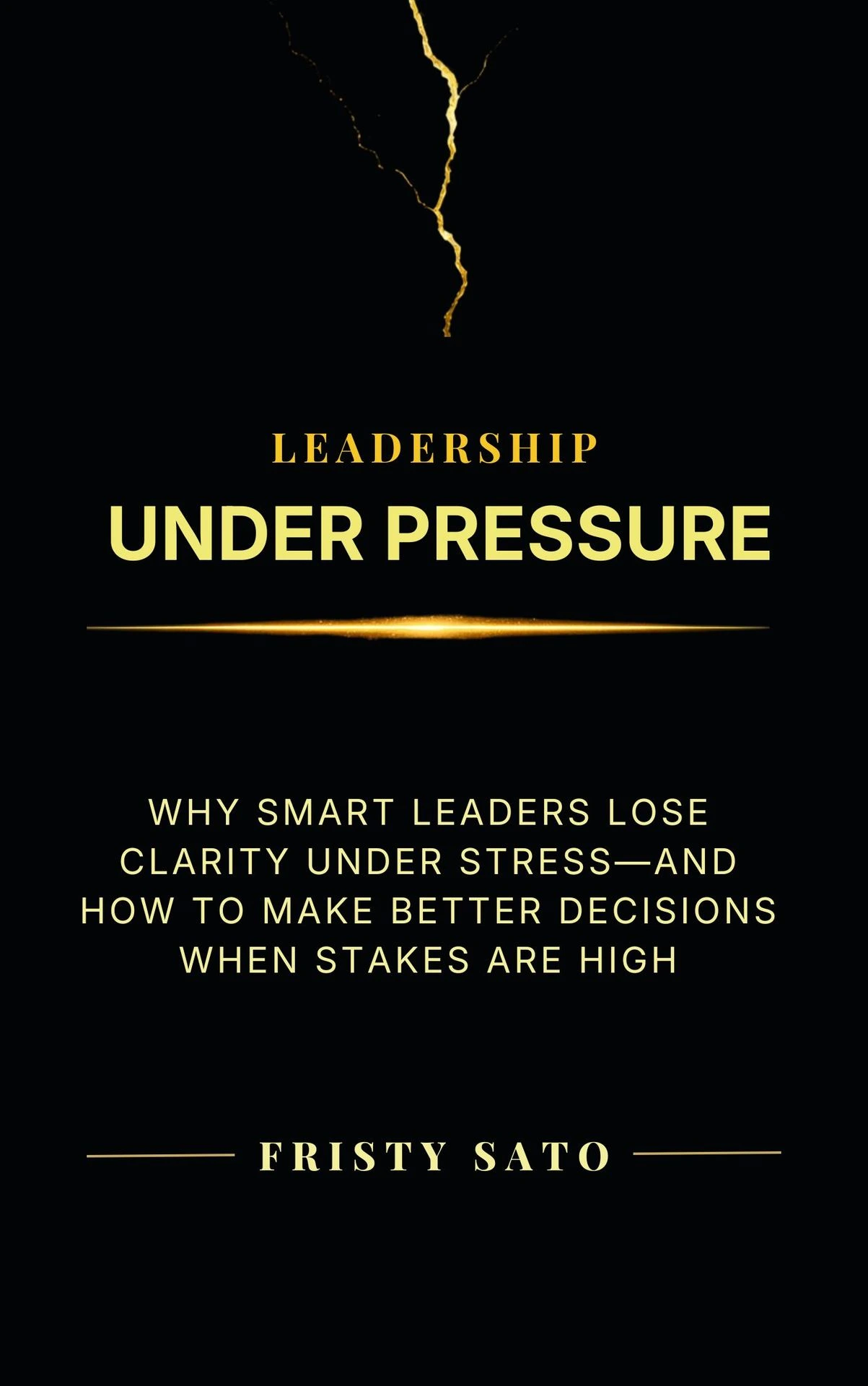
Read the Book: Leadership Under Pressure
Leadership becomes especially challenging when the stakes are high.
Decisions become more complicated, emotions become stronger, and the pressure to get things right can affect clarity.
In Leadership Under Pressure: Why Smart Leaders Lose Clarity Under Stress—and How to Stay Clear When Stakes Are High, this book explores why capable leaders can struggle to maintain clarity under pressure and how they can develop a more conscious relationship with their leadership responses.
Emotionally Safe Leadership for Teams and Organizations
Better communication requires more than teaching people what to say. It requires leadership and organizational conditions where honest conversations can happen.
Organizations may need to examine:
How leadership behavior influences team communication.
Whether decision-making authority is clear.
How responsibility and workload are distributed.
What happens when employees raise concerns.
Whether performance expectations support sustainable contribution.
How managers respond to mistakes, conflict, and uncertainty.
The goal is to create working conditions where people can communicate honestly, take meaningful responsibility, and contribute without depending on fear, excessive control, or chronic overwork.
Explore Emotionally Safe Leadership™ as a starting point for understanding this wider approach.
Continue Exploring Emotionally Safe Leadership™
If this article articulated something you have been experiencing within your own career, you are not alone. The journey toward sustainable, high-impact authority begins by exploring the underlying systems that govern how we show up.
Featured Topics